Tunisia's Democratic Promise Fades: Experts Warn of Authoritarian Drift
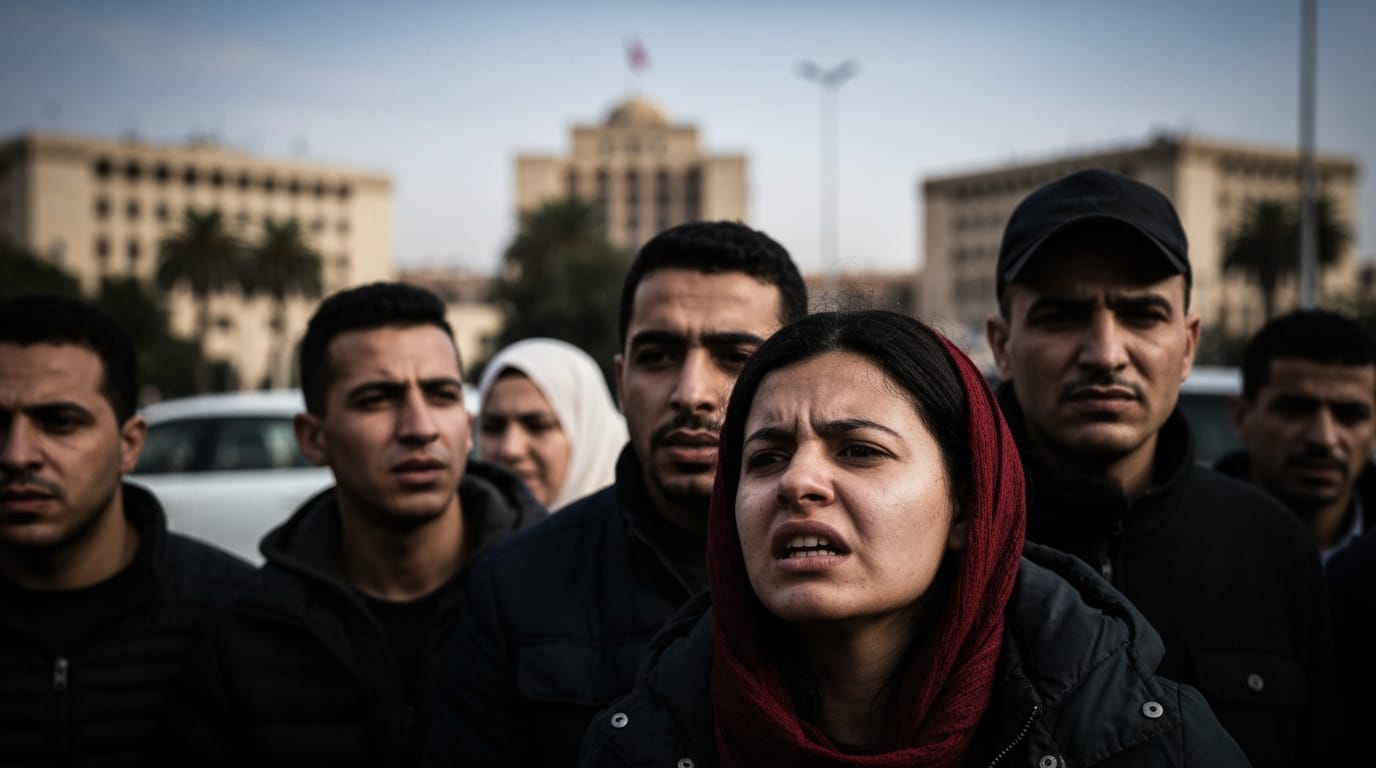
Tunisia, once hailed as the sole democratic success story of the Arab Spring, is increasingly drawing concern from international observers and experts who warn of a significant regression toward authoritarianism. A series of moves by President Kais Saied, initiated in July 2021, has systematically dismantled democratic institutions, curtailed civil liberties, and consolidated executive power, raising fears that the nation's decade-long democratic experiment is rapidly unraveling.
The current trajectory marks a stark departure from the hopes ignited by the 2011 revolution that overthrew long-time dictator Zine El Abidine Ben Ali. For years, Tunisia was celebrated for its constitutional framework, relatively free elections, and vibrant civil society, standing as a beacon of democratic potential in a turbulent region. However, a combination of persistent economic stagnation, political infighting, and public disillusionment provided fertile ground for the dramatic shift that began nearly three years ago.
The Pivot: From Crisis to Centralization of Power
The critical turning point occurred on July 25, 2021, when President Kais Saied, citing national emergency amidst a severe COVID-19 health crisis and widespread protests against government mismanagement, dismissed the government of Prime Minister Hichem Mechichi and suspended the Assembly of the Representatives of the People. Saied justified his actions under Article 80 of the 2014 constitution, which allows for exceptional measures in cases of "imminent danger." However, critics quickly argued that his interpretation stretched the constitutional limits, as it did not mandate consultation with the prime minister and parliamentary speaker, nor did it permit the freezing of parliament.
Following these initial steps, Saied's consolidation of power accelerated. A month later, he announced an indefinite extension of the exceptional measures. In September 2021, he issued a presidential decree, effectively sidelining the existing constitution and establishing a system where legislative texts would be promulgated directly by presidential decree. This move significantly strengthened the presidency at the expense of the legislative and governmental branches, allowing Saied to appoint the Cabinet and dictate policy without parliamentary interference. The moves were initially met with mixed reactions, with some Tunisians, frustrated by years of political gridlock and economic hardship, expressing support for a leader who promised to bypass corrupt elites.
Dismantling Institutions: Constitutional and Judicial Overhauls
A cornerstone of Tunisia's democratic backsliding has been the systematic dismantling and restructuring of key state institutions. In July 2022, a new constitution, drafted under Saied's direction, was approved via a referendum that saw low voter turnout and was boycotted by major opposition parties. This new charter transformed Tunisia from a semi-presidential system to a hyper-presidential one, granting the president extensive powers with few checks and balances from the legislative or judicial branches. The parliament, now largely consisting of two weakened chambers, has been reduced to a largely rubber-stamp body, its legislative authority significantly curtailed.
Parallel to the constitutional changes, President Saied moved decisively to undermine judicial independence. In February 2022, he dissolved the Supreme Judicial Council, the body responsible for judicial appointments and disciplinary actions, replacing it with a provisional council largely under his control. This was followed by a decree-law in June 2022 that granted him the unilateral power to summarily dismiss judges and prosecutors based on vague criteria such as "prejudicing public security." Numerous judges have since been dismissed, with many facing politically motivated prosecutions. Experts warn that this erosion of judicial autonomy eliminates a crucial bulwark against executive overreach and makes it nearly impossible to hold the government accountable. Furthermore, Saied seized control of the independent electoral commission, consolidating his influence over future elections.
Silencing Dissent: Erosion of Civil Liberties
The consolidation of power has been accompanied by a significant crackdown on civil liberties, freedom of expression, and dissent. Human rights organizations, both domestic and international, have documented a rapid decline in civic freedoms since 2021. Journalists, activists, lawyers, and opposition figures have faced arbitrary detentions, politically motivated prosecutions, and intimidation.
A key instrument in this repression is Decree-Law 2022-54, presented as a tool to combat online disinformation, but which has been widely used to prosecute critics for "spreading false information" or "conspiracy against state security." Prominent cases include the arrest and sentencing of lawyer Sonia Dahmani for public comments, and the prosecution of activists for peaceful protests. Civil society organizations also face increased pressure, with authorities making it difficult to organize events, suspending groups, and subjecting them to asset freezes and lawsuits. The environment of fear and suppression has led many to conclude that the vibrancy of Tunisia's post-revolution public discourse is diminishing, replaced by a climate of self-censorship.
Economic Woes and International Repercussions
Underlying Tunisia's political upheaval are persistent and severe economic challenges. Years of sluggish growth, high unemployment, inflation, and shortages of basic goods fueled public discontent with successive governments after 2011. While President Saied's initial moves garnered some popular support due to his promises to address corruption and economic hardship, his policies have not significantly improved the situation. The country's foreign debt now stands at around 90 percent of GDP, and critical international financial support, particularly from the International Monetary Fund (IMF), has been stalled due to Saied's resistance to proposed reforms.
The international community has largely responded with concern, though with varying degrees of assertiveness. The United States and European Union have expressed dismay over the democratic backsliding, with the U.S. even reducing military aid to Tunisia. Human rights watchdogs continue to call for the release of political prisoners and a return to democratic norms. However, the lack of decisive international pressure, some analysts suggest, has allowed Saied to continue his authoritarian trajectory relatively unchecked.
Conclusion: The Fading Light of the Arab Spring
The path taken by Tunisia since July 2021 signifies a profound reversal for a nation once seen as a testament to the possibility of democratic transition in the Arab world. Experts widely agree that the country is experiencing a "slow-motion coup" and has fallen into an authoritarian spiral. The systematic dismantling of legislative and judicial independence, coupled with a widening crackdown on dissent and civil liberties, points to an increasingly consolidated autocratic rule under President Saied.
The erosion of democratic institutions and the suppression of fundamental freedoms carry significant implications, both for Tunisia's domestic stability and for the broader regional context. As the country grapples with an unresolved economic crisis and a shrinking space for political pluralism, the aspirations of the 2011 Jasmine Revolution appear increasingly distant. The future of Tunisia, once a symbol of hope, now serves as a cautionary tale of how quickly democratic gains can be undone when political and economic frustrations converge.


