Turkey Grapples with Authoritarianism, Economic Woes, and Human Rights Concerns in 2025
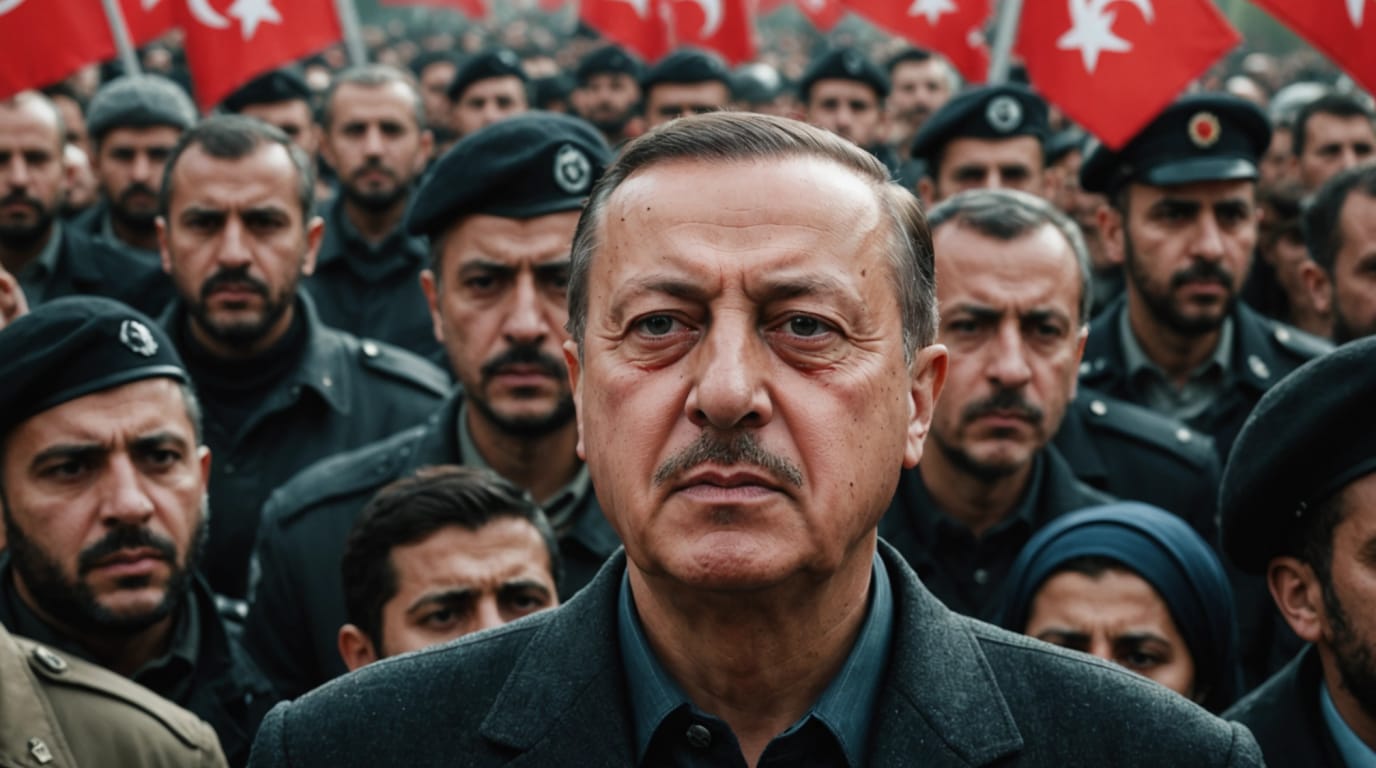
Turkey faces a complex landscape in 2025, marked by increasing authoritarianism under President Recep Tayyip Erdoğan, persistent economic challenges, and a concerning human rights record. While the ruling Justice and Development Party (AKP) has experienced some setbacks, particularly in local elections, the government's grip on power remains firm, raising questions about the future of democracy and stability in the country.
Erosion of Democratic Institutions
President Erdoğan and the AKP-led government exert significant control over the media, judiciary, and state institutions, sidelining perceived critics. This consolidation of power has led to a decline in freedom, with Turkey ranking among the top 10 countries experiencing the sharpest democratic backsliding over the past decade. According to Freedom House, Turkey's score has dropped 22 points since 2014, placing it alongside Venezuela as one of the worst decliners.
The government's control extends to the media, with the public broadcaster TRT and the Anadolu Ajansı news agency largely aligned with the government. Independent media primarily operate online, but authorities regularly block websites and remove critical content, citing threats to national security or violations of personal rights. Despite Constitutional Court decisions finding these practices violate freedom of expression, the government continues to suppress dissent.
Human Rights Under Pressure
Turkey's human rights record remains a significant concern, with the country facing numerous adverse rulings from the European Court of Human Rights (ECtHR). In 2024, 67 out of 73 cases brought against Turkey were found to involve at least one breach of the European Convention on Human Rights. These violations include infringements on the rights to liberty and security, freedom of expression, private and family life, and freedom of assembly and association.
As of 2024, approximately 21,600 applications from Turkey are pending before the ECtHR, representing more than a third of the court's caseload. This underscores the scale of human rights concerns in the country, with many cases involving prolonged pretrial detention, politically motivated judicial rulings, and excessive restrictions on freedom of expression. The use of counterterrorism laws against journalists, politicians, and human rights activists remains a key concern.
Economic Challenges and Instability
Turkey's economy continues to face significant challenges in 2025, including high inflation and a growing trade deficit. In November 2024, the annual inflation rate was reported at 47 percent. The central bank interest rate is at 50%. The Turkish lira has depreciated, exacerbating the trade deficit and increasing the cost of imports.
The government has revised its economic outlook for 2025-2027, reflecting a strategic shift amid high inflation and slowing growth. The Medium-Term Program (MTP) raised the inflation target for 2024 to 41.5 percent, up from the earlier estimate of 33 percent, while lowering the 2024 GDP growth forecast to 3.5 percent, down from the previous 4 percent projection.
The economic situation has also fueled social tensions, including rising xenophobia and violence against refugees. Turkey hosts the world's largest refugee population, including over 3.6 million Syrians. Political parties have increasingly weaponized anti-refugee sentiment, contributing to a hostile environment for refugees.
Political Opposition and Crackdowns
The political opposition in Turkey faces increasing pressure from the government, with key figures like Istanbul Mayor Ekrem İmamoğlu facing legal challenges and imprisonment. In March 2025, İmamoğlu was arrested on charges of corruption, aiding a terrorist organization, and organized crime, sparking protests across the country.
The government's actions against İmamoğlu, who is seen as a potential challenger to Erdoğan in the 2028 presidential election, have been widely criticized as politically motivated. These actions are viewed as a further step towards authoritarian rule, with the government using the judiciary to sideline key opposition figures.
Despite these challenges, the opposition Republican People's Party (CHP) has achieved some success, gaining control of major municipalities in the 2024 local elections. However, the CHP faces significant obstacles in challenging Erdoğan's grip on power, with the government using state resources to suppress dissent and limit public discourse.
International Relations and Foreign Policy
Turkey's foreign policy in 2025 is shaped by its evolving security context and its pursuit of a multi-aligned strategy. The country has sought to balance its relations with the West and the Middle East, while also exploring new partnerships, such as its application for BRICS membership in 2024.
Turkey's relations with the European Union remain complex, with progress on issues like modernizing the customs union and achieving visa liberalization dependent on overcoming political and economic challenges. The country's human rights record and democratic backsliding continue to be major obstacles in its relations with the EU.
Turkey's involvement in Syria remains a key foreign policy concern, with the country continuing to occupy territories in northern Syria with the stated objective of protecting itself against Syrian Kurdish groups. The Turkish authorities have been criticized for failing to curb abuses by their Syrian National Army (SNA) and Military Police proxies in the occupied territories.
A Nation at a Crossroads
In 2025, Turkey stands at a crossroads, facing significant challenges to its democratic institutions, human rights record, and economic stability. President Erdoğan's government has consolidated power, suppressing dissent and sidelining political opponents. The country's economic woes have fueled social tensions and xenophobia, while its foreign policy remains complex and multifaceted.
The future of Turkey will depend on its ability to address these challenges and uphold the principles of democracy, human rights, and the rule of law. Whether the country can reverse its authoritarian trajectory and foster a more inclusive and prosperous society remains to be seen.


