Turkish Opposition Plunges into Crisis as Court Ousts Leader, Reigniting Power Struggle
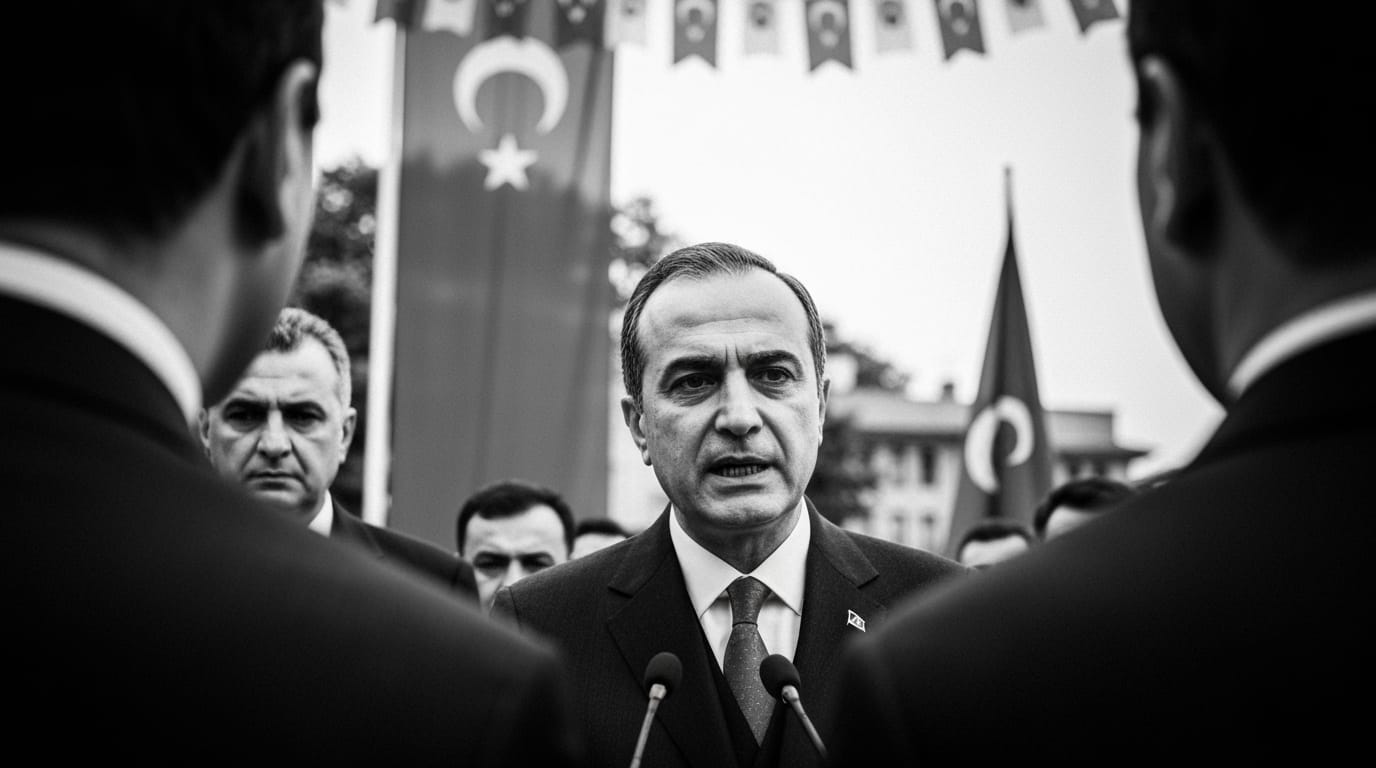
ANKARA, Turkey – Turkey's main opposition Republican People's Party (CHP) has been thrust into an unprecedented leadership crisis following a contentious court ruling that annulled the party's 2023 congress and reinstated its former chairman, Kemal Kılıçdaroğlu. The decision, handed down by an Ankara appeals court on May 21, 2026, has ignited a fierce internal power struggle and drawn widespread condemnation as a profound blow to the country's already fragile democratic institutions, culminating in a dramatic police intervention at the party's headquarters.
The judicial intervention has sparked intense debate over the independence of Turkey's judiciary and the future of political opposition in a landscape increasingly dominated by President Recep Tayyip Erdoğan's ruling Justice and Development Party (AKP). Critics argue the move is a politically motivated attempt to hobble the CHP, especially after its significant electoral gains in recent local elections, while supporters of the ruling maintain the court acted independently to address alleged irregularities.
Judicial Fiat Ignites Internal Fury
The crisis began with the Ankara appeals court's declaration that the CHP's 38th Ordinary Congress, held in November 2023, was an "absolute nullity." This ruling effectively erased the election of Özgür Özel as party leader, restoring Kemal Kılıçdaroğlu, who had led the party for 13 years until his defeat in that very congress. The court’s decision was predicated on allegations of irregularities, including vote buying and the offering of political favors, during the 2023 leadership contest. While CHP officials consistently rejected these claims and presented legal defenses throughout the proceedings, the court ultimately sided with the plaintiffs, who included party delegates and former Hatay Mayor Lutfu Savas.
The immediate fallout was palpable. On May 26, 2026, riot police stormed the CHP's headquarters in Ankara, deploying tear gas and rubber bullets to forcibly evict Özel and his supporters who had occupied the building in protest. Özel, who had been hailed for revitalizing the party, condemned the court's decision as a "judicial coup" and a direct assault on democratic principles, asserting that his only "crime" was leading the CHP to outperform the ruling AKP in the 2024 municipal elections. Kılıçdaroğlu, meanwhile, promptly updated his social media biography to reflect his reinstatement as "Chairperson of the Republican People's Party" and called for unity within the party, stating the ruling "should not be an occasion for division, but an opportunity to unite." Appeals filed by the CHP against the ruling were swiftly rejected by both an Ankara court and the Supreme Election Council.
The Shifting Sands of CHP Leadership
The leadership battle within the CHP has deep roots, particularly in the aftermath of the May 2023 general elections. Kemal Kılıçdaroğlu, who had served as CHP leader since 2010, faced widespread criticism for his inability to secure a national election victory against President Erdoğan. His defeat in the 2023 presidential runoff election, where he garnered 47.86% of the vote against Erdoğan's 52.14%, intensified calls for a change in party leadership.
This led to the fiercely contested 38th Ordinary Congress in November 2023, where Özgür Özel, then the leader of the CHP's parliamentary caucus, mounted a successful challenge to Kılıçdaroğlu. Özel's victory, which ended Kılıçdaroğlu's 13-year tenure, was widely seen as a mandate for renewal. A key figure in Özel's ascendance was Istanbul Mayor Ekrem İmamoğlu, who chaired the congress and had been a vocal proponent for change within the party. Under Özel’s new leadership, the CHP experienced a resurgence, achieving its best electoral performance since 1977 in the March 2024 municipal elections. The party outstripped the AKP by over a million votes, securing control of key metropolitan areas including Istanbul and Ankara, and now governs municipalities representing 65% of the Turkish population and 80% of the country's economic output.
However, the legitimacy of Özel's victory was immediately questioned by some within the CHP and later became the subject of a judicial investigation. Allegations emerged that İmamoğlu had used municipal resources to "pressure and incentivise delegates" during the 2023 congress, claims that were later cited in the court's annulment. İmamoğlu himself was arrested and imprisoned in March 2025 on corruption charges, a move many observers believe to be politically motivated, given his status as a formidable potential rival to Erdoğan.
Erosion of Democratic Norms and Authoritarian Shadows
The judicial decision to remove Özel and the subsequent police action have ignited serious concerns about the state of democracy and the rule of law in Turkey. Human Rights Watch characterized the court's intervention as part of the Erdoğan government's "broader political efforts to sideline the main political opposition" and profoundly undermine democratic processes. Analysts suggest that the ruling party, having witnessed the CHP's unexpected strength in the 2024 local elections, views the internal disarray of the opposition as politically advantageous.
The incident is not isolated, occurring amidst an ongoing crackdown on opposition figures. Since the 2024 elections, over 20 CHP mayors have been detained on various charges ranging from corruption to terrorism. The imprisonment of Istanbul Mayor İmamoğlu, seen as a leading contender for the presidency, further underscored the perceived weaponization of the judiciary against political rivals. These events contribute to a broader erosion of public trust in the judiciary, with confidence levels dropping significantly in recent years. Critics argue that such actions create an uneven playing field, making it increasingly difficult for the opposition to compete effectively in future elections.
Economic Turmoil and Uncertain Political Future
The political upheaval within the CHP has also sent ripples through Turkey's already precarious economy. The day after the court's ruling, the Istanbul stock exchange plummeted by 5-6%, and the Turkish lira experienced a 2% drop against the U.S. dollar. State banks reportedly intervened by selling billions of dollars to stabilize the currency, reflecting the market's sensitivity to political instability. This economic volatility adds another layer of complexity to a nation already grappling with persistent inflation.
The current leadership vacuum and internal strife within the CHP could have significant ramifications for Turkey's political trajectory. While the next presidential election is not scheduled until 2028, some analysts suggest that President Erdoğan might seize the opportunity presented by the opposition's disarray to call an early general election, potentially in autumn 2026. This scenario would allow the ruling party to capitalize on the CHP's internal divisions and further consolidate its power.
Özgür Özel, despite his ouster, has remained defiant, urging party members not to abandon the CHP and ruling out the formation of a new party. He has called for a new leadership election that would allow the party's 2 million members to directly choose their leader. This proposal aims to bypass the judicial ruling and reassert democratic control over the party's direction.
A Defining Moment for Turkish Opposition
The ongoing leadership dispute within the CHP represents a critical juncture for Turkish democracy. The court's decision, perceived by many as an external imposition on an internal party matter, underscores the growing challenges faced by opposition forces in a highly centralized political system. The struggle between the judicially reinstated Kemal Kılıçdaroğlu and the democratically elected Özgür Özel is more than a mere internal squabble; it is a battle for the very definition of political opposition in Turkey. The outcome will not only determine the future direction of the CHP but will also provide a significant indicator of the health and resilience of Turkey's democratic processes in the face of escalating political pressures.


