Turkish Political Landscape Upended as Ousted Opposition Leader Forms Second-Largest Party
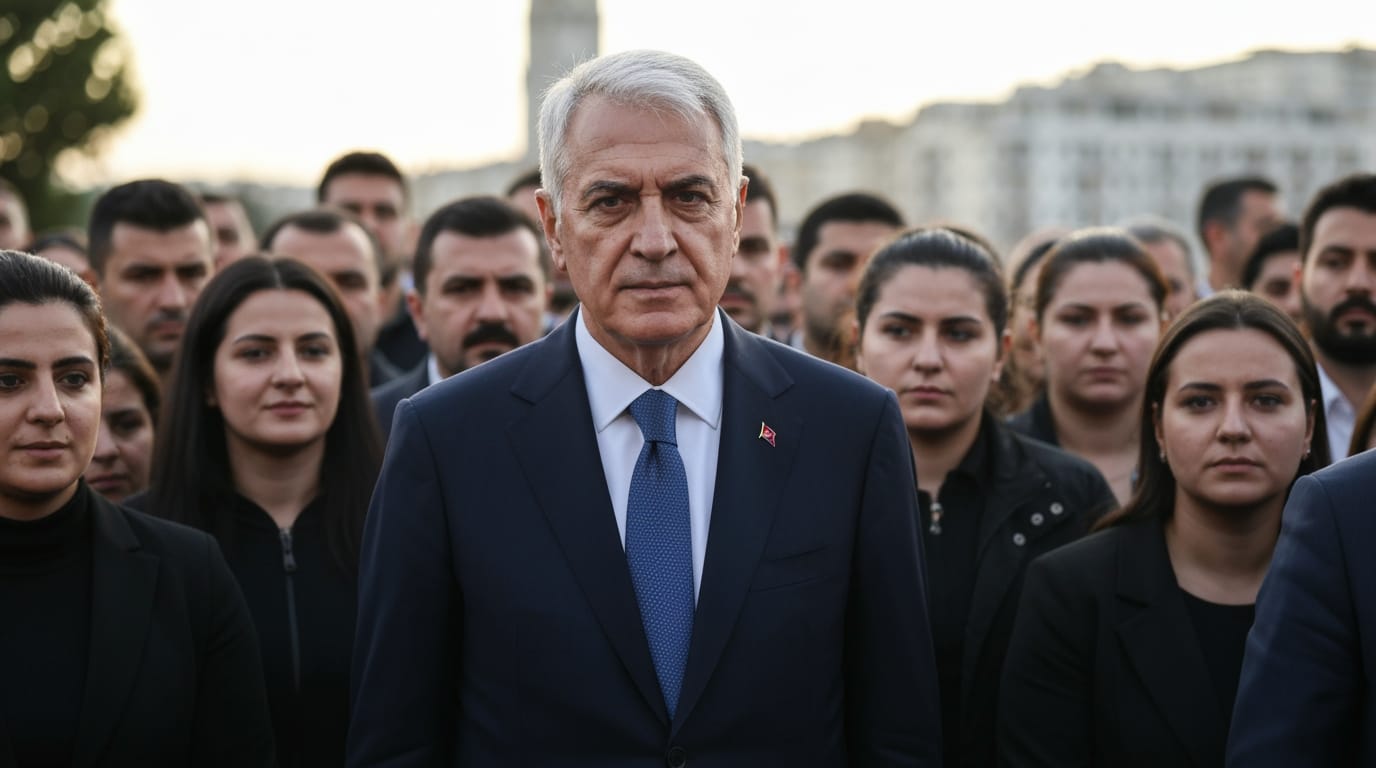
ANKARA, Turkey – In a dramatic reshaping of Turkey's political landscape, Ozgur Ozel, the recently ousted leader of the main opposition Republican People's Party (CHP), has officially launched a new political entity, the "Yeni Parti" (New Party), which immediately claims the position of the country's second-largest party in the 600-seat parliament. This move, executed on Friday, July 24, 2026, marks a significant challenge to President Recep Tayyip Erdogan's ruling Justice and Development Party (AKP) and signals a new era of opposition politics in Turkey.
The formation of the Yeni Parti comes just months after a controversial court ruling in May annulled Ozel's 2023 election as CHP leader, reinstating his predecessor, Kemal Kilicdaroglu. Critics widely view the court's decision as a politically motivated maneuver aimed at weakening the opposition, fueling concerns about the state of democracy and the rule of law in Turkey.
The Genesis of a New Force
Ozgur Ozel's ascent to leadership within the CHP in November 2023, following a fiercely contested internal election, was initially seen as a revitalization for Turkey's oldest political party. Under his brief tenure, the CHP achieved significant electoral success in the 2024 local elections, sweeping major cities and emerging as the country's largest party by vote share, an outcome that surprised many political observers. However, this momentum was abruptly halted by the Ankara court's ruling, which cited allegations of vote-buying in the 2023 leadership election as grounds for annulling the results and reinstating Kilicdaroglu.
This judicial intervention, which some suggest was part of a broader crackdown on government opponents, left Ozel in a precarious position. Despite appeals against the ruling, procedural delays meant the case did not reach the Supreme Court before its summer recess, effectively blocking Ozel's path to reinstatement within the CHP. Faced with this impasse, Ozel announced his intention to form a new party, declaring that Turkey stood at a "historic crossroads." On Tuesday, July 21, 2026, Ozel publicly confirmed his plans, and by Friday, he had formally resigned from the CHP along with 90 other lawmakers, submitting the founding documents for the Yeni Parti to the interior ministry.
A Seismic Shift in Parliamentary Power
The immediate consequence of Yeni Parti's formation is a dramatic restructuring of parliamentary power. With 91 lawmakers joining Ozel, the Yeni Parti instantly becomes the second-largest party in Turkey's 600-seat Grand National Assembly. This places it directly behind President Erdogan's ruling AKP, which currently holds 277 seats.
The impact on the CHP is profound. The party, which previously held 135 seats and was the main opposition force, will see its representation shrink to a mere 44 lawmakers following the resignations. This precipitous drop relegates the CHP to fourth place, falling behind the pro-Kurdish DEM party, which currently holds 56 seats. Ozel's strategic move to attract a significant bloc of CHP lawmakers was crucial to his new party's immediate parliamentary standing, with political insiders having anticipated between 83 and 85 CHP lawmakers would join the new faction.
This dramatic shift fundamentally alters the dynamics within the Turkish opposition, which has historically struggled with fragmentation. While the emergence of a strong new opposition party could invigorate political discourse, it also carries the risk of further dividing the opposition vote, potentially benefiting the ruling AKP in future elections.
Implications for Turkey's Political Future
The formation of the Yeni Parti carries significant implications for Turkey's political future, particularly with the next parliamentary and presidential elections slated for no later than May 2028. For President Erdogan and the AKP, the new opposition presents a complex challenge. While a fragmented opposition might initially appear advantageous by potentially splitting votes, a newly energized and numerically strong opposition force could also galvanize public discontent.
The judicial actions that led to Ozel's ousting have intensified concerns among international observers and rights groups about democratic erosion in Turkey. Critics argue that the crackdown on the CHP, including investigations and arrests of opposition mayors and officials, demonstrates an effort to suppress dissent and consolidate power.
Historically, new splinter parties in Turkish politics have often struggled to gain significant traction. However, the AKP itself emerged as a splinter party in 2001 and quickly rose to power, demonstrating that under specific circumstances, new political movements can achieve rapid success. The Yeni Parti's immediate large parliamentary presence differentiates it from other recent efforts by former high-ranking politicians, such as Ali Babacan's DEVA (Democracy and Progress) Party and Ahmet Davutoglu's Future Party, which were formed from disenchanted AKP members but did not achieve the same initial parliamentary strength.
The Road Ahead
Ozgur Ozel and the Yeni Parti now face the formidable task of translating their parliamentary strength into broad public support and effectively challenging the entrenched power of the AKP. Ozel has positioned the Yeni Parti as the rightful main opposition, committed to leading the fight against President Erdogan's governance. His previous success in local elections suggests a capacity to connect with voters, yet the splintering of the traditional opposition base raises questions about long-term strategy and unity.
The political landscape in Turkey remains highly polarized, with deep divisions along ideological lines. The Yeni Parti's ability to attract voters beyond the traditional CHP base, especially those disillusioned with both the ruling party and the existing opposition, will be critical. The coming months will undoubtedly witness intense political maneuvering as the Yeni Parti seeks to consolidate its position and the remaining opposition forces regroup in response to this dramatic realignment. This significant development ensures that Turkish politics will remain dynamic and unpredictable as the country moves towards its next electoral cycle.