Turkish Political Landscape Upended as Özgür Özel Launches New Opposition Party
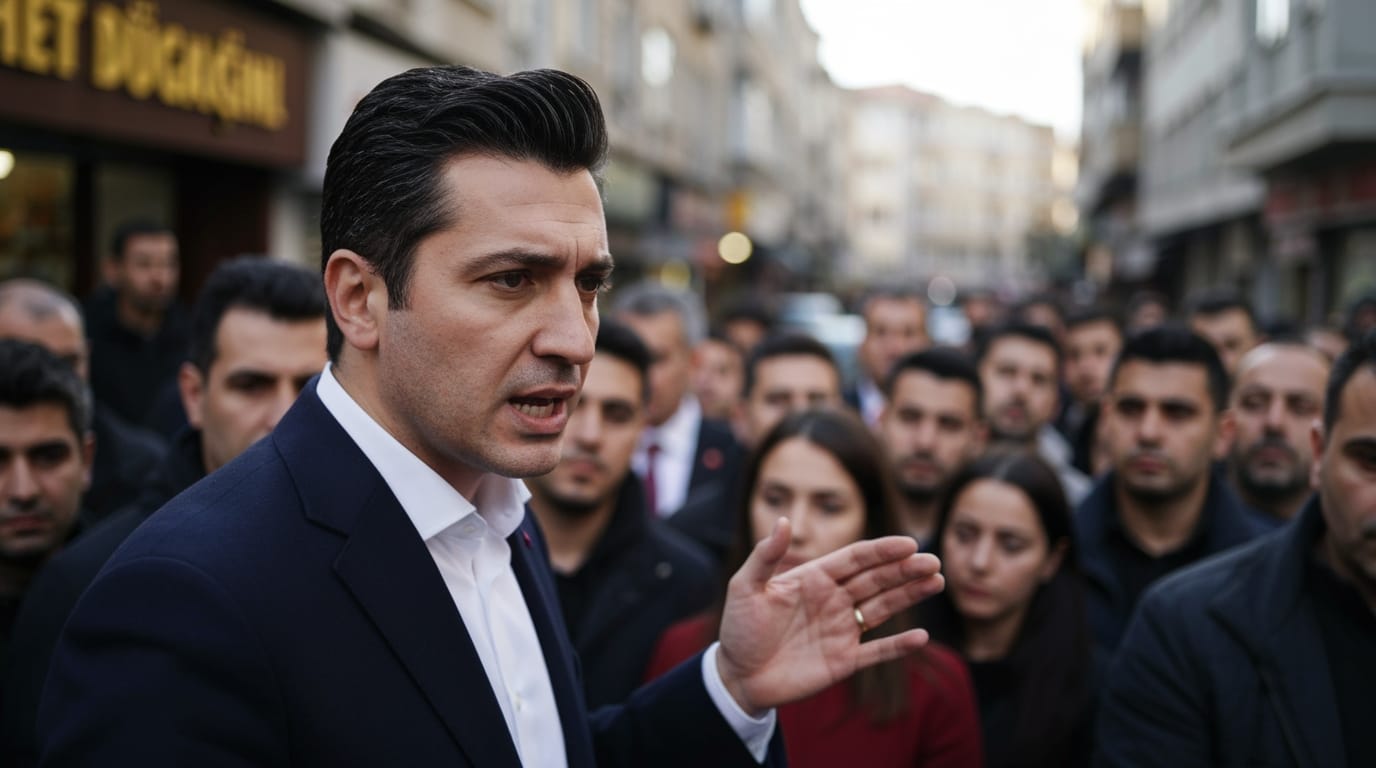
Ankara, Turkey – Turkey's political arena has been dramatically reshaped this week with the formal establishment of a new opposition party, "Yeni Parti" (New Party), led by Özgür Özel, the former chairman of the Republican People's Party (CHP). The move, which saw a significant defection of lawmakers from the CHP, signals a profound fragmentation within the opposition ranks, posing both a fresh challenge to President Recep Tayyip Erdoğan's long-standing rule and new uncertainties for Turkey's democratic future. Özel's declaration on July 21, followed by the party's official registration on July 24, comes months after a controversial court ruling ousted him from his leadership role in the CHP, a decision widely condemned by his supporters as a politically motivated maneuver to weaken the opposition.
The Genesis of a New Political Force
The formation of Yeni Parti stems directly from a tumultuous period within Turkey's main opposition. In May 2026, an Ankara appeals court annulled the results of the 2023 CHP leadership congress that had elected Özgür Özel, citing alleged irregularities. This decision controversially reinstated Kemal Kılıçdaroğlu, Özel's 77-year-old predecessor, who had led the party for 13 years and suffered a significant defeat against President Erdoğan in the 2023 presidential elections.
Özel, 51, who had revitalized the CHP following the 2023 setback, and his allies vehemently condemned the court's ruling as a "judicial coup" and a blatant attempt by the government to undermine the opposition. The government, however, maintains that the judiciary operates independently and impartially. Facing what he described as an inevitable farewell to the CHP, Özel announced his departure, stating his intent to establish a new movement that would mark a "new beginning" for Turkish opposition politics. He emphasized that his decision was not a retreat but a determined step towards governing Turkey.
A Seismic Shift in Parliamentary Dynamics
The immediate aftermath of Yeni Parti's formation has sent shockwaves through the Turkish parliament. On July 24, Özel, alongside 91 fellow lawmakers, formally resigned from the CHP to join his new political entity. This mass defection instantaneously propelled Yeni Parti into the position of the second-largest party in Turkey's 600-seat parliament, second only to President Erdoğan's ruling Justice and Development Party (AKP), which holds 277 seats.
The impact on the CHP is considerable. Prior to the resignations, the CHP held 135 seats, establishing it as the primary opposition force. With 91 deputies departing, the CHP's parliamentary representation has plummeted to just 44 seats, placing it behind the pro-Kurdish DEM Party, which holds 56 seats. This development means the Republican People's Party, Turkey's oldest political party and a foundational institution of the modern republic, has, for the first time without an election, lost its status as the official main opposition party. This internal upheaval within the opposition camp risks severe disruption to its organizational structure and could impact its funding, media access, and institutional leverage within the legislature.
Public Sentiment and the Path Forward
Initial public reaction to Özel's new party suggests a potentially strong start. Early opinion polls indicate that Yeni Parti could garner significant public support, with some surveys placing it ahead of the ruling AKP. One poll, for instance, showed Özel's potential new party attracting 33.8% of the vote in a hypothetical parliamentary election, surpassing the AKP's 27%. These polls suggest the new party could draw support from a diverse electorate, including Kurds, Turkish nationalists, and religious voters, indicating a broader appeal than the traditional CHP base.
Özel's past leadership of the CHP offers a glimpse into his potential. Under his tenure, the CHP achieved remarkable success in the 2024 municipal elections, securing victories in major cities like Istanbul and Ankara and emerging as the largest party nationwide for the first time in 47 years. This success demonstrated his ability to galvanize voters and represents a key part of the background leading to the current political climate. However, analysts caution that these initial high poll numbers might represent a "honeymoon period," emphasizing the need for Özel to articulate clear policies and consolidate support across disparate demographic groups to sustain this momentum. Özel has already called for a "Türkiye Alliance," aiming to unite social democrats, conservatives, and nationalist democrats under one umbrella.
The Shadow of the State and the 2028 Horizon
The formation of Yeni Parti unfolds against a backdrop of intensified government pressure on opposition figures. The government's narrative of judicial impartiality is frequently challenged by critics who point to ongoing criminal investigations and detentions targeting opposition mayors and officials. Notably, Ekrem İmamoğlu, the popular mayor of Istanbul and a key figure under Özel's previous leadership, has been imprisoned since March 2025 on corruption charges, widely seen as politically motivated. There are also concerns that Özel himself could face similar legal challenges, with fears that his parliamentary immunity might be lifted, potentially leading to his arrest.
The fragmentation of the opposition, while potentially creating a fresh and dynamic alternative, also carries inherent risks. Some observers suggest that a divided opposition could inadvertently strengthen President Erdoğan's position, potentially paving the way for him to seek another presidential term or push for constitutional changes ahead of the scheduled 2028 general elections. The 2023 presidential election, which Kılıçdaroğlu narrowly lost despite widespread economic discontent, highlighted the challenges of uniting the anti-Erdoğan vote. However, the Turkish electoral system, with its 50%+1 presidential threshold and requirements for parliamentary majorities, still incentivizes opposition parties to form alliances. This means Yeni Parti, the remaining CHP faction, and other opposition groups may ultimately need to coalesce to mount a credible challenge in 2028.
The emergence of Özgür Özel's Yeni Parti marks a pivotal moment in Turkish politics. While it injects a new dynamic into the opposition and offers a potential path for disaffected voters, it simultaneously introduces a period of uncertainty and potential fragmentation. The party's ability to transcend its "honeymoon period," clearly define its policy platform, and navigate the intricate landscape of Turkish state pressure will be crucial in determining its long-term viability and its chances of effectively challenging President Erdoğan's enduring political dominance.


