Tusk Challenges Rising Anti-Ukrainian Violence, Warns of Russian Influence and Damaged Reputation
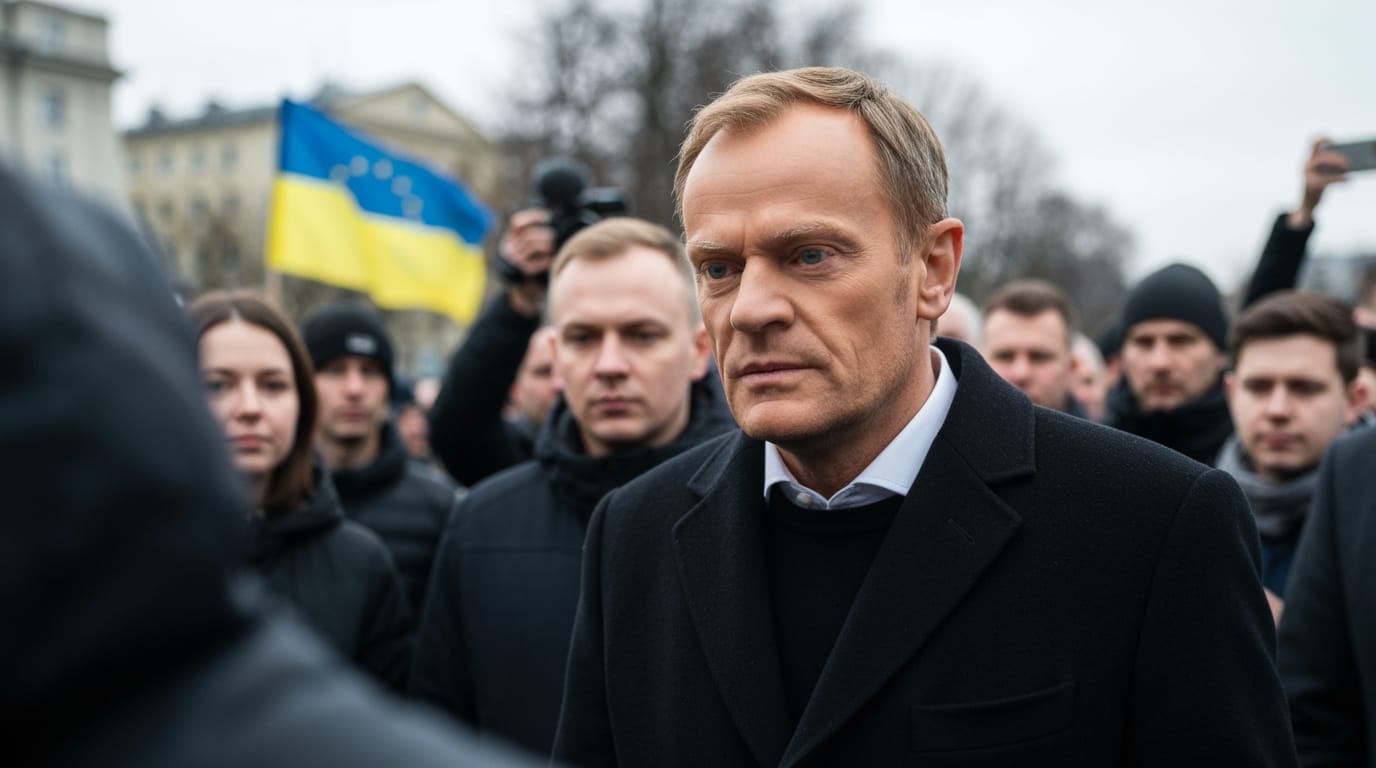
WARSAW – Polish Prime Minister Donald Tusk has issued a stern warning against a disturbing surge in anti-Ukrainian violence across Poland, forcefully condemning xenophobic attacks and calling on all political leaders, including President Karol Nawrocki, to unequivocally denounce such acts. Tusk's direct and urgent appeal comes amid a documented rise in hate crimes targeting Ukrainians, highlighting a fracturing in the initial widespread solidarity Poland extended following Russia's full-scale invasion of Ukraine in 2022. The Prime Minister emphasized that these acts not only undermine Poland's national interests and hard-won international reputation but also play directly into Russia's hands.
The escalating tensions threaten to unravel the strong alliance between Warsaw and Kyiv, a partnership forged in the crucible of Russia's aggression. While Poland has been a crucial logistical hub and a staunch advocate for Ukraine's defense, a complex interplay of economic pressures, historical grievances, and targeted disinformation campaigns has fostered an increasingly hostile environment for Ukrainian refugees and immigrants within Polish borders. Tusk's government is now battling not only the perpetrators of violence but also the corrosive political rhetoric and external forces aiming to divide the two nations.
A Troubling Surge in Hate Crimes
Recent weeks have seen several high-profile incidents expose the growing animosity. On July 26, a brutal attack in Wrocław, where three Polish men assaulted a Ukrainian couple following an argument in a shop, captured national attention after a video of the incident circulated widely on social media. Police subsequently arrested two suspects, with a third still being sought. This incident is far from isolated. Polish police data reveal a significant escalation in reported hate crimes against Ukrainians, with 180 complaints filed in the first half of 2026 alone—a 30% increase compared to the same period in 2025. For context, there were 267 such reports in all of 2024 and 275 in 2025, indicating a sharp upward trend that could see the annual figure reach approximately 360 by year-end.
Other incidents underscore the gravity of the situation: a 60-year-old Polish man was beaten in Poznan after attempting to defend a Ukrainian boy from verbal harassment, while a woman in Legnica faced charges for assaulting two 13-year-old Ukrainians. In Bielsko-Biala, a 54-year-old man was filmed insulting two Ukrainian girls, leading to his detention and dismissal from his job as a bus driver. These occurrences, ranging from verbal abuse to physical assault, reflect a "toxic atmosphere" that experts suggest is spreading from political rhetoric and online platforms into daily life. Sociologist Jacek Kucharczyk noted that the true number of hate crimes is likely higher, as many victims fear reporting incidents to the police.
Tusk's Firm Stance and Call for Leadership
Prime Minister Tusk has been unequivocal in his condemnation, asserting that those who commit such "vile acts" are "acting directly against Poland's interests" and are "working against Poland, in favour of Russia and in favour of Polish and Ukrainian nationalism." He publicly challenged President Karol Nawrocki, urging him to "stop remaining silent on this matter" and to "draw a very clear line" against such aggression. Tusk's remarks to journalists emphasized that Poland has spent decades building its international reputation as a safe and hospitable country, a reputation that can be easily destroyed by allowing "thugs, football hooligans and common criminals to beat and humiliate people with such impunity simply because they speak with a slightly different accent."
The Prime Minister also directly linked the rise in violence to the rhetoric of certain right-wing politicians, noting that one of the Wrocław attackers had presented himself on social media as a "defender of the Polish border." Government spokesman Adam Szłapka further suggested that right-wing politicians have "created an atmosphere of impunity and effectively given society 'permission to hate'." Tusk has appealed to all political forces to unite against ethnically motivated violence, stressing that support for Ukraine, regardless of historical disputes, remains a matter of Poland's national security and should not become a subject of domestic political squabbles.
Underlying Currents: Economic Strain, Historical Echoes, and Disinformation
The decline in public goodwill towards Ukrainians in Poland is multifaceted. While initial solidarity after the 2022 invasion was overwhelming, with 90% of Poles welcoming refugees, this figure plummeted to a record low of 48% by autumn 2025. Public sympathy has given way to discontent, with 43% of Poles viewing Ukrainians negatively in 2026, a significant reversal from 2023 when 51% expressed sympathy. This shift is partly attributable to the strain on social services and perceived competition for resources, amplified by the large influx of refugees (over 1.6 million registered in Poland).
Economic tensions, particularly concerning agricultural imports, have also played a role. Early 2024 saw extensive farmer protests and border blockades, with Polish farmers alleging that cheap Ukrainian grain imports threatened their livelihoods. These protests, at times featuring anti-Ukrainian slogans and incidents of grain dumping, contributed to a broader narrative of resentment. While Tusk's government has addressed some farmer concerns by pushing for changes to the European Green Deal, the issue has left lingering bitterness.
Adding to these contemporary pressures are deeply rooted historical grievances. The complex and often painful history between Poland and Ukraine, particularly concerning the Volyn massacres carried out by the Ukrainian Insurgent Army (UPA) during World War II, continues to resurface. Recent political friction, such as Ukraine's decision to name a military unit after the UPA, has reignited these sensitivities, leading to diplomatic disputes and even President Nawrocki revoking Ukraine's President Zelenskyy's top Polish honor.
Moreover, evidence suggests that these simmering resentments are actively being exploited by external actors. Foreign Minister Radosław Sikorski explicitly warned that efforts to sow discord between Poles and Ukrainians are part of "a lavishly funded Russian operation." Research indicates a massive increase in anti-Ukrainian content online, with 94,000 negative messages spread between April and July 2025 alone, reaching internet users over 32 million times. These disinformation campaigns, often driven by Russian trolls, amplify false narratives, fears, and stereotypes, fueling the growing hostility.
The Path Forward: Preserving Alliance and Reputation
Prime Minister Tusk's strong denouncement reflects his government's understanding of the strategic importance of Polish-Ukrainian unity, particularly in the face of ongoing Russian aggression. He consistently reiterates that supporting Ukraine is not just an act of solidarity but a matter of Poland's own security. The challenge lies in mitigating the social and political consequences of prolonged refugee presence, economic competition, and historical sensitivities, all while countering deliberate efforts to undermine the relationship.
The government's commitment to prosecuting hate crimes and protecting affected communities is crucial to rebuilding trust and maintaining Poland's standing as a reliable ally. However, the deep-seated nature of some grievances and the effectiveness of disinformation campaigns mean that a comprehensive approach addressing economic concerns, fostering dialogue on historical issues, and aggressively combating propaganda will be necessary to ensure that the initial spirit of Polish-Ukrainian solidarity ultimately prevails over the forces of division. Tusk's defiance of anti-Ukrainian violence is a critical step in reaffirming Poland's commitment to its neighbor and its own core values.


