Two and a Half Centuries: Charting the United States' Enduring Global Footprint
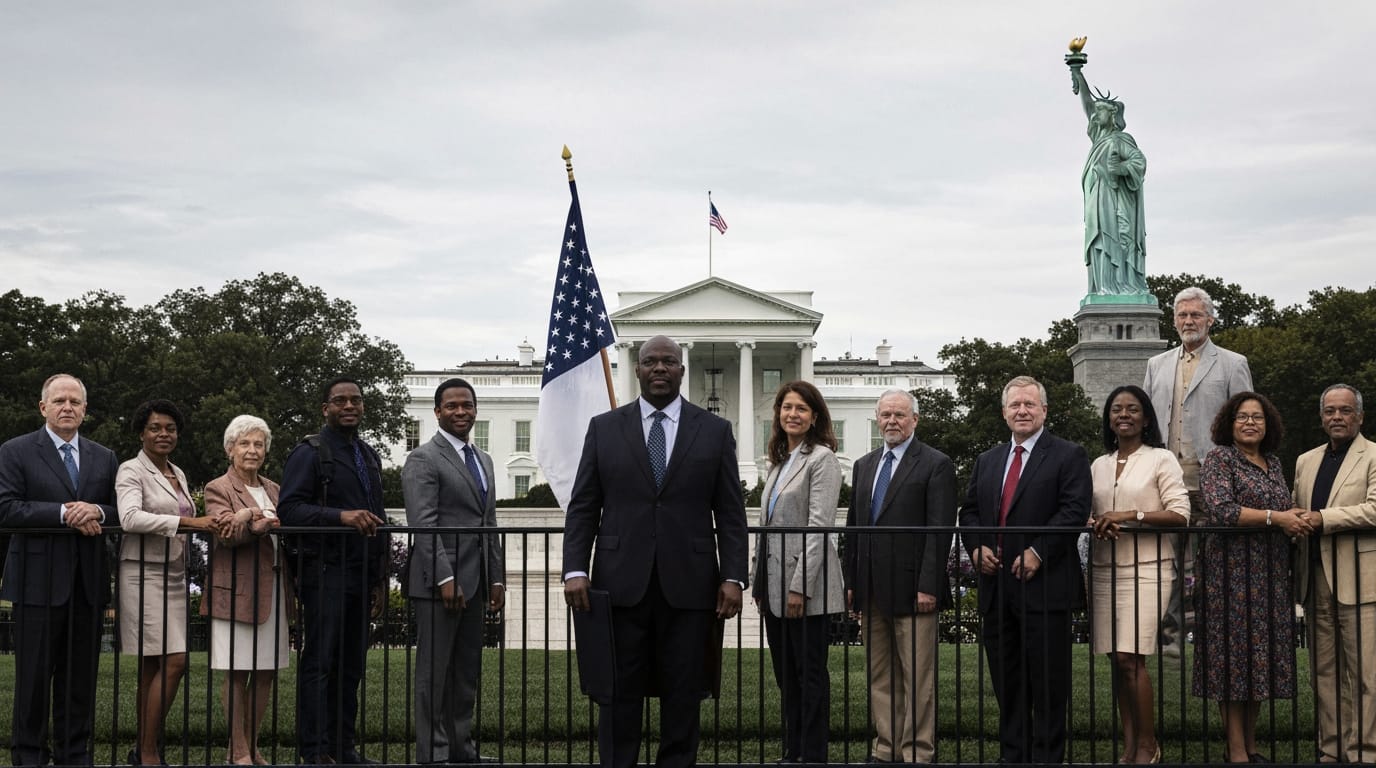
As the United States approaches its 250th anniversary on July 4, 2026, the nation stands at a pivotal juncture, reflecting on a quarter-millennium of profound and often paradoxical global influence. From a nascent republic grappling with its independence to an undisputed superpower and now a key player in an increasingly multipolar world, America's journey has undeniably shaped international politics, economics, and culture. This milestone invites introspection into the ideals that propelled its rise and the complex legacy it leaves across continents, with ongoing debates about its future role in a world it helped define.
Foundations of an Emerging Power: Early Principles and Regional Hegemony
The seeds of American global influence were sown in its founding principles, rooted in concepts of liberty, self-governance, individual rights, and constitutionalism. These ideals, articulated in documents like the Declaration of Independence, resonated far beyond its borders, inspiring movements and rethinking political systems in other nations, particularly in Western Europe. In its earliest years, the young republic focused on securing its interests and maintaining neutrality, navigating a world dominated by European powers. Early diplomatic efforts, such as Benjamin Franklin's endeavors to secure French support during the Revolutionary War, marked the nascent stages of American foreign policy.
A defining moment in this early period was the articulation of the Monroe Doctrine in 1823. This policy declared the Western Hemisphere closed to further European colonization and asserted a distinct American sphere of influence. While initially lacking the military might to enforce this declaration, the doctrine became a cornerstone of U.S. foreign policy, signifying a clear break between the "New World" and the "Old." Over time, this doctrine was expanded, notably with the Roosevelt Corollary in the early 20th century, which justified U.S. interventions in Latin American affairs, ostensibly to prevent European interference but often leading to strained relations with its southern neighbors. Concurrently, the concept of Manifest Destiny fueled westward expansion, profoundly shaping the nation's territorial growth and internal character.
Ascendancy Through Conflict: World Wars and the Establishment of a Global Order
The 20th century marked the United States' definitive emergence onto the global stage, propelled by its involvement in two World Wars. Initially, the nation maintained a stance of isolationism, particularly after the costly experience of World War I, which many Americans viewed as a European conflict to be avoided. However, German actions, including unrestricted submarine warfare and the sinking of ships like the Lusitania, gradually shifted public and political opinion, leading to U.S. entry into World War I in 1917. America's participation elevated the conflict to a truly global scale, and its economic contributions, providing crucial food and aid to Allied nations, were particularly significant.
Despite a renewed desire for isolationism in the interwar period, the attack on Pearl Harbor in 1941 irrevocably drew the United States into World War II. Unlike other major powers, the U.S. emerged from the war with its industrial base intact, having provided massive economic aid through programs like Lend-Lease to Great Britain and the Soviet Union, underscoring its pivotal role in the Allied victory. This era saw the U.S. solidify its position as one of the world's two leading powers. In the aftermath of World War II, the United States took a leading role in establishing a new international order. It was instrumental in the creation of key global institutions such as the United Nations, the International Monetary Fund (IMF), and the World Bank. The Bretton Woods system, established in 1944, pegged the U.S. dollar to gold and other currencies to the dollar, cementing its status as the world's primary reserve currency and laying the foundation for American economic dominance for decades.
The Cold War and its Aftermath: Containing Ideologies and Unipolarity
The post-World War II landscape quickly evolved into the Cold War, a period of intense ideological, political, and economic rivalry between the United States and the Soviet Union. This contest between capitalism and communism profoundly reshaped U.S. foreign policy, shifting it towards a strategy of "containment" aimed at halting the spread of communism. The Truman Doctrine and Marshall Plan exemplified this approach, with significant military and economic involvement in regions from Europe (e.g., the Berlin Airlift) to Asia (e.g., the Korean and Vietnam Wars), and the formation of strategic alliances like NATO. The Cold War was characterized by proxy conflicts, a nuclear arms race, and pervasive geopolitical tensions that permeated global politics.
The collapse of the Soviet Union in 1991 marked the end of the Cold War and ushered in a "unipolar moment," leaving the United States as the world's sole superpower. This period saw American foreign policy pivot towards global leadership, emphasizing the promotion of liberal democracy and free markets. Initial aspirations for a "New World Order" emerged, though the era also saw persistent challenges and interventions in various regions. The post-Cold War period highlighted both the significant influence and the complex responsibilities that came with America's singular global standing.
Navigating a Multipolar Future: Enduring Power and Emerging Challenges
As the United States reaches its 250th anniversary in 2026, the global landscape is once again in flux. The "unipolar moment" has given way to an increasingly multipolar world, with the rise of new powers like China and Russia, alongside internal divisions and economic uncertainties at home. These dynamics pose fundamental questions about America's future role and how it can sustain its leadership.
Despite these evolving challenges, the United States maintains considerable global influence. Its economic strength, evidenced by its position as the world's largest economy and the U.S. dollar's enduring status as the dominant reserve currency, remains a powerful force. American technological leadership, particularly from innovation hubs like Silicon Valley, continues to shape global advancements, while its cultural influence, disseminated through entertainment, music, and brands, pervades societies worldwide. The U.S. military also retains unparalleled capabilities, playing a significant role in maintaining international order and stability.
Contemporary U.S. foreign policy continues to grapple with a range of issues, from counter-terrorism efforts following the September 11 attacks to navigating intensifying geopolitical competition and calls for greater emphasis on diplomacy and multilateral cooperation. The nation's approach to global affairs is characterized by a blend of persistent interventionism and efforts to adapt to a more complex, interconnected world. The 250-year mark serves as a moment of profound reflection for the United States, prompting a re-evaluation of its founding vision and a strategic assessment of how its enduring power and principles can best serve its interests and contribute to global stability in the decades ahead.
Conclusion: A Legacy of Influence and Ongoing Adaptation
Over 250 years, the United States has transformed from a fledgling nation into a global colossus, leaving an indelible mark on the world. Its foreign policy, driven by a complex interplay of liberal ideals, national interests, and pragmatic power politics, has evolved through periods of isolationism, expansion, Cold War confrontation, and post-Cold War dominance. From asserting regional authority with the Monroe Doctrine to championing a new international order after World War II, and then engaging in ideological battles during the Cold War, America's actions have reverberated across every continent.
As the nation commemorates its semiquincentennial, it faces a world vastly different from the one its founders envisioned. Yet, its fundamental commitment to liberty and self-governance, coupled with its immense economic, technological, and cultural weight, ensures its continued centrality in global affairs. The ongoing challenge for the United States will be to reconcile its historical legacy and enduring power with the imperative to adapt to a multipolar future, balancing its own interests with a nuanced understanding of global interdependence. The dialogue surrounding its 250th anniversary highlights not only a proud history of shaping the world but also an ongoing journey of self-assessment and adaptation in an ever-changing international landscape.


