Two Trains Collide North of London, Prompting Major Emergency Response and Multiple Injuries
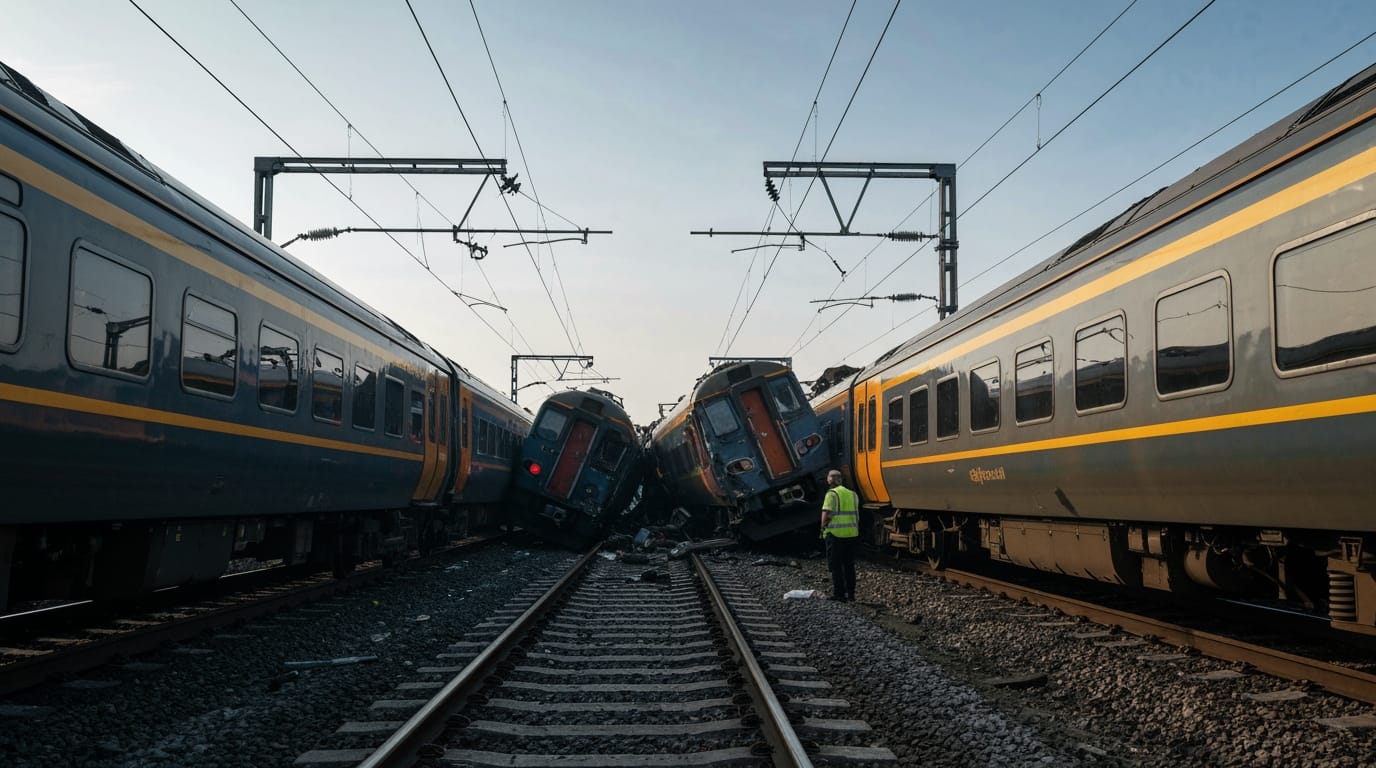
BEDFORD, UK – Two passenger trains collided north of London on Friday evening, triggering a significant emergency operation and leaving an undetermined number of people injured. The incident, which occurred in the Bedford area, approximately 56 to 60 miles north of the capital, has sent shockwaves through Britain's usually reliable rail network, leading to widespread service disruptions and immediate calls for a thorough investigation. British Transport Police confirmed they were responding to reports of the collision, with emergency services swarming the scene south of Bedford by 6:45 p.m. BST.
The Collision and Immediate Aftermath
The dramatic incident unfolded on the railway lines connecting London St Pancras to Leicester, a vital artery for commuters and intercity travelers. Unverified footage circulated on social media platforms shortly after the event, depicting the front of one train severely entangled with the rear of another. Despite the impact, both trains appeared to remain upright on the tracks, a detail that likely mitigated even more severe outcomes. One of the trains involved was identified as a Luton Airport Express service, showing visible damage. East Midlands Railway (EMR) trains were also reportedly involved.
The scale of the response was swift and extensive. The East of England Ambulance Service dispatched a comprehensive array of resources to the site, including multiple ambulance crews, an air ambulance, and a Hazardous Area Response Team, highlighting the severity of the situation on the ground. Bedfordshire Fire and Rescue Service crews were also in attendance, working to secure the area and assist those affected. Authorities quickly urged the public to steer clear of the vicinity to allow emergency personnel unobstructed access to the scene.
Casualties and Harrowing Witness Accounts
While emergency services have yet to release precise figures regarding casualties, media reports and firsthand accounts from passengers painted a grim picture of the immediate aftermath. James Murray, the Secretary of State for Health and Social Care, confirmed that "a number of people have been injured," extending gratitude to the first responders assisting those impacted. The National Union of Rail, Maritime and Transport Workers (RMT) echoed these concerns, expressing deep distress over "serious injuries sustained by on-board train staff and passengers."
Passengers on the affected trains described a terrifying experience. One individual, Peter Knapp, told the BBC that he saw "bloodied faces" and others who appeared to have suffered broken legs. Knapp himself sustained a back injury and recounted feeling as though he had been in a "bomb explosion," observing "smoke everywhere" within the train carriages. Another passenger, Shola Mene, described a "big bang" that sent people flying from their seats. Mene further detailed the chaos, noting that "someone just flew across and hit my husband in the face," resulting in "a lot of blood" and numerous facial injuries among those on board. These personal testimonies underscore the sudden and violent nature of the collision, leaving many shaken and requiring medical attention.
Widespread Disruption and Official Reactions
The collision immediately paralyzed a significant section of the rail network north of London. East Midlands Railway announced that it was unable to operate services into or out of the capital for the remainder of the day, leaving thousands of passengers stranded or facing extensive delays. Thameslink, another major operator serving the region, confirmed that all lines between Luton and Bedford were blocked, attributing the disruption to an "incident under investigation." The operational shutdown underscores the far-reaching impact of such an event on the intricate web of Britain's railway system.
Transport Minister Heidi Alexander publicly conveyed her deep concern following reports of the collision, signaling the government's close monitoring of the evolving situation. Such high-level attention highlights the gravity of the incident and the immediate need for transparency and reassurance to the traveling public. The priority remains the welfare of the injured and the safe clearance of the tracks to restore normal service.
The Path to Understanding: Investigations Underway
With emergency efforts ongoing, attention will soon shift to understanding precisely how this collision occurred. British Transport Police are leading the initial response, and a comprehensive investigation will follow. In the United Kingdom, railway incidents are typically scrutinized by specialized bodies such as the Rail Accident Investigation Branch (RAIB) and the Office of Rail and Road (ORR).
The RAIB operates independently, focusing on investigating accidents and incidents without assigning blame or liability. Its primary objective is to learn lessons to enhance railway safety and prevent similar occurrences in the future. The ORR, as the safety authority for Britain's railways, also plays a crucial role, working in collaboration with RAIB and BTP to determine if any breaches of health and safety law have occurred. This multi-faceted investigative approach is designed to uncover both the immediate and underlying causes of such complex incidents, drawing upon evidence from witnesses, CCTV, train data recorders, and track examinations. The findings from these investigations are critical for implementing necessary safety improvements across the rail network.
A Rare Yet Sobering Reminder of Rail Safety
Train collisions of this nature are considered relatively rare events within the British rail system, which has seen continuous improvements in safety over many years. Statistics generally indicate a downward trend in significant incidents and passenger fatalities on the railways since the turn of the century. However, recent data from Network Rail revealed a sobering trend, with accidental deaths on the railway reaching a five-year high between April 2024 and March 2025. While many of these incidents involve trespassers or level crossing accidents, rather than train-on-train collisions, the figures serve as a stark reminder of the inherent risks associated with railway operations.
This latest incident will undoubtedly prompt a renewed focus on operational safety protocols and infrastructure integrity. The UK's commitment to rail safety is consistently reinforced through rigorous investigation processes aimed at preventing future tragedies.
As night falls over Bedford, emergency crews continue their work under challenging circumstances, tending to the injured and beginning the arduous process of securing the scene. The collision serves as a powerful reminder of the vulnerabilities within even the most robust transportation systems and the unwavering dedication of those who respond when disaster strikes. The coming days and weeks will be crucial for understanding the full extent of the incident and ensuring that every possible lesson is learned to safeguard the millions who rely on Britain's railways.


