U.S. Air Force F-16 Fighter Jet Crashes During Approach at Spangdahlem Air Base
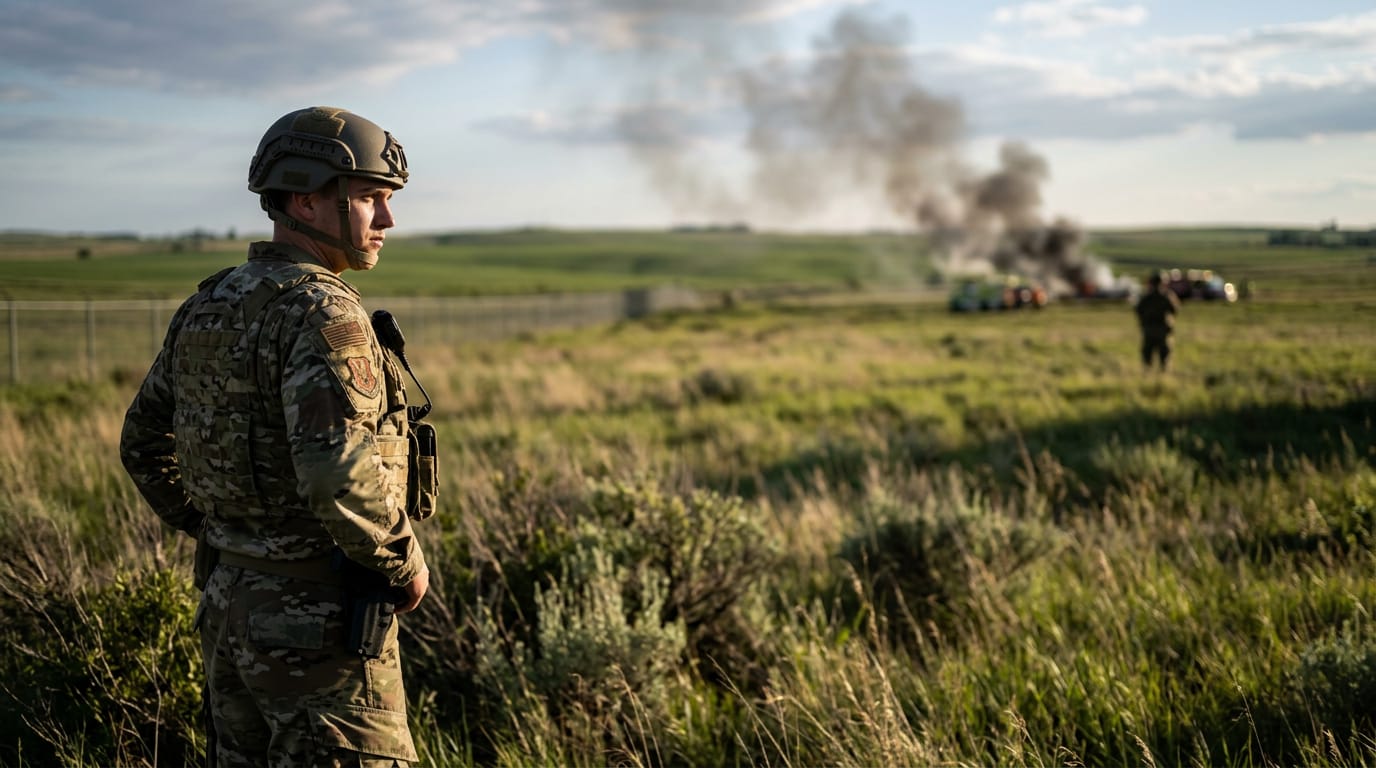
A United States Air Force F-16 Fighting Falcon crashed while attempting to land at Spangdahlem Air Base in western Germany, leaving the aircraft destroyed and sending thick black smoke over the rural Eifel landscape. The pilot managed to eject safely moments before impact, sustaining minor injuries. Military officials and German civil authorities launched immediate emergency response efforts while flight investigators began examining the circumstances surrounding the incident.
The accident occurred at approximately 2:30 p.m. local time as a flight of four jets completed a routine training exercise. Two aircraft were en route back to base when the mishap occurred on approach near the facility's single active runway. While one aircraft crashed, the three companion fighters diverted to nearby Ramstein Air Base, where they touched down without further incident.
Emergency Response and Scene Management
First responders moved quickly to contain the crash site on base grounds. Firefighters assigned to the 52nd Fighter Wing reached the debris field within minutes, having already taken standby positions during flight operations. Thick columns of dark smoke remained visible from surrounding villages across the Bitburg-Prüm district.
Local German civil emergency crews, including municipal fire departments and disaster relief personnel from the Bitburg-Prüm administrative district, deployed to assist military units. The emergency teams quickly doused remaining hot spots in the wide debris field to prevent residual jet fuel and synthetic materials from sparking larger brush fires.
Paramedics treated the pilot at the scene before transport to a local medical center for further observation. Medical evaluations confirmed non-life-threatening, minor injuries resulting from the high-velocity ejection sequence, allowing the pilot's release shortly thereafter. No ground injuries or property damage to private homes in nearby German communities were reported.
Operational Role of the 52nd Fighter Wing
The downed single-engine fighter was assigned to the 480th Fighter Squadron, the primary flying component of the 52nd Fighter Wing. The unit operates roughly two dozen F-16 Fighting Falcons out of Spangdahlem, maintaining an around-the-clock posture in support of NATO collective defense commitments and global contingency operations.
Known specialized operational missions of the 480th Fighter Squadron include the suppression and destruction of enemy air defenses. The unit's pilots frequently deploy on forward security missions across Europe and the Middle East. Routine regional training missions, such as the flight undertaken ahead of the crash, allow flight crews to maintain qualification benchmarks for tight-formation tactics, low-altitude maneuvering, and instrument approach patterns.
Spangdahlem serves as one of the most strategically significant aviation installations operated by the U.S. military in Europe, alongside Ramstein Air Base located southeast in Rhineland-Palatinate. Established in the mid-1950s, the installation houses approximately 5,000 active-duty personnel, civilian staff, and their families. The installation also directly employs several hundred local German nationals in logistics, engineering, and support services.
Investigative Procedures and Equipment Safety
Military safety boards have formally launched a dual-tier investigation into the cause of the crash. Standard Air Force safety regulations require two distinct panels: a safety investigation board and an accident investigation board. The first panel works expeditiously to determine systemic hazards that could affect the wider fleet, while the latter produces a public record detailing legal liability and specific physical factors.
Investigators are analyzing black box flight telemetry, engine monitoring records, radar tracks, and communications between the pilot and the Spangdahlem control tower. Technicians will also evaluate mechanical systems, potential bird strike impacts, and sudden engine performance disruptions during final landing configurations.
The incident follows another recent loss of an American F-16. Just days earlier, a Fighting Falcon belonging to the Texas Air National Guard came down during a training run over northern Michigan. That pilot survived after ejecting. Although investigators have not linked the two mishaps, the proximity of the dates places heightened scrutiny on maintenance pipelines and airframe fatigue in legacy fighter fleets.
Host Nation Ties and Community Impact
The quick coordination between American airmen and German first responders highlighted long-standing bilateral protocols established in the Eifel region. Decades of continuous joint emergency drills have created interoperability between military firefighters and nearby municipal brigades.
Despite smooth emergency management, aviation accidents around active bases often reopen domestic discussions in German host communities regarding flight safety, training corridors, and residential aircraft noise. Residents in neighboring towns remain sensitive to military air activity, balancing the regional economic benefits of the base against the inherent disruptions of high-tempo jet training.
German local administrators praised the rapid containment of the crash scene and the open coordination maintained by base leadership throughout the afternoon. The regional government indicated that environmental safety teams are running routine tests on surrounding soil and groundwater near the crash trajectory to detect any petrochemical contamination from unburned fuel or fire-retardant foam.
Looking Forward
Normal airfield operations resumed gradually following the removal of priority wreckage and completion of primary safety sweeps across the tarmac. With the pilot cleared of severe injury, investigators remain focused on recovering mechanical flight components from the debris zone.
The eventual findings will yield safety directives for maintenance personnel and flight crews across the broader F-16 fleet. As regional security arrangements across Europe maintain high operational tempos, the Spangdahlem facility continues its day-to-day training and defensive commitments while awaiting the official technical verdict on the landing accident.


