U.S. Dispatches Second Aircraft Carrier to Middle East Amid Soaring Iran Tensions
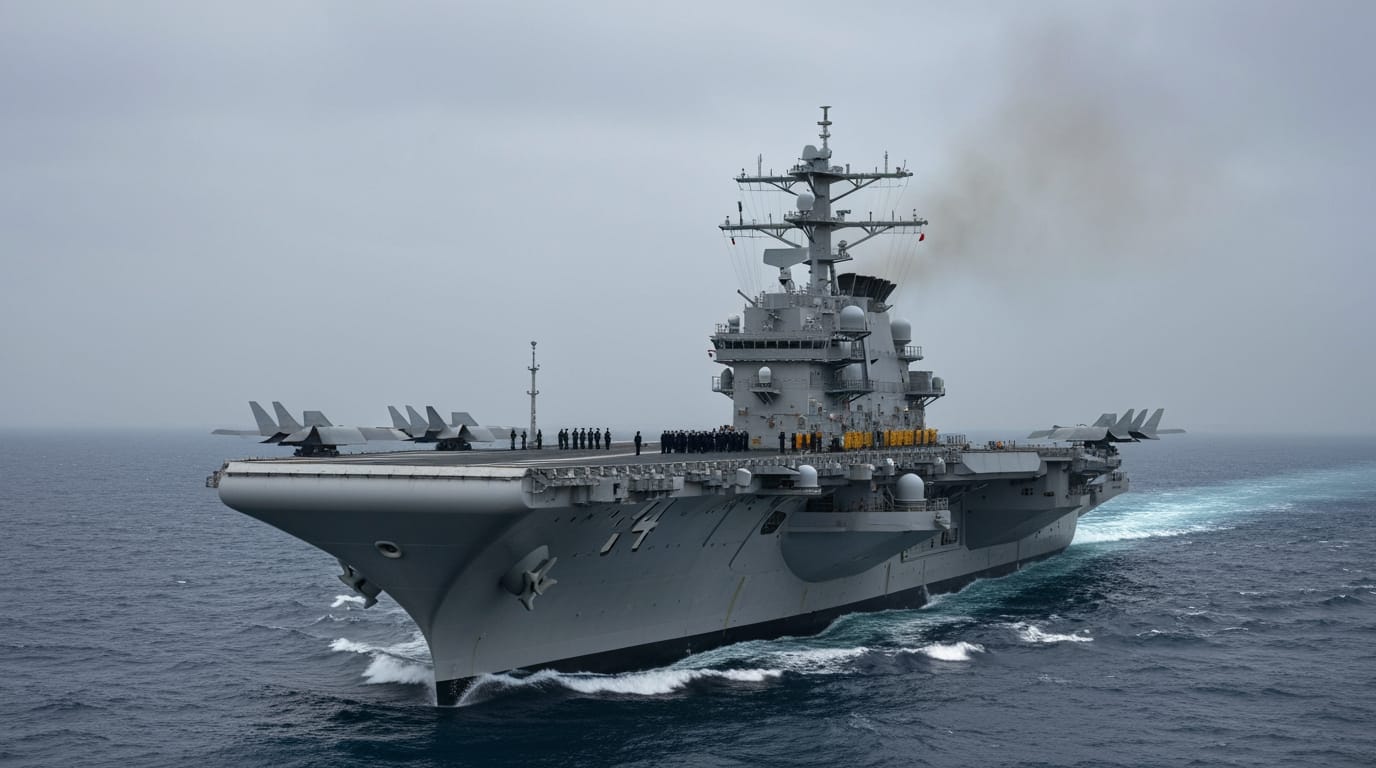
WASHINGTON D.C. — The United States has ordered its newest and largest aircraft carrier, the USS Gerald R. Ford, to deploy to the Middle East, a move poised to significantly escalate military pressure on Iran. The deployment, confirmed Friday by U.S. officials, will place two American carrier strike groups in the region simultaneously, marking a rare and potent display of force as the Trump administration seeks to compel Tehran into a new nuclear agreement and address ongoing regional destabilization.
The USS Gerald R. Ford, currently sailing in the Caribbean Sea, received the directive to cross the Atlantic and proceed to the Middle East. It will join the USS Abraham Lincoln and its accompanying guided-missile destroyers, which arrived in the Arabian Sea more than two weeks ago. This dual-carrier presence dramatically expands the military firepower available to the U.S. in a region already fraught with heightened sensitivities.
A Deliberate Show of Force
The decision to send the USS Gerald R. Ford comes amidst a period of intense pressure from the Trump administration on Iran. President Donald Trump has openly threatened military action unless Iran complies with his demands regarding its nuclear program and ceases what the U.S. describes as destabilizing activities in the region. Officials, speaking on condition of anonymity to discuss sensitive military movements, indicated the Ford's deployment is part of this broader strategy to coerce Iran.
The USS Gerald R. Ford's journey will extend a deployment that began in late June 2025, meaning its crew of approximately 4,200 sailors will have been at sea for roughly eight months upon its arrival in the Middle East. This extended timeline raises concerns about naval readiness and maintenance schedules, as Navy officials had previously warned that the Ford and its strike group were due for routine upkeep. However, the Pentagon appears to have prioritized the immediate need for a robust presence in the Middle East over scheduled maintenance, underscoring the urgency of the current situation.
Unrest in Iran and Diplomatic Stalemate
The deployment coincides with ongoing internal unrest in Iran, marked by widespread protests over economic hardship and political repression. Thousands have reportedly been killed in Tehran's crackdown on these demonstrations, with activists reporting a death toll exceeding 7,000 and tens of thousands detained. President Trump had previously linked potential U.S. military involvement to Iran's treatment of protesters, warning that "if they start killing people as they have in the past, we'll get involved."
Diplomatic efforts between Washington and Tehran have been strained, with recent indirect negotiations in Oman failing to produce a breakthrough. Despite earlier suggestions from President Trump that another round of talks might be imminent, these negotiations have not materialized, further intensifying the standoff. Israeli Prime Minister Benjamin Netanyahu, who recently held discussions with Trump, has urged the administration to press Tehran to scale back its ballistic missile program and end support for militant groups like Hamas and Hezbollah as part of any deal.
Strategic Implications and Regional Concerns
The arrival of a second carrier strike group significantly amplifies U.S. military capabilities in the Middle East. Each strike group, including the flagship aircraft carrier, a carrier air wing with multiple squadrons, a destroyer squadron, and a guided-missile cruiser, provides formidable assets for long- and short-range strikes, intelligence and surveillance, and defense against air, sea, and subsea threats. This combined presence offers President Trump a wider range of military options, from enhanced deterrence to the potential for comprehensive strikes on Iran if deemed necessary.
The deployment has drawn international attention and concern. The United Nations expressed apprehension over the heightened military tensions, with a spokesperson stating that increased military activities and rhetoric "go counter to the stability of the region." Neighboring Gulf Arab nations have also voiced concerns, warning that any attack could spiral into a wider regional conflict that could disrupt global oil supplies. Iran, for its part, has condemned the U.S. military buildup as an "act of war" and warned of a "swift and comprehensive" response to any attack.
This is not the first time the U.S. has maintained a dual-carrier presence in the Middle East. In October 2023, following the Hamas attack on Israel, the USS Dwight D. Eisenhower was deployed to the Eastern Mediterranean to join the USS Gerald R. Ford, which was already on station, in a show of deterrence against regional escalation. More recently, in early 2025, the USS Nimitz joined the USS Carl Vinson in the Arabian Sea amidst rising tensions between Israel and Iran. These prior deployments highlight a recurring pattern of surging naval power in response to regional crises.
Strain on Readiness and Future Outlook
The continuous demand for carrier deployments to volatile regions places considerable strain on the U.S. Navy's resources and personnel. Extended deployments can delay critical maintenance, disrupt training schedules, and impact the morale of service members. Such shifts also have ripple effects on global force readiness, potentially affecting onward deployments in other priority areas, including the Trump administration's focus on deterring China.
Beyond the aircraft carriers, the U.S. has further augmented its military footprint in the region. This includes the deployment of Terminal High Altitude Area Defense (THAAD) missile batteries and additional Patriot battalions, as well as an increased presence of fighter jets and refueling tankers. Approximately 40,000 U.S. troops are currently stationed in the Middle East, operating from ten bases across the region.
As the USS Gerald R. Ford makes its way to the Middle East, the region remains on high alert. The dual-carrier presence underscores the gravity of the U.S. administration's stance on Iran, but it also elevates the risks of miscalculation and unintended escalation in an already combustible part of the world. The coming weeks are expected to be critical as global powers watch to see whether this significant display of military might will lead to a diplomatic resolution or push the region closer to a broader conflict.


