U.S. Escalates Call for Military Action Against Latin American Drug Cartels, Drawing Regional Pushback
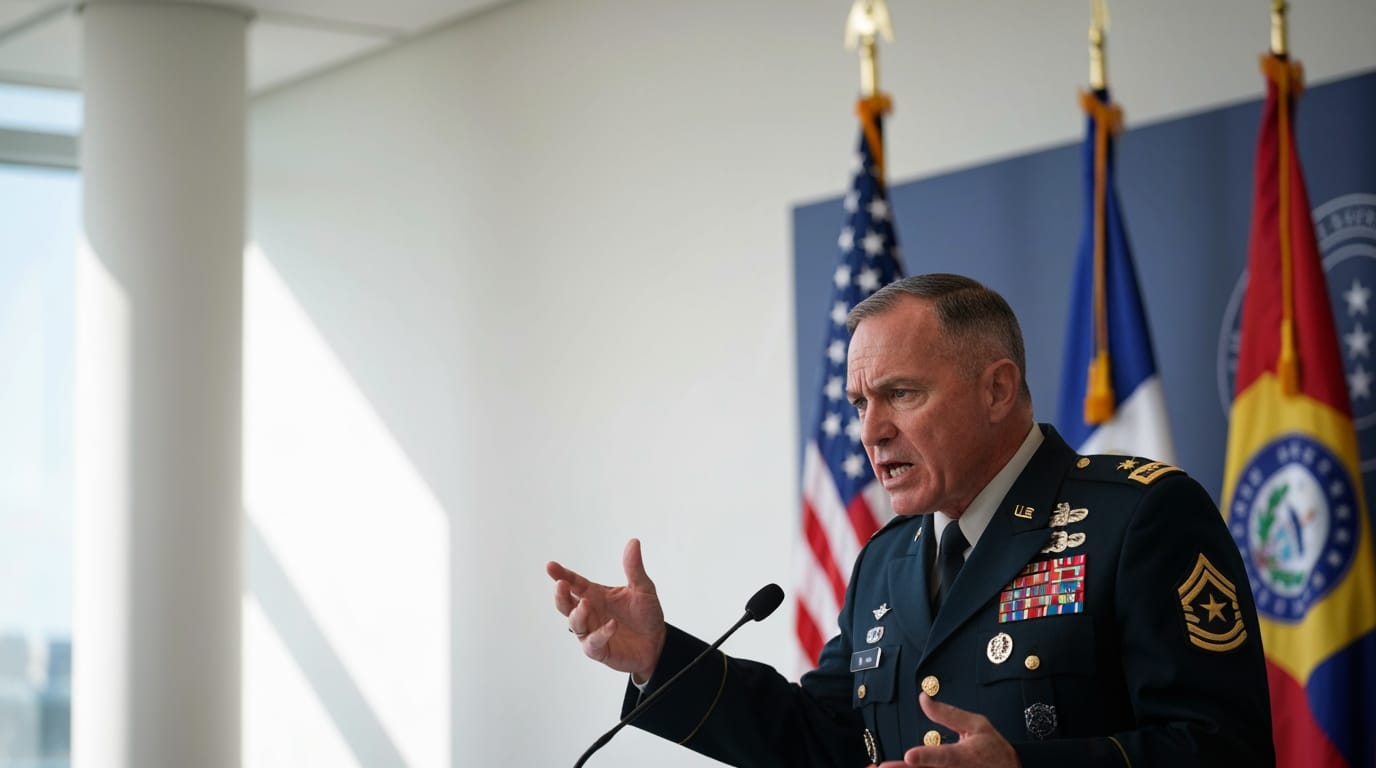
WASHINGTON D.C. – The United States is intensifying its push for Latin American nations to deploy military force against powerful drug cartels, marking a significant shift in strategy that prioritizes national security over traditional law enforcement approaches. This aggressive stance, articulated by senior U.S. officials, comes amidst growing concerns over the flow of illicit drugs, particularly fentanyl, into the United States. However, the call for increased military intervention faces considerable resistance and skepticism from Latin American leaders, who emphasize sovereignty and warn of potential destabilization in an already volatile region.
U.S. Policy Shift: From Law Enforcement to National Security Threat
The Trump administration has explicitly reclassified the fight against drug cartels as a national security imperative, moving away from viewing it solely as a criminal justice issue. White House homeland security adviser Stephen Miller publicly stated that decades of effort indicate "there is not a criminal justice solution to the cartel problem," asserting that these organizations "can only be defeated with military power." This sentiment was echoed by Defense Secretary Pete Hegseth at the "Americas Counter Cartel Conference" in Miami, where he urged Latin American countries to adopt a more aggressive military posture, cautioning that the U.S. is prepared to act alone if necessary.
Underpinning this strategic pivot is the administration's designation of several Latin American drug cartels as Foreign Terrorist Organizations (FTOs). This designation, applied to groups like Mexico's Sinaloa Cartel, Venezuela's Tren de Aragua, and El Salvador's MS-13, provides a legal framework for potential military actions. President Donald Trump reportedly issued a directive instructing the Pentagon to prepare military options, which include naval and drone strikes, special forces operations, intelligence support, and precision targeting against cartel leaders and infrastructure. While "boots on the ground" in Mexico are reportedly not under consideration, the contemplation of such kinetic actions represents a notable escalation in U.S. anti-drug policy. The rationale behind this intensified approach is largely attributed to the cartels' role in the fentanyl crisis and their perceived threat to U.S. border security.
Latin American Resistance: Sovereignty and the Specter of Intervention
Despite the U.S. administration's resolute stance, the proposal for increased military action has been met with firm opposition from several Latin American governments, particularly Mexico. Mexican President Claudia Sheinbaum has unequivocally rejected any unilateral U.S. military intervention on Mexican soil, asserting that an "invasion" is "absolutely off the table." Following reports of U.S. directives, Sheinbaum reiterated her government's position that while cooperation and collaboration are welcome, they do not extend to foreign military presence. She emphasized Mexico's national sovereignty and territorial integrity as non-negotiable.
The strong pushback from Mexico highlights a deep-seated historical sensitivity in the region regarding U.S. military intervention. Many Latin American nations view such actions as violations of their sovereignty and a return to past eras of contentious foreign policy. The recent "Americas Counter Cartel Conference," intended to foster a united front, saw attendance primarily from governments closely aligned with the Trump administration, while key countries with significant drug production and trafficking issues, such as Mexico, Colombia, and Brazil, notably did not participate. This divergence underscores the differing perspectives on how best to confront transnational criminal organizations and the reluctance of some nations to embrace a militarized strategy led by the United States.
A Troubled History of Militarization in the War on Drugs
The idea of using military force against drug cartels is not new in U.S.-Latin American relations. For decades, the U.S. has engaged in various forms of military aid, training, and interdiction efforts in the region, particularly through initiatives like the Andean Initiative in the late 1980s and early 1990s, and later, Plan Colombia. These past efforts, often characterized by significant U.S. Department of Defense involvement, aimed to disrupt drug production and trafficking at their source.
However, the historical record of militarized anti-drug strategies presents a mixed picture. While some operations, such as those that targeted the Medellín and Cali cartels in Colombia, achieved initial successes, they often led to unintended consequences. Critics point out that dismantling established cartels frequently resulted in the fragmentation of criminal networks, leading to the emergence of smaller, more adaptable, and often more violent groups. Moreover, concerns about human rights abuses by U.S.-trained security forces and the potential for exacerbating internal conflicts have long shadowed these interventions. The effectiveness of a supply-side, military-heavy approach has been consistently debated, with some experts arguing it has had a negligible long-term impact on the overall drug supply entering the United States.
The Perilous Path Ahead: Potential Consequences and Unintended Outcomes
The proposed escalation of military involvement carries significant risks and potential consequences for the region. Diplomatic backlash is seen as inevitable, with non-consensual military operations on foreign soil potentially damaging bilateral relations for years. Analysts warn that such actions could lead to a severe escalation of violence, not only within Latin American countries but also with potential spillover effects across borders. Cartels, known for their ruthlessness and significant firepower, including armored vehicles and advanced weaponry, could retaliate by targeting U.S. personnel or even U.S. citizens in the region or domestically.
There are also grave humanitarian concerns, as military strikes against cartel targets could result in civilian casualties in areas where criminal organizations are deeply embedded within communities. Furthermore, critics argue that a purely military approach fails to address the underlying socioeconomic factors that contribute to the drug trade and the power of cartels, such as corruption, poverty, and lack of opportunity. The focus on kinetic operations may also sideline efforts to strengthen judicial systems, promote police reform, and build democratic institutions—elements deemed crucial for long-term stability and effective crime reduction. The fundamental question remains whether military force, even with precision targeting and intelligence support, can effectively dismantle complex, adaptive criminal enterprises or if it will merely create power vacuums that lead to more brutal and fragmented forms of organized crime.
The U.S. insistence on military action against drug cartels in Latin America represents a bold and potentially risky shift in foreign policy. Driven by domestic concerns over drug flows and border security, the administration is advocating for a strategy that many in the region view with apprehension due to historical context and concerns over national sovereignty. While the U.S. seeks a definitive solution to a persistent problem, the path of militarization is fraught with diplomatic challenges, the potential for escalating violence, and questions about its ultimate effectiveness against deeply entrenched criminal networks. The coming months will likely test the limits of bilateral cooperation and define the future of anti-drug efforts across the Americas.


