U.S. Indicts Sinaloa Governor and Top Officials on Sweeping Drug Trafficking Charges, Escalating Bilateral Tensions
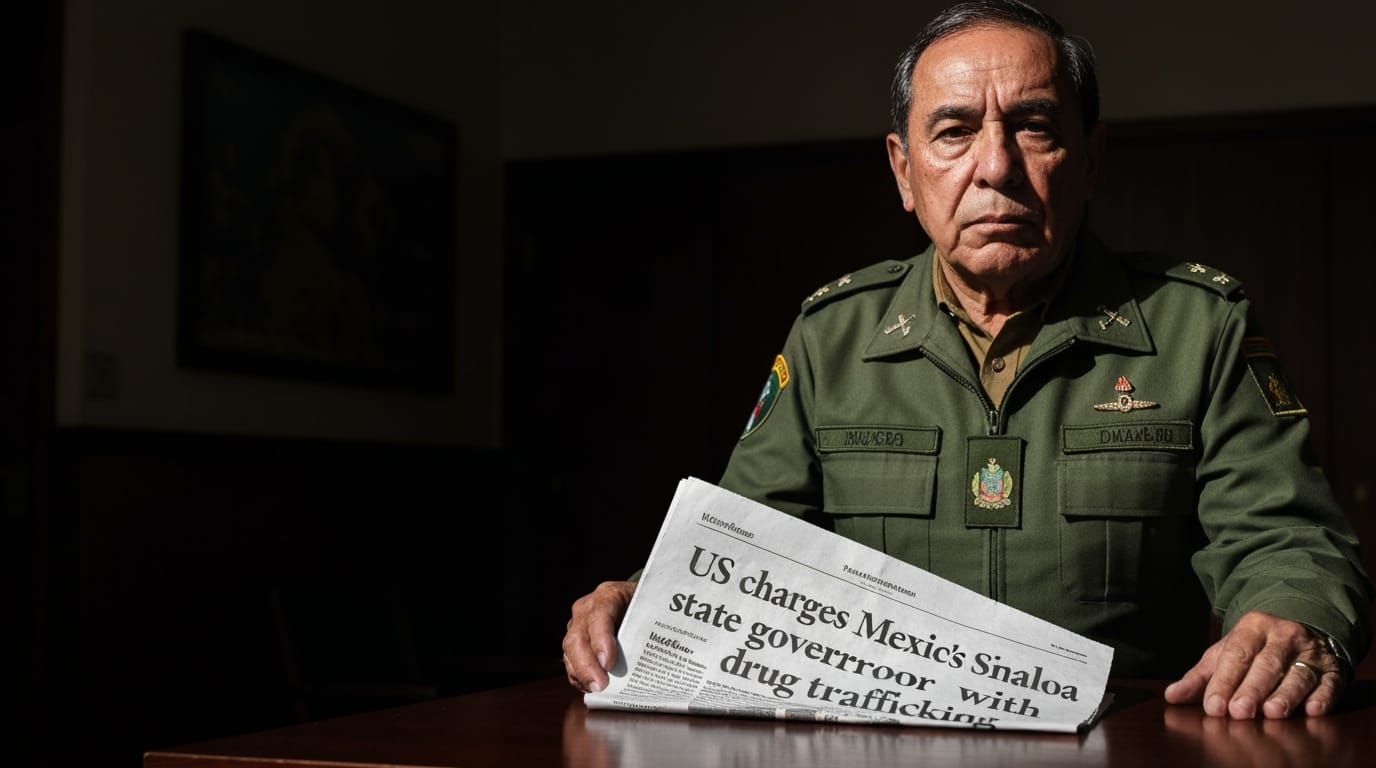
NEW YORK, NY – In a dramatic escalation of the global fight against drug trafficking and corruption, the United States Department of Justice has unsealed an indictment charging Rubén Rocha Moya, the sitting governor of Mexico's Sinaloa state, along with nine other current and former high-ranking Mexican officials, with drug trafficking and weapons offenses. The charges, made public on Wednesday, April 29, 2026, accuse the officials of conspiring with the notorious Sinaloa Cartel to facilitate the massive importation of illicit narcotics into the United States in exchange for political influence and substantial bribes. This unprecedented legal action against a sitting Mexican governor threatens to significantly strain diplomatic relations between the two nations and underscores the deep-seated challenge of cartel infiltration into government institutions.
The Charges Unveiled: A Network of Alleged Corruption
The indictment, filed in federal court in the Southern District of New York, paints a grim picture of systemic corruption, alleging that Governor Rocha Moya and his co-defendants leveraged their positions to actively aid the Sinaloa Cartel. The accused include Senator Enrique Inzunza Cázarez, a member of Mexico's ruling Morena party and former secretary-general of Sinaloa, and Juan de Dios Gámez Mendívil, the current mayor of Culiacán, the state capital. The charges also extend to other former and current law enforcement and government figures within Sinaloa, including a deputy attorney general, former police chiefs, and a former secretary of public security.
U.S. Attorney Jay Clayton and DEA Administrator Terrance C. Cole announced the charges, emphasizing that the alleged collaboration enabled the cartel to traffic enormous quantities of fentanyl, heroin, cocaine, and methamphetamine across the U.S.-Mexico border. Prosecutors contend that the Sinaloa Cartel, specifically the "Los Chapitos" faction led by the sons of Joaquín "El Chapo" Guzmán, provided crucial support to Rocha Moya's 2021 gubernatorial campaign. This support allegedly included kidnapping and intimidating political rivals and even manipulating ballots to ensure his victory. In return for this assistance, Rocha Moya reportedly met with cartel leaders and promised them protection, allowing them to operate with "impunity" in Sinaloa.
The indictment further details how other officials allegedly received millions of dollars in bribes to protect drug shipments, provide intelligence on law enforcement operations, and shield cartel members from investigation and prosecution. Disturbingly, some Mexican police officers are accused of directly participating in the cartel's violence, including kidnappings and killings of those suspected of cooperating with U.S. authorities. One former Culiacán municipal police commander, Juan Valenzuela Milán, faces additional charges related to the alleged kidnapping and murder of a U.S. Drug Enforcement Administration (DEA) source and a relative of that person. The offenses outlined in the indictment carry severe penalties, including a minimum sentence of 40 years in prison, with prosecutors potentially seeking life imprisonment for the defendants.
Sinaloa's Shadow: A State Entwined with Cartel Influence
Sinaloa state, the birthplace and stronghold of the infamous Sinaloa Cartel, has long been recognized as a critical hub for global narcotics trafficking. The region's history is deeply intertwined with organized crime, making the U.S. allegations against its highest-ranking officials particularly resonant. The Sinaloa Cartel, designated by the U.S. government as a terrorist organization, has demonstrated a pervasive ability to corrupt institutions and exert control through violence and bribery.
U.S. officials, including DEA Administrator Terrance Cole, stressed that criminal organizations like the Sinaloa Cartel "would not operate as freely or successfully without corrupt politicians and law enforcement officials on their payroll." This indictment represents a significant, assertive step by the U.S. to confront what it perceives as deep-seated corruption facilitating the flow of deadly drugs into American communities. The charges implicitly challenge Mexico's capacity to control its own territory and eradicate the corrosive influence of drug cartels on its political system.
Diplomatic Fallout and Political Ramifications
The U.S. charges have ignited a diplomatic firestorm, creating a "major blow" to bilateral relations between the United States and Mexico. Mexico's Foreign Ministry (SRE) responded by acknowledging receipt of the extradition requests for the accused officials but stated that Washington had not provided sufficient evidence to substantiate the claims. Governor Rocha Moya vehemently denied the allegations, branding them "completely untrue and without any basis whatsoever" and an "attack on Mexico's political project" and its national sovereignty. He reiterated his innocence, stating, "This will be demonstrated conclusively at the appropriate time."
The indictment poses a significant "political conundrum" for Mexican President Claudia Sheinbaum, as several of the charged officials, including Governor Rocha Moya and Senator Inzunza, are members of her ruling Morena party. Rocha Moya was also a staunch ally of former President Andrés Manuel López Obrador, who advocated a "Hugs, Not Bullets" policy, a strategy focused on addressing root causes of crime rather than direct confrontation with cartels. Critics have suggested that this approach may have inadvertently allowed cartels to strengthen their hold.
U.S. Ambassador to Mexico, Ronald Johnson, affirmed U.S. support for the charges, highlighting the shared commitment of both nations to combat drug trafficking. However, the Mexican government's response indicates a likely prolonged legal and diplomatic battle over the extradition of the accused. The move by the Trump administration is seen as its most aggressive push to date in investigating and prosecuting Mexican officials suspected of complicity with drug cartels, a key priority for the administration. The situation underscores the complex challenges in U.S.-Mexico cooperation, particularly when allegations directly implicate high-level government figures.
A Precedent of Corruption and the Path Forward
While the scope and target of this indictment are striking, it is not an entirely isolated incident. The U.S. has previously pursued charges against high-ranking Mexican officials for drug-related corruption. Notably, in 2023, former Mexican Public Security Secretary Genaro García Luna was convicted in a U.S. court and sentenced to 38 years in prison for taking bribes from the Sinaloa Cartel, a conviction he is currently appealing. This earlier case set a precedent, demonstrating the U.S. government's resolve to target corruption at the highest levels of Mexican officialdom.
The current charges against Governor Rocha Moya and his associates send an unequivocal message from Washington: "no matter your title or position, we are committed to bringing you to justice." The fallout from this indictment will undoubtedly have profound implications for Mexico's political landscape, its justice system, and the future trajectory of its relationship with the United States. As both nations grapple with the pervasive threat of organized crime, the coming months will reveal the true extent of the diplomatic and legal repercussions of these sweeping allegations.


