U.S. Lauds Release of Detained Americans Amidst Venezuelan Political Upheaval
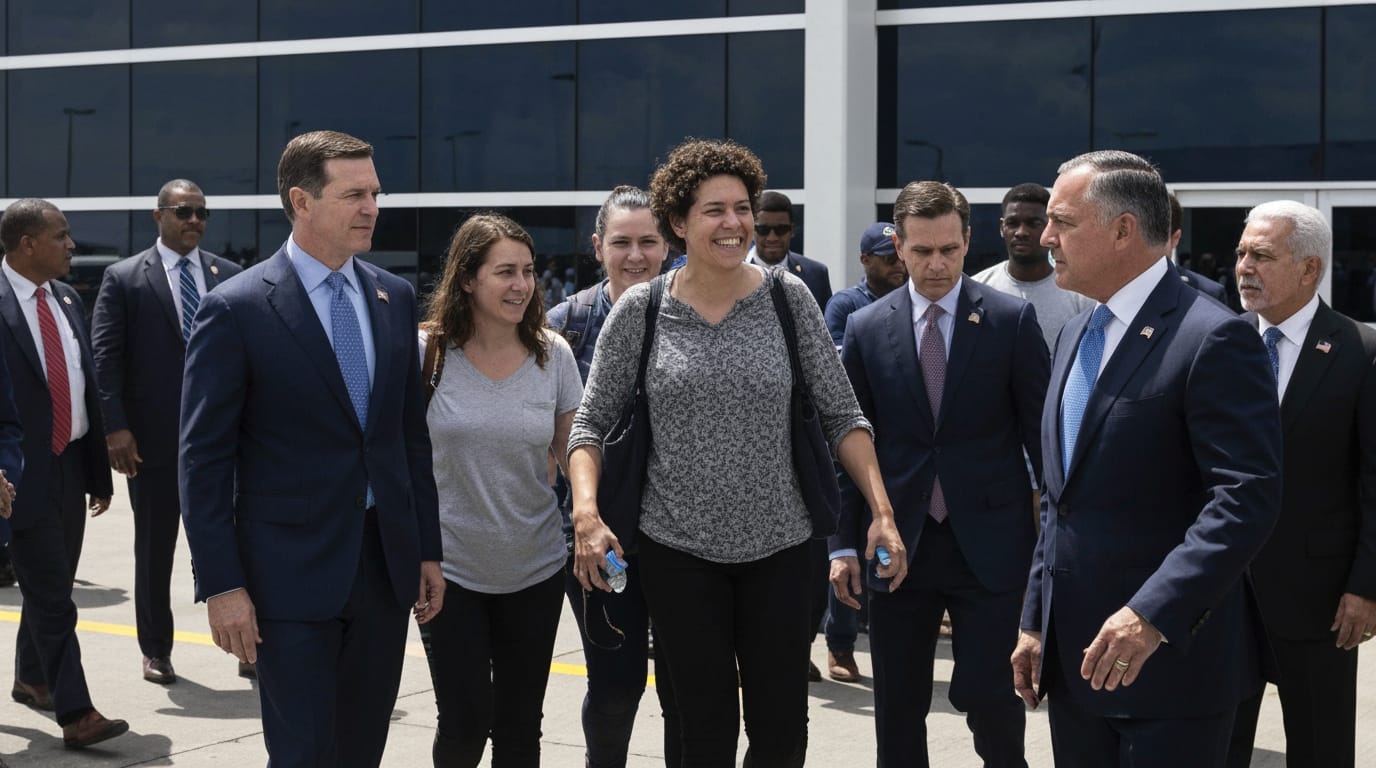
WASHINGTON D.C. — The United States is welcoming home a number of its citizens detained in Venezuela, a development lauded by the Trump administration as a significant diplomatic achievement following a dramatic shift in the South American nation's political landscape. These recent releases, occurring in early January 2026, come in the wake of U.S. forces capturing Venezuelan President Nicolás Maduro in a nighttime raid, leading to an interim leadership taking the helm in Caracas. The move marks a new chapter in the often-strained relationship between Washington and Caracas, characterized by high-stakes negotiations and humanitarian appeals.
A New Era of Releases Under Interim Leadership
The latest wave of repatriations in January 2026 has been directly linked to the recent political changes in Venezuela. Following the reported capture of President Nicolás Maduro by U.S. forces on January 3, 2026, and the subsequent establishment of an interim government, the release of political prisoners and foreign nationals has accelerated. U.S. President Donald Trump praised these actions, describing them as a "smart gesture" and a step toward cooperation, indicating that Venezuela was "seeking peace." White House officials have credited President Trump’s leadership and “maximum leverage” for securing these freedoms, with the State Department welcoming the releases as an "important step in the right direction by the interim authorities."
While the exact number of Americans freed in this most recent phase has varied in reports, one instance saw the release of ten Americans in July 2025, which the Trump administration noted brought home all wrongfully detained Americans in Venezuela at that time. These releases have been part of broader efforts by the interim Venezuelan leadership to free a "large number" of political prisoners, a gesture reportedly made at Washington's request. However, the lack of transparency from the Venezuelan government regarding specific numbers and identities has led human rights groups, such as Foro Penal, to question the extent of the releases, noting that only a fraction of estimated political detainees have been confirmed freed.
Precedent for Prisoner Diplomacy: The Biden Administration's Exchanges
The current releases build upon a history of complex prisoner exchanges between the U.S. and Venezuela. Prior to the recent political shifts, the Biden administration engaged in at least two significant swaps to secure the freedom of American citizens. In October 2022, seven Americans, including five executives from Houston-based CITGO Petroleum known as the "CITGO 6," Marine veteran Matthew Heath, and Osman Khan, were released. This exchange was made in return for the freeing of two nephews of then-President Nicolás Maduro's wife, who had been imprisoned in the U.S. on drug charges. The CITGO 6 had been arrested in Venezuela in 2017 on embezzlement charges, with their families consistently maintaining their innocence and describing them as victims of political maneuvering.
A subsequent major deal occurred in December 2023, where the U.S. secured the release of ten Americans, including Joseph Cristella, Eyvin Hernandez, Jerrel Kenemore, and Savoi Wright. In exchange, the U.S. granted clemency to Alex Saab, a close ally of President Maduro facing money laundering charges in Florida, and facilitated the return of Leonard Francis, known as "Fat Leonard," a fugitive defense contractor central to a Pentagon bribery scandal. This 2023 agreement, brokered by Qatar, also involved Venezuela pledging to release 20 political prisoners and suspend arrest warrants for three others.
The Geopolitical Chessboard and Human Cost
These prisoner exchanges underscore the intricate and often fraught relationship between the U.S. and Venezuela, where humanitarian concerns frequently intertwine with geopolitical strategies. The decision by both the Biden and Trump administrations to engage in these swaps has been a consistent aspect of U.S. foreign policy, prioritizing the return of its citizens, particularly those deemed wrongfully detained. Each negotiation, however, has involved significant concessions, drawing criticism from some who argue such exchanges might incentivize future detentions or create a false equivalence between those wrongfully held and individuals legitimately prosecuted.
The recent events of January 2026, including the "capture" of Maduro and the subsequent U.S. assertion of influence in Venezuela's transition, represent an unprecedented shift in this dynamic. President Trump's statements about the U.S. potentially "running" Venezuela during this transition period highlight a bold new approach. This shift has been accompanied by reports of further releases of political prisoners, which some observers link to the U.S. administration's leverage and demands for access to Venezuela's oil reserves. Another instance of exchange in July 2025 involved the repatriation of "scores of migrants" deported by the U.S. to El Salvador, including alleged gang members, in return for detained Americans.
Looking Ahead: The Path to Normalization
The releases of American citizens, especially in the context of the dramatic political changes in Venezuela in early 2026, signify a complex and evolving phase in bilateral relations. For the returned individuals and their families, these moments represent the end of years of uncertainty and hardship. As new leadership in Venezuela works to establish its authority, and with the Trump administration actively shaping the transitional period, the ongoing release of detainees is portrayed as a critical component of efforts to foster greater stability and potentially normalize diplomatic ties. The U.S. continues to press for transparency regarding all detained individuals, emphasizing that the use of unjust detention as a tool of political repression must end. The future trajectory of U.S.-Venezuela relations remains uncertain, but the repatriation of American citizens stands as a consistent, if hard-won, priority across different U.S. administrations.


