U.S. Military Footprint Across Europe: A Shifting Strategic Landscape
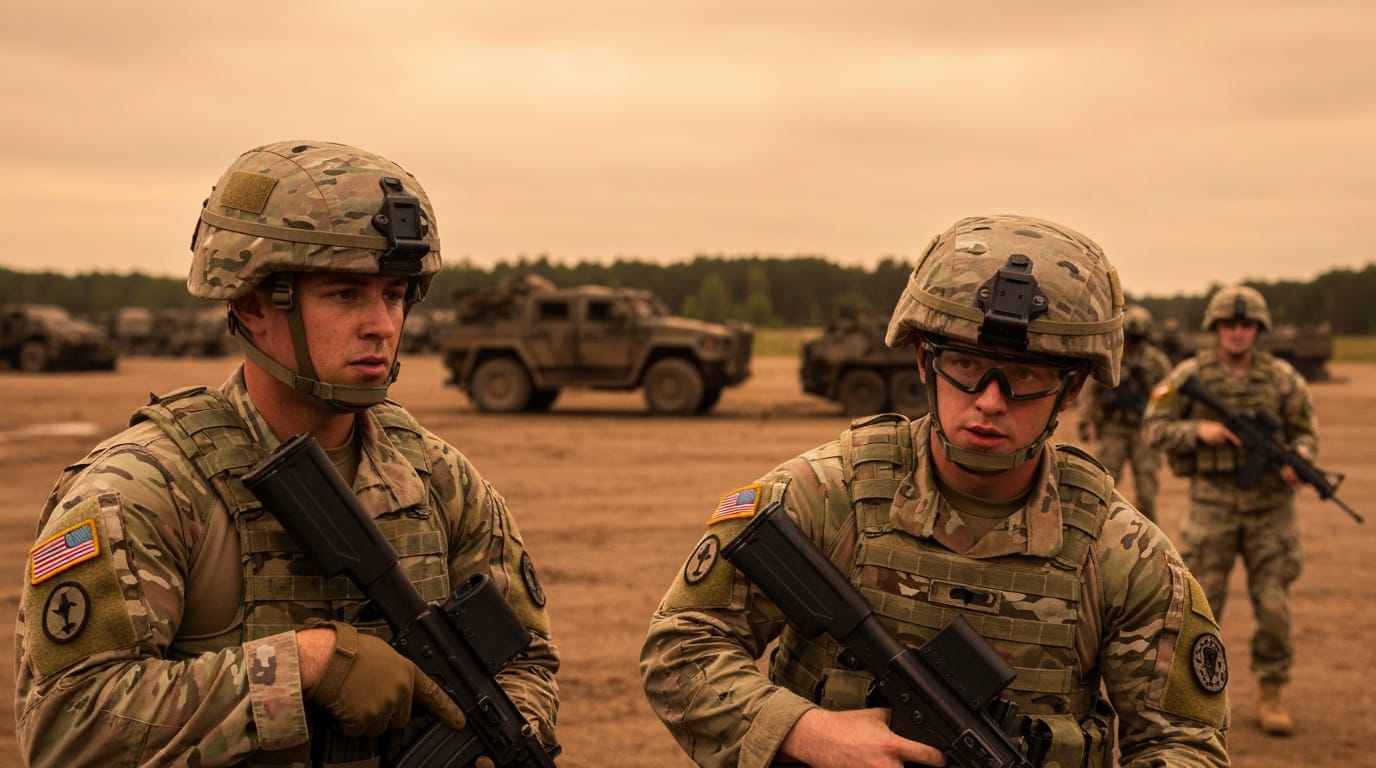
The United States maintains a substantial military presence across Europe, a deployment rooted in post-World War II stability and Cold War deterrence, which has evolved significantly in response to contemporary geopolitical shifts, particularly Russia's actions in Ukraine. With approximately 80,000 U.S. service members currently stationed on the continent, a figure that fluctuates with ongoing exercises and rotations, the U.S. force posture remains a cornerstone of NATO's collective defense and a critical enabler for global power projection. This enduring commitment, however, is undergoing re-evaluation and adjustment, prompting questions among allies and within Washington about the future distribution and role of American troops.
Germany Remains Central Hub Amidst Evolving Dynamics
Germany continues to serve as the largest strategic hub for U.S. military operations in Europe, hosting over 35,000 active-duty troops. This extensive presence includes some of the most critical installations, such as Ramstein Air Base, the largest U.S. Air Force installation in Europe, functioning as a vital logistics and command center for NATO and a hub for U.S. Air Force Africa. Other key facilities include U.S. Army Garrison Stuttgart, home to the headquarters of both U.S. European Command (EUCOM) and U.S. Africa Command (AFRICOM), coordinating operations across two continents. U.S. Army Garrison Bavaria, encompassing sites like Grafenwöhr, Vilseck, and Hohenfels, provides the largest training area for American forces in Europe, crucial for maintaining readiness and interoperability with allies.
Historically, the U.S. military presence in Germany peaked during the Cold War with over 400,000 troops, primarily to counter the Soviet threat. While numbers have significantly reduced since then, Germany's central location and robust infrastructure continue to make it indispensable. However, recent discussions have involved planned reductions of approximately 5,000 troops from Germany, reflecting a broader strategic review and calls for European allies to assume greater defense responsibilities.
Southern Europe: Italy and Spain as Maritime and Air Anchors
Italy hosts the second-largest concentration of U.S. forces in Europe, with roughly 12,000 American service members. Major installations include Aviano Air Base, home to the 31st Fighter Wing, and U.S. Army Garrison Italy in Vicenza, where the 173rd Airborne Brigade acts as a primary contingency response force for rapid deployment across Europe and Africa. Naval Air Station Sigonella in Sicily is a critical maritime patrol and logistics hub, while Naval Support Activity Naples serves as the headquarters for U.S. Naval Forces Europe-Africa and the U.S. Sixth Fleet, overseeing naval operations throughout the Mediterranean. These bases are vital for projecting U.S. power in Southern Europe and into the Middle East and Africa.
Spain also maintains a significant U.S. military footprint, accommodating nearly 4,000 personnel. These forces operate from important naval and air bases near the Strait of Gibraltar, providing strategic access and capabilities for U.S. operations in the region. Italy and Spain’s roles underscore the importance of their geographic positions for air and naval power projection.
Eastern Flank Reinforcement: Poland, Romania, and the Baltics
In recent years, the focus of U.S. deployments has increasingly shifted eastward, largely in response to Russia's aggression in Ukraine. Poland has become a key strategic partner, hosting approximately 10,000 U.S. troops, primarily on a rotational basis. The U.S. leads an enhanced Forward Presence (eFP) Battlegroup in Poland and deploys rotational Armored Brigade Combat Teams as part of Operation Atlantic Resolve, aimed at bolstering deterrence on NATO's eastern flank. The V Corps Forward Headquarters in Poznań represents a permanent U.S. Army presence, and Poland also hosts a critical logistical hub in Rzeszów, supporting global military assistance to Ukraine.
However, recent announcements concerning troop movements in Poland have generated confusion. A planned deployment of 4,000 rotational U.S. troops was initially halted, only to be followed by a statement from President Donald Trump pledging an "additional" 5,000 troops to Poland. This dynamic situation highlights ongoing adjustments in U.S. force posture and allied concerns regarding clarity and consistency in deployments.
Romania also plays a crucial role on NATO's eastern flank, with roughly 1,000 to 1,700 U.S. troops, mainly rotational. Key facilities include Mihail Kogălniceanu Air Base, a significant logistics and training hub, and Deveselu, home to the U.S. Aegis Ashore Ballistic Missile Defense system. Despite some recent reductions in troop numbers, described by officials as routine adjustments, the U.S. maintains a robust presence to reinforce regional security.
Further north, the Baltic states of Estonia, Latvia, and Lithuania host up to 2,000 U.S. troops, primarily through rotational deployments of special operations forces, helicopter units, and an armored battalion in Lithuania. These deployments, which began increasing after Russia's 2014 actions in Ukraine, focus on training and enhancing the capabilities of local forces and improving interoperability within NATO. The U.S. presence in Lithuania, particularly near the Suwałki Gap, is considered a key element for the defense of this vulnerable point on NATO's eastern border.
United Kingdom and Belgium: Persistent Support and Command
The United Kingdom maintains a substantial U.S. military presence, with around 10,000 to 12,000 personnel. RAF Lakenheath stands as the largest U.S. Air Force base in the UK, hosting the 48th Fighter Wing, capable of projecting airpower globally. Other vital sites include RAF Mildenhall, RAF Croughton, an important military communications hub, and RAF Menwith Hill, recognized for its intelligence gathering capabilities. These bases are integral to U.S. and NATO operations, providing launch platforms and critical intelligence infrastructure.
Belgium also hosts U.S. Army garrisons that support Supreme Headquarters Allied Powers Europe (SHAPE) and NATO. While specific troop numbers were not detailed in the provided information, its role in supporting NATO's command structure is clear.
Enduring Purpose and Future Challenges
The underlying purpose of the U.S. military presence in Europe has remained consistent since the Cold War: to deter aggression, ensure regional stability, and contribute to collective security under the NATO alliance. Beyond deterrence, these forces provide a massive operational platform for U.S. global military reach, offering flexibility and options for policymakers in Washington. The infrastructure developed over decades in Europe allows for rapid deployment and extensive training, fostering interoperability with allied forces.
However, the current geopolitical landscape presents both continuity and new challenges. While the U.S. is legally bound by the 2026 National Defense Authorization Act not to let permanent troop numbers in Europe fall below 75,000 without specific conditions, the recent policy fluctuations signal a dynamic period for transatlantic defense cooperation. The debate over burden-sharing within NATO and the strategic imperative to confront challenges beyond Europe, particularly in the Indo-Pacific, are shaping ongoing discussions about the size and disposition of U.S. forces. As Europe increasingly considers shouldering more of its own defense, the U.S. military presence continues to adapt, balancing longstanding commitments with evolving global priorities.


