U.S. Orders Staff Departure from Israel Amid Looming Iran Strike, Regional Tensions Mount
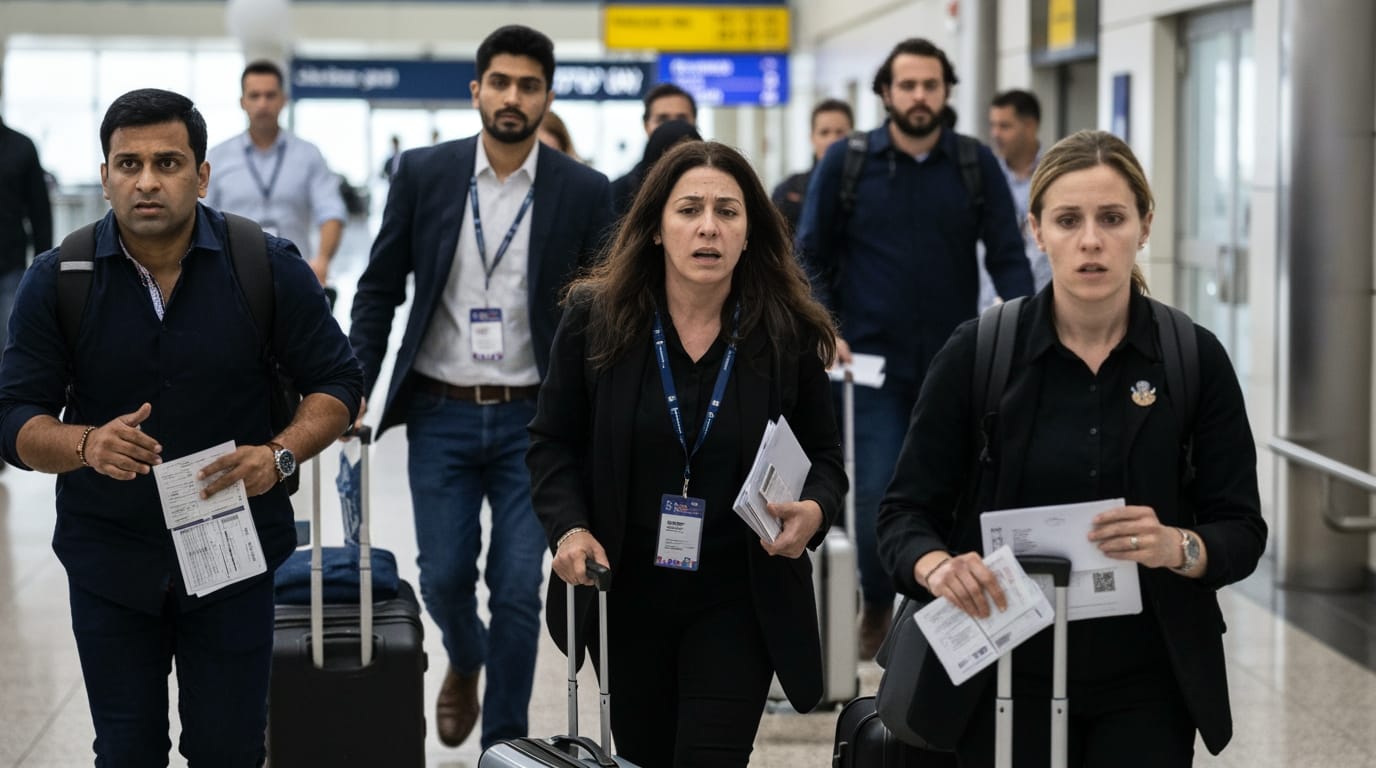
Jerusalem, Israel - The United States government has authorized the immediate departure of non-emergency personnel and their families from its embassy in Jerusalem, a stark warning underscoring rapidly escalating tensions with Iran as a potential U.S. military strike looms. The State Department cited unspecified "safety risks" for the move, while U.S. Ambassador Mike Huckabee urged staff to leave "TODAY" if they wished to, emphasizing the critical window for commercial travel amid heightened regional instability. This urgent advisory comes as President Donald Trump reportedly weighs military options against Tehran, amplifying fears of a broader conflict in an already volatile Middle East.
Authorized Departure Signals Imminent Threat
The U.S. State Department's decision, issued Friday, enables non-essential government employees and their dependents to voluntarily leave Israel at government expense. While the advisory refrained from explicitly mentioning Iran, it highlighted increased "safety risks" and the potential for further restrictions on travel for U.S. government personnel within Israel, including the Old City of Jerusalem and the West Bank. Ambassador Huckabee's internal email to embassy staff was even more direct, advising them to prioritize securing a flight out of Israel to any destination, acknowledging that outbound flights "may not be" available in the coming days. This unprecedented level of caution signals a significant shift in the U.S. security posture in the region, directly linked to intelligence indicating a high probability of Iranian retaliation should the U.S. initiate military action.
The immediate directive has sent ripples of concern through the American community in Israel and among international observers. Other nations have followed suit, with Australia directing dependents of its diplomats to leave Israel and neighboring Lebanon, and the United Kingdom temporarily withdrawing staff from Iran. Airlines, such as Netherlands-based KLM, have already announced plans to suspend flights from Tel Aviv's Ben Gurion International Airport, further underscoring the precarious situation. The warnings collectively paint a picture of a region bracing for potential military confrontation.
Trump Weighs Military Options Amidst Massive Buildup
At the heart of the crisis are ongoing tensions between the U.S. and Iran, exacerbated by President Trump's consideration of military strikes. Reports indicate that the U.S. Central Command (CENTCOM) chief, Admiral Brad Cooper, has briefed President Trump on potential military options against Iran. This comes as the U.S. has undertaken the largest military buildup in the Middle East since the 2003 invasion of Iraq, deploying aircraft carriers, fighter jets, and warships within striking distance of Iran.
President Trump has consistently articulated that Iran's pursuit of nuclear capabilities and its ballistic missile program pose a direct threat to American national security. This framing marks a notable departure from previous administrations, which often emphasized the threat to Israel. His administration has maintained that if a new nuclear deal, aimed at reining in Iran's nuclear program, cannot be reached, military action remains a distinct possibility. White House officials have indicated that any potential action against Iran would be "more severe" than past limited strikes.
The military posturing also holds domestic political implications for President Trump, with midterm elections scheduled for November 2026. Some political analysts suggest that a decisive stance against Iran could serve to consolidate voter support. However, the potential for a prolonged conflict carries significant risks, a concern Vice President JD Vance has sought to downplay, asserting that there is "no chance" a U.S. strike would lead to a protracted war in the Middle East.
Diplomatic Efforts Falter Amid Skepticism
Despite the heightened military readiness, diplomatic channels remain open, albeit with limited progress. Indirect talks between U.S. and Iranian delegations are ongoing in Geneva, mediated by Oman. Oman's Foreign Minister Badr bin Hamad Al Busaidi has been actively shuttling between the two sides, with recent reports indicating some, but not conclusive, progress in the negotiations regarding Iran's nuclear enrichment program. Technical talks are expected to resume in Vienna next week.
However, skepticism abounds regarding the likelihood of a diplomatic breakthrough. Experts and even some U.S. officials express doubts about Tehran's readiness to finalize an agreement that meets Washington's demands to curb uranium enrichment and limit its ballistic missile activities. The perception in Washington is that targeted strikes could be a means to compel Iranian leaders to make concessions. The parallel tracks of intense diplomacy and overt military preparation highlight the precarious balance the Trump administration is attempting to strike.
A Region on Edge: Echoes of Past Conflicts
The current climate of apprehension is not unprecedented in the Middle East. The region has endured significant instability, most recently the "12-day war" between Israel and Iran in June 2025. During that conflict, the U.S. directly intervened, attacking three Iranian nuclear sites. Iran retaliated with missile strikes, including one that landed in Tel Aviv. This conflict, which saw Israel inflict damage on Iran's ballistic missile capacity, demonstrated the potential for rapid escalation and international involvement. The region also saw Israel's largest direct attack on Iran in October 2024, following an unprecedented drone and missile barrage from Iran targeting Israel.
The specter of renewed hostilities hangs heavy over the region. While some U.S. officials believe Iran's options for retaliation are limited, others caution that a U.S. strike could easily draw other nations into a devastating, prolonged war. Regional partners, many of whom host U.S. military facilities, are keenly aware of the risk of becoming targets in an expanded conflict.
An Uncertain Future
As the U.S. takes measures to secure its personnel and military forces remain poised, the Middle East teeters on the brink of an unpredictable future. The interplay between stalled nuclear negotiations, President Trump's resolve for military action, and the deep-seated animosity between regional powers creates a highly combustible situation. With diplomatic efforts struggling to gain traction and military options actively on the table, the coming days are likely to be critical in determining whether the region can avert a full-scale conflagration. The U.S. State Department's warning to its staff in Israel serves as a stark reminder of the gravity of the moment, urging readiness for an outcome that remains profoundly uncertain.


