U.S. Scales Back European Troop Presence to 2021 Levels, Emphasizing Allied Contributions
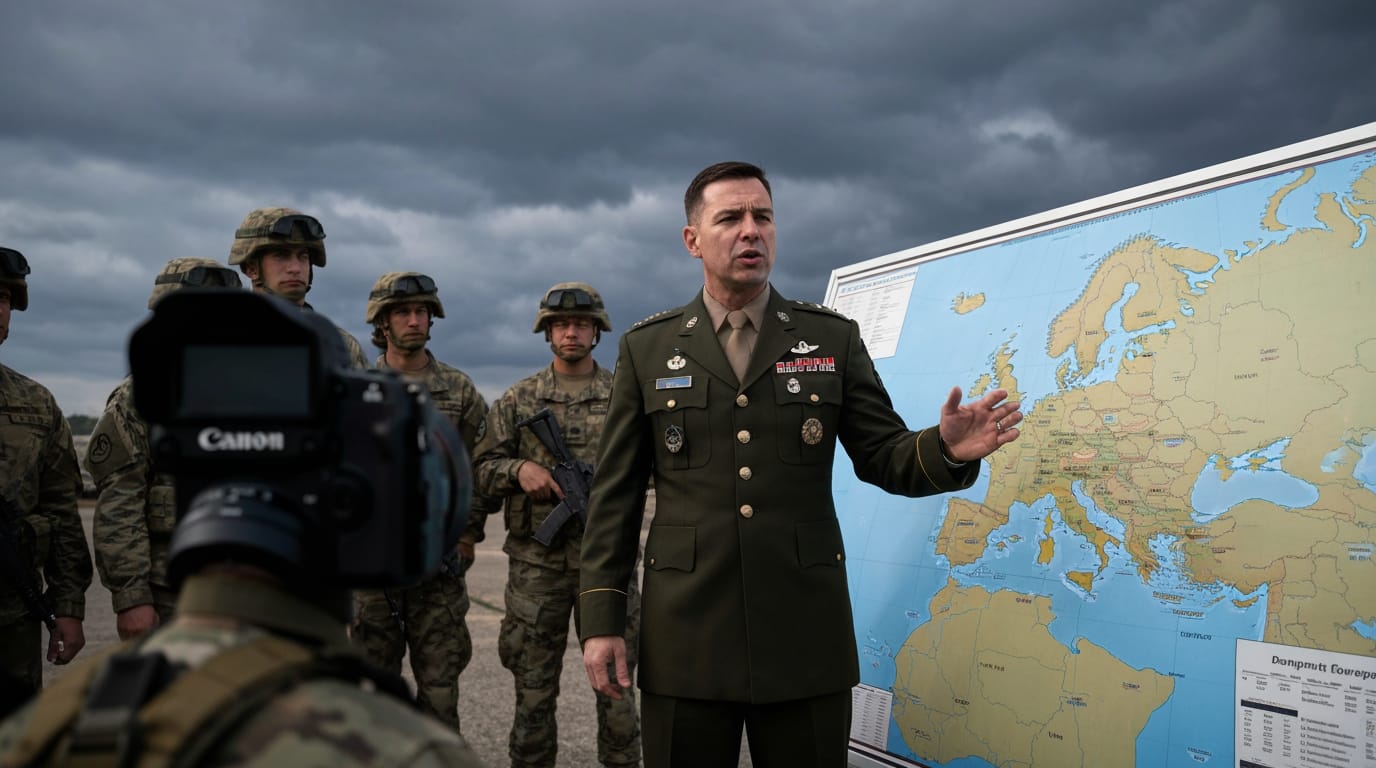
WASHINGTON – The United States Department of Defense has announced a significant recalibration of its military footprint in Europe, reducing the number of U.S. troop brigades to levels last seen in 2021. This strategic adjustment, detailed by Pentagon officials, involves decreasing the active Brigade Combat Teams (BCTs) from four to three, a move that the administration frames as part of a broader reevaluation of U.S. strategic and operational requirements and an impetus for European allies to bolster their own defense capabilities. The decision includes a temporary delay of a planned troop deployment to Poland, underscoring a persistent U.S. call for increased burden-sharing within the transatlantic alliance.
Pentagon Details Force Posture Adjustment
The Pentagon confirmed the reduction of Brigade Combat Teams (BCTs) stationed in Europe from four to three. This adjustment reverts the U.S. military presence to its 2021 configuration, preceding some of the significant reinforcements that followed geopolitical shifts in the region. A standard BCT typically comprises between 4,000 and 4,700 personnel, according to Congressional reports, indicating a reduction of several thousand troops from the continent. Pentagon spokesman Sean Parnell stated that this change is the outcome of a "comprehensive, multilayered process" focused on the U.S. force posture in Europe.
The announcement also detailed a temporary delay in the deployment of U.S. forces to Poland. This delay affects approximately one brigade, with reports indicating the cancellation of a deployment of about 4,000 soldiers from the 2nd Armored Brigade Combat Team of the 1st Cavalry Division, some of whom were already en route. This latest step follows an earlier decision this month to withdraw approximately 5,000 troops from Germany. Defense Secretary Pete Hegseth signed off on the decision after a thorough review of U.S. force posture across Europe, with the Department of War emphasizing that the change came after a detailed assessment of American strategic needs and the contributions of NATO allies to their own defense.
Strategic Rationale and the "America First" Doctrine
The recalibration of U.S. forces aligns squarely with President Donald Trump's "America First" foreign policy doctrine, which advocates for allies to assume greater responsibility for their own security. Pentagon officials, including spokesman Sean Parnell, articulated that the review is intended to advance the President's agenda and incentivize European nations to take up more of the cost of their defense. The administration has consistently pressured NATO allies to increase their defense spending to the agreed-upon target of 2% of their gross domestic product, a long-standing point of contention within the alliance.
The Department of Defense emphasized that the final disposition of these forces would depend on further analysis of U.S. strategic and operational requirements, alongside an assessment of allies' capacity to contribute to Europe's defense. This move is also seen in the context of recent geopolitical tensions, with the Trump administration having hinted at a drawdown after some NATO allies reportedly failed to fully support the U.S.-led war against Iran. The underlying message is a push for a more equitable distribution of defense responsibilities, ensuring that American military resources are optimally deployed to meet global challenges while fostering greater self-reliance among allies.
Implications for Poland and Broader European Security
Despite the delay in troop deployment, U.S. officials have been quick to reassure Poland of their continued commitment, labeling the nation a "model U.S. ally". Defense Secretary Pete Hegseth personally communicated with Polish Deputy Prime Minister Władysław Kosiniak-Kamysz to discuss the decision and future force planning, promising to maintain "close contact" with Warsaw and ensure a strong military presence in Poland. This commitment reflects Poland's consistent efforts to increase its defense spending and modernize its military, demonstrating both the "ability and resolve to defend itself".
For the broader European security landscape, this reduction prompts questions about the future of NATO's collective defense posture. While the U.S. maintains its commitment to the alliance, the shift signals a more discerning approach to its troop deployments, expecting European partners to fill perceived gaps. Since Russia's invasion of Ukraine in 2022, U.S. troop levels in Europe have fluctuated, often increasing in response to heightened regional instability. The current reduction, therefore, marks a notable pivot, placing greater emphasis on European nations' indigenous defense capabilities and their collective commitment to regional security. The administration's stance suggests that while the U.S. will remain a crucial security guarantor, it anticipates a more robust, self-funded defense effort from its European allies.
Historical Context and Future Outlook
U.S. troop levels in Europe have undergone numerous transformations throughout history, largely dictated by evolving geopolitical realities. For over a decade prior to 2021, the number of U.S. troops remained relatively stable. However, the landscape shifted significantly after 2022 with Russia's actions in Ukraine, leading to increased U.S. military presence to reassure allies on NATO's eastern flank. The current decision to return to 2021 levels represents a strategic inflection point, moving away from post-2022 surge levels.
This recalibration is not merely about troop numbers but signifies an evolving philosophy regarding transatlantic security. The Pentagon's statements indicate a sustained evaluation process, where future deployments and force dispositions will be dynamically determined by both U.S. strategic imperatives and the demonstrable defense contributions of its allies. The United States seeks to cultivate a more balanced security architecture, where European nations are empowered and expected to play a more prominent role in their conventional defense. This strategic shift underscores a future where shared security is built upon mutual commitment and robust self-defense capabilities across the alliance, fostering a more resilient and integrated European defense framework.


