U.S. Weighs Airstrikes in Mali Amid Deepening Insurgency and Geopolitical Tensions
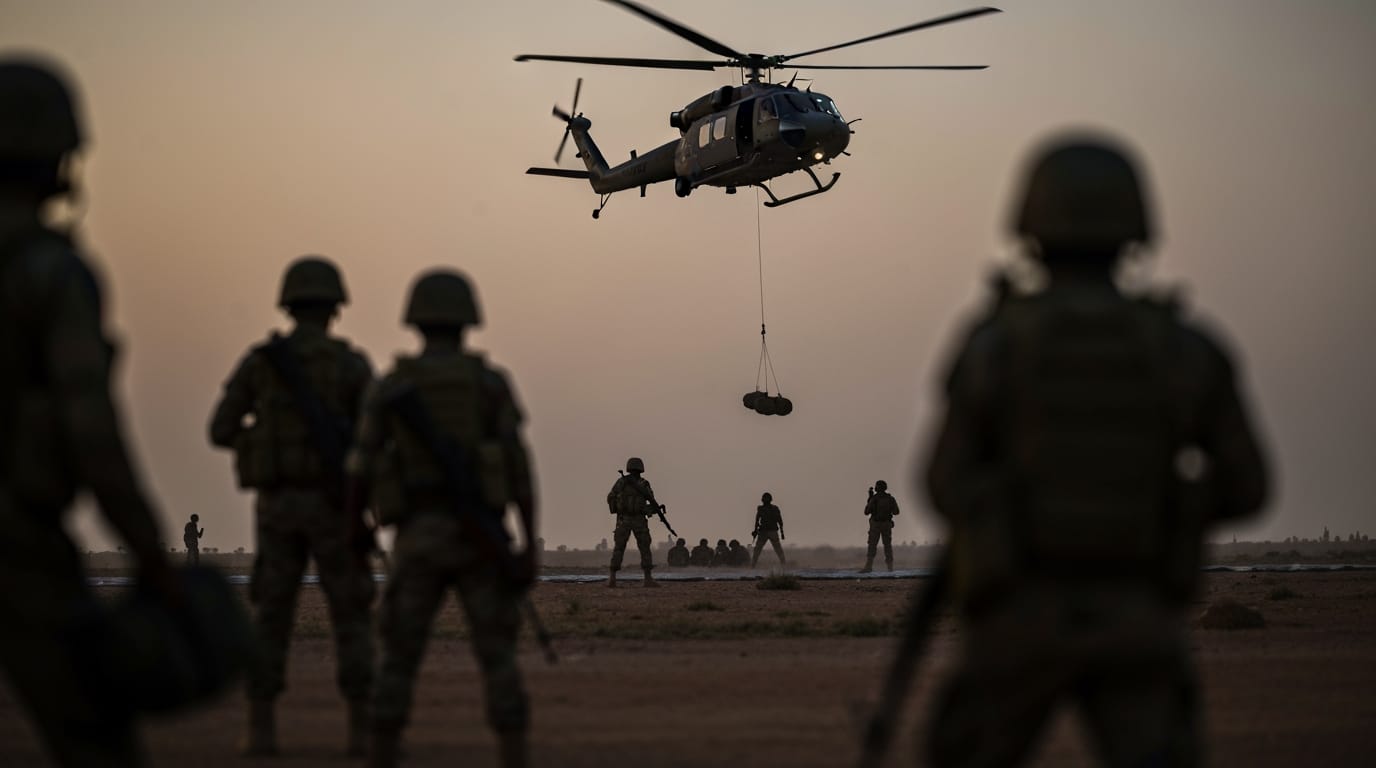
The specter of expanded military intervention looms over Mali as reports indicate the U.S. administration is considering airstrikes against the al-Qaeda-affiliated Jama'at Nusrat al-Islam wal-Muslimin (JNIM), a move that could significantly alter the complex and deteriorating security landscape in West Africa. This deliberation comes at a critical juncture for Mali, which has seen its insurgency strengthen despite years of international military presence, raising profound questions about the efficacy and potential consequences of further external military engagement in a region already grappling with multifaceted crises.
Mali's Deepening Crisis: A Resilient Insurgency
Mali has been locked in a protracted and escalating conflict since a Tuareg rebellion in 2012, which quickly devolved into a broader insurgency involving various extremist groups. Key among these are JNIM and the Islamic State Sahel Province (ISSP), which exploit weak state control, poverty, and ethnic tensions to recruit and expand their influence. JNIM, in particular, has emerged as one of al-Qaeda's most capable global affiliates, intensifying its guerrilla campaign across the Sahel with fears of spillover into neighboring states. These groups employ irregular warfare tactics, including hit-and-run attacks, improvised explosive devices (IEDs), and complex assaults, often targeting security forces and civilians alike.
The insurgency has demonstrated an increasing capacity to coordinate operations, target strategic locations, and exert pressure across multiple regions simultaneously. Recent reports from May 2026 highlight coordinated attacks by JNIM and Tuareg separatist rebels, the Azawad Liberation Front (FLA), seizing northern cities, attempting to blockade the capital, Bamako, and even killing the defense minister. This surge in violence indicates that militant groups have expanded their reach and operational coordination, challenging the Malian government's already stretched military capacity. By 2020, some estimates suggested that only one-third of the country remained under government authority, with jihadist activity rapidly expanding into central Mali. In areas they control or contest, these groups quickly establish forms of governance and enforce their interpretation of Sharia law, often through coercive and violent strategies.
A History of External Efforts and Mixed Results
Mali's conflict has seen a long history of external military and diplomatic interventions, yielding mixed results and often highlighting the limitations of purely military solutions. France launched Operation Serval in 2013 at Mali's request, initially quashing the insurgency in the north and restoring a measure of order. This was followed by Operation Barkhane, which aimed to eliminate prominent militant leaders and expanded its footprint across the Sahel. While Barkhane saw early successes, neutralizing hundreds of jihadists, it ultimately failed to stop the spread of various armed groups, with security conditions in Mali and Burkina Faso significantly worsening since 2019. Critics argue that France's military-centric strategy, which focused on counterterrorism, failed to address the underlying drivers of insurgency and conflict. The operation's withdrawal was completed in 2022 amid growing anti-French sentiment and political tensions with the Malian junta. Civilian casualties resulting from French airstrikes, including a 2021 incident where a wedding was mistaken for a terrorist gathering, further fueled public discontent.
The United Nations Multidimensional Integrated Stabilization Mission in Mali (MINUSMA) was established in 2013 to stabilize the country. Until 2016, MINUSMA contributed to improving stability in northern Mali, decreasing civilian deaths, and supporting the 2015 Algiers Agreement. However, its effectiveness declined significantly after 2016 as violence increased, and jihadist groups began attacking MINUSMA personnel, making it one of the deadliest UN peacekeeping missions in history. Mali's military government ultimately requested MINUSMA's withdrawal in 2023, citing its failure to effectively respond to security challenges.
Following the French withdrawal, Mali's transitional military government, which seized power in coups in 2020 and 2021, turned to Russia for security assistance. The Kremlin-affiliated Wagner Group (now rebranded as Africa Corps) was invited into Mali in 2021 as "military trainers". However, the presence of Russian mercenaries has been controversial and has coincided with a dramatic increase in civilian casualties. According to reports, the Malian military and its Russian partners were responsible for 925 civilian deaths in the past year, compared to 232 by Islamist militants. Wagner's operations have been linked to massacres and a significant surge in civilian fatalities, with four out of five people killed in their operations being civilians. The current security arrangements with Russia have also failed to contain the insurgency, leading to a more resilient extremist ecosystem.
The U.S. Dilemma: Weighing Airstrikes in a Complex Battlefield
The United States has historically maintained a role in the Sahel primarily through training, support, and intelligence-gathering, largely avoiding direct military operations in Mali. U.S. efforts date back to the 2002 Pan-Sahel Initiative (PSI), later expanded into the Trans-Sahara Counterterrorism Partnership (TSCTP), designed to enhance the counterterrorism capabilities of partner nations. These programs involve providing funding, logistical support, intelligence sharing, and training to local forces. Despite these efforts, the U.S. counterterrorism strategy in the Sahel has been critiqued for its ineffectiveness in containing regional insecurity and potentially exacerbating the vulnerability to coups in recipient countries.
However, the current situation suggests a potential shift in U.S. policy. Reports from July 2026 indicate that the Trump administration is actively weighing military options, including airstrikes, to target JNIM in Mali. If approved, this would mark the first publicly reported American military action inside Mali and would add Mali to a list of countries where the U.S. has authorized strikes. While the Malian foreign minister has stated that any nation wishing to partner must respect its sovereignty, he has not ruled out military cooperation with the U.S.. This consideration for direct intervention stems from growing concerns over JNIM's increasing power and the fear of the insurgency spreading.
The prospect of U.S. airstrikes introduces a new layer of complexity. Analysts express concern that such actions could encourage JNIM to target American interests, which they traditionally have not prioritized. Furthermore, direct U.S. military involvement risks potential hostilities or complex deconfliction efforts with Russian forces already operating in Mali. Critics of a purely military approach argue that it has been tried repeatedly by other foreign powers with limited long-term success, noting that the situation has only worsened despite years of intervention.
Beyond Military Solutions: The Deeper Roots of Instability
The persistent instability in Mali is not solely a military problem but deeply rooted in governance failures, socio-economic grievances, and historical dynamics. The inability of successive Malian governments to assert control, address ethnic tensions, and provide essential services in rural areas has created ungoverned spaces that extremist groups exploit. Issues such as poverty, lack of economic opportunities, and perceptions of government corruption fuel recruitment into militant groups.
Heavy-handed tactics by state security forces and their allies, including human rights abuses and civilian casualties, have paradoxically fueled recruitment for extremist organizations like JNIM, which then capitalize on the junta's use of violence to expand their appeal and local influence. Rural populations, seeking protection, have increasingly turned to JNIM. The repeated military coups in Mali, partly inspired by the perception of government inability to provide security, have further fragmented the state and diverted intelligence efforts away from counterterrorism toward political opponents.
Experts emphasize that effective counterinsurgency requires a comprehensive approach that goes beyond targeting jihadist leaders and clearing areas with raids. It necessitates holding territory, expanding government presence, promoting good governance, addressing root causes of grievances, and potentially even negotiating with some insurgent groups for demobilization.
Conclusion
The potential for U.S. airstrikes in Mali underscores the urgent and complex challenges facing the Sahel region. While such actions might aim to degrade specific militant capabilities, the historical record of foreign military interventions in Mali suggests that purely military solutions have consistently fallen short of achieving lasting stability. The enduring insurgency, fueled by deep-seated political, economic, and social grievances, demands a multi-faceted approach that prioritizes robust governance, community engagement, economic development, and respect for human rights, alongside targeted security efforts. Without addressing these fundamental issues, any military intervention, including potential U.S. airstrikes, risks repeating past patterns of temporary gains followed by renewed instability, potentially exacerbating the humanitarian crisis and further entrenching the conflict.


