Uganda Seals Border with DR Congo as Rare Ebola Strain Spreads
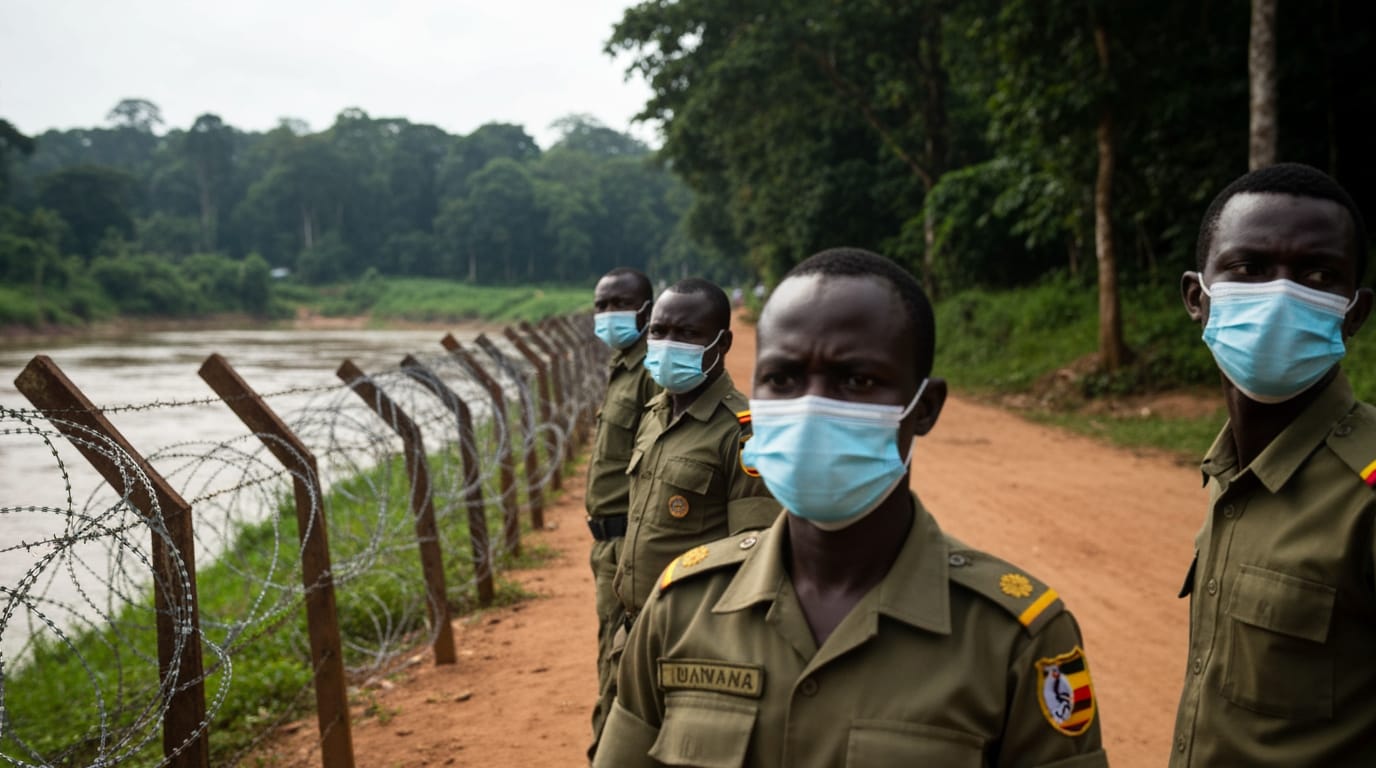
Kampala, Uganda – Ugandan authorities have moved swiftly to close their border with the Democratic Republic of Congo (DRC), enacting stringent measures in response to a rapidly escalating outbreak of a rare and aggressive strain of Ebola virus. The decision, announced Wednesday, comes as the Bundibugyo ebolavirus, for which there are no approved vaccines or medicines, surges in the DRC's eastern Ituri Province and has begun to manifest within Uganda's borders. The drastic action underscores growing fears of contagion in a region perennially threatened by hemorrhagic fevers, despite guidance from the World Health Organization (WHO) that typically advises against such blanket restrictions.
The Urgent Response to a Novel Threat
Uganda's Vice-President Jesca Alupo led a local Ebola task force in making the decision, citing a concerning rise in Ugandan health workers exposed to the virus by Congolese patients who had crossed the border prior to the official declaration of the outbreak on May 15. The closure, implemented "with immediate effect," temporarily halts most cross-border movement, with exceptions granted only for essential services such as emergency outbreak response, cargo transportation, and security operations. Individuals permitted to enter Uganda under these emergency circumstances are subject to a mandatory 21-day self-isolation period. Furthermore, public transport, including ferries and cross-border buses, has been suspended, and flights to the DRC have been temporarily halted.
This swift, preemptive action by Kampala reflects a deep apprehension over the Bundibugyo strain, which was first confirmed in Ituri Province on May 15. Health authorities in the DRC are grappling with a rapidly evolving crisis, reporting nearly 1,000 suspected cases and at least 220 suspected deaths. Uganda has, to date, reported seven cases, including one fatality in the capital, Kampala, on May 14. While the overall caseload in Uganda is not yet spiking, the increasing number of local exposures, particularly among healthcare workers, prompted the urgent border closure.
A Region on Edge: The Persistent Shadow of Ebola
The current outbreak is not an isolated incident but rather the latest in a series of recurring Ebola epidemics that have plagued the Great Lakes region for decades. The Democratic Republic of Congo, in particular, has faced numerous outbreaks, including the significant 2018-2020 North Kivu/Ituri epidemic, which became the second-largest Ebola outbreak in recorded history, resulting in 3,481 reported cases and 2,299 deaths before being declared over on June 25, 2020. That previous outbreak, much like the current one, posed a grave threat to neighboring countries, particularly Uganda, due to their shared, highly porous border and intertwined communities.
Uganda has a long history of investing in Ebola preparedness, building robust surveillance, rapid response mechanisms, and community engagement strategies. These efforts were notably tested in June 2019 when three confirmed Ebola cases, originating from the DRC, entered Uganda. Due to extensive preparedness, including point-of-entry screenings, trained health workers, laboratory investigations, and vaccination of healthcare workers, these cases were promptly detected and contained, preventing wider spread within the country. However, the unique challenge of the current Bundibugyo strain, for which no approved medical countermeasures currently exist, coupled with the instability and ongoing conflict in eastern DRC, intensifies the containment challenge. The region's extensive informal border crossings and daily movement of people for trade and family visits complicate monitoring efforts, often pushing surveillance to unmonitored routes when formal crossings are restricted.
The Economic and Social Toll of Isolation
While implemented as a critical public health measure, the border closure carries significant economic and social implications for the communities along the Uganda-DRC border. These borderlands are characterized by deep social and economic integration, with daily cross-border trade forming the backbone of many livelihoods. Farmers, traders, and families rely on the open flow of goods and people for survival. Restrictions on movement, while aimed at curbing the virus, inevitably disrupt these essential activities, potentially leading to economic hardship and increasing resentment.
The World Health Organization has historically cautioned against such border closures, arguing that they can be counterproductive. The WHO's stance is that closures often push people and goods toward informal, unmonitored border crossings, thereby increasing, rather than decreasing, the chances of disease spread, as these routes lack screening and health protocols. This dilemma highlights the difficult balance governments face between immediate public health protection and the broader socio-economic stability of border communities.
Navigating International Health Guidelines and Regional Diplomacy
The declaration of the Ebola outbreak in Ituri Province as a Public Health Emergency of International Concern (PHEIC) by the WHO underscores the severity of the situation. However, even with this declaration, the WHO maintained its advice against border closures, acknowledging the high risk to neighboring countries but prioritizing the need for seamless collaboration and coordinated response over isolation. This creates a diplomatic tightrope for Uganda, which must prioritize its national health security while also engaging with international partners and adhering to broader public health principles.
Effective response requires more than just border controls; it demands strengthened surveillance, rapid deployment of medical teams, comprehensive contact tracing, infection prevention and control in health facilities, and robust community engagement on both sides of the border. The challenges are further compounded by armed group activity in eastern DRC, which can impede access for health responders and undermine containment efforts. International solidarity and sustained funding are critical to supporting affected countries, particularly given the resource-intensive nature of Ebola response.
The Enduring Challenge of a Porous Border
Uganda's decision to close its border with the Democratic Republic of Congo reflects the profound and ongoing challenges posed by Ebola in a region defined by high mobility, economic interdependence, and occasional instability. While a stark measure that goes against some international public health recommendations, it signifies the gravity of the threat presented by the Bundibugyo strain and the immediate imperative to protect its population. The long, often informal, border between the two nations will remain a critical frontier in this public health battle.
Successfully navigating this crisis will require a multi-faceted approach: sustained vigilance at formal and informal crossing points, robust public health infrastructure, continuous community engagement to build trust and ensure cooperation, and strong regional and international partnerships. The current closure is a testament to the immediate fear of viral spread, but the long-term containment of Ebola in this region will ultimately depend on comprehensive, collaborative strategies that address both the health crisis and the socio-economic realities of its vulnerable populations.


