UK Intercepts Sanctioned Russian 'Shadow Fleet' Tanker in English Channel
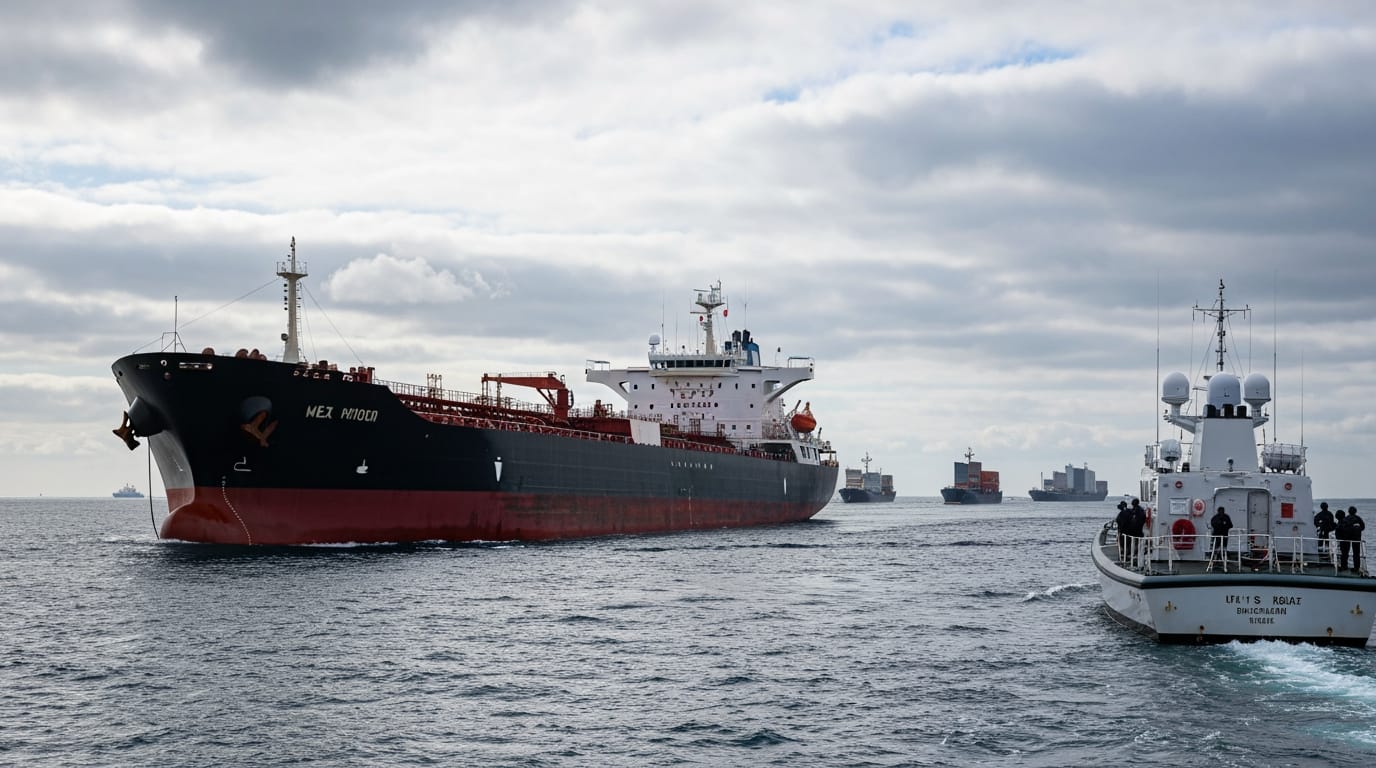
In a significant maritime operation, British forces have for the first time led the seizure of a suspected Russian "shadow fleet" oil tanker in the English Channel, marking a notable escalation in international efforts to curb Moscow's ability to finance its war in Ukraine. The boarding of the tanker Smyrtos on Sunday, June 14, 2026, signals a more assertive stance by the United Kingdom against vessels believed to be illicitly transporting Russian oil in defiance of international sanctions.
The Dramatic Interception
The early hours of Sunday saw Royal Marine Commandos, accompanied by National Crime Agency officials, execute a six-hour operation to board the 244-meter oil tanker Smyrtos. The intricate mission was supported by a substantial array of military assets, including Chinook, Merlin, and Wildcat helicopters, a P-8 Poseidon maritime patrol aircraft, and Royal Navy vessels HMS Sutherland and HMS Ledbury. The Smyrtos, sailing under a Cameroonian flag that authorities suspect to be false, had departed from the Russian Baltic port of Ust-Luga on June 5 and was reportedly en route to Port Said, Egypt. Following its interception, the vessel has been provisionally moved to an anchorage off the south coast of England, where it will undergo further monitoring for any potential environmental or safety concerns, and an investigation will commence. Prime Minister Keir Starmer emphasized the operation's impact, stating it "delivers yet another blow to Russia and reminds those fuelling Putin's war in Ukraine that we will not let them hide." Defence Secretary Dan Jarvis lauded the skill, professionalism, and courage of the personnel involved, asserting that "Russia relies on its shadow fleet to fund its conflict in Ukraine and our interdiction delivers a blow to Putin's illegal war."
Unmasking the Shadow Fleet
The Smyrtos is believed to be part of Russia's extensive "shadow fleet," a clandestine network of hundreds of vessels operating globally to circumvent the crude oil price cap sanctions imposed by G7 countries and the European Union following Russia's 2022 invasion of Ukraine. This fleet, comprising largely older and often decrepit oil tankers, serves a critical role in enabling Russia to export its oil and generate revenue to fund its ongoing conflict.
The tactics employed by the shadow fleet are intricate and designed to obscure ownership, origin, and destination. These include the use of complex corporate structures and shell companies, frequent changes of vessel names, and the adoption of "flags of convenience" from countries with lax oversight, such as Cameroon. Furthermore, vessels often engage in deceptive practices like Automatic Identification System (AIS) blackouts or "spoofing," where false location signals are broadcast to mask their true movements. Ship-to-ship transfers on the high seas and the blending of oils from multiple sources also serve to conceal the origin of the cargo. The size of this illicit fleet has grown dramatically, reportedly tripling since 2022 to encompass between 1,100 and 1,400 ships by December 2023. Estimates suggest Russia has spent over $10 billion since 2022 on acquiring these vessels. Beyond sanctions evasion, the operation of these often poorly maintained and uninsured ships poses significant environmental, safety, and security risks, including the potential for major oil spills and suspected damage to critical undersea infrastructure.
A New Front in Economic Warfare
The interception of the Smyrtos represents a tangible outcome of a policy shift implemented by the UK in March 2026, which granted British armed forces and law enforcement agencies the authority to intercept and detain suspected Russian "shadow fleet" vessels within its territorial waters. This proactive approach aligns with broader international efforts to counter the shadow fleet phenomenon. Other NATO allies, including France, Belgium, Finland, and the United States, have also conducted similar operations to interdict sanction-busting tankers. France, in coordination with the UK, had previously intercepted vessels linked to Russia's oil trade.
Ukrainian President Volodymyr Zelenskyy promptly thanked Prime Minister Starmer and the British people for their "principled resolve," advocating for further legislative steps across Europe to enable not only the detention of such tankers but also the confiscation of their oil cargo to further impact Russia's war funding. International organizations like the International Maritime Organization (IMO) have also moved to define "dark fleet" ships and seek new enforcement mechanisms. Collaborative initiatives, such as the UK-led "Nordic Warden," which uses AI to monitor suspicious vessels, underscore the growing resolve among Western nations to disrupt these illicit maritime activities.
Impact and Ramifications
The comprehensive sanctions imposed on Russia's oil and gas sectors since the invasion of Ukraine have had a significant impact, costing the country over $100 billion in export earnings since the EU and UK embargoes took effect. Russia's oil and gas revenues reportedly declined by 24% in 2025 compared to the previous year. However, the shadow fleet has served as a crucial workaround, allowing Russia to generate an estimated $10 billion in additional crude oil earnings since December 2022. To mitigate the impact of sanctions, Russia has had to redirect substantial volumes of its oil exports to new markets, primarily India, China, and parts of Africa and Brazil, often at discounted prices. This redirection, coupled with the need to utilize complex intermediaries and new supply chains, has also led to increased transaction costs for Russian oil companies. While a Kremlin envoy dismissed the seizure as a "distraction," the UK and its allies view such actions as directly curtailing the resources sustaining Russia's aggression and reducing its capacity to threaten wider European security.
The interdiction of the Smyrtos underscores the multifaceted nature of economic warfare and the ongoing cat-and-mouse game between sanctioning nations and those seeking to evade them. This operation, as the first UK-led seizure of its kind, represents a determined effort to enforce international law and choke off a vital revenue stream for Russia's war machine. While the shadow fleet continues to pose a formidable challenge, this latest action signals a heightened commitment from the international community to disrupt these illicit networks and diminish Russia's financial capacity to sustain its conflict. The long-term implications of such aggressive enforcement actions remain to be seen, but they undoubtedly add pressure to Russia's economy and its ability to maintain its military objectives.