UK Leadership Turmoil Casts Shadow Over European Security at Critical Juncture
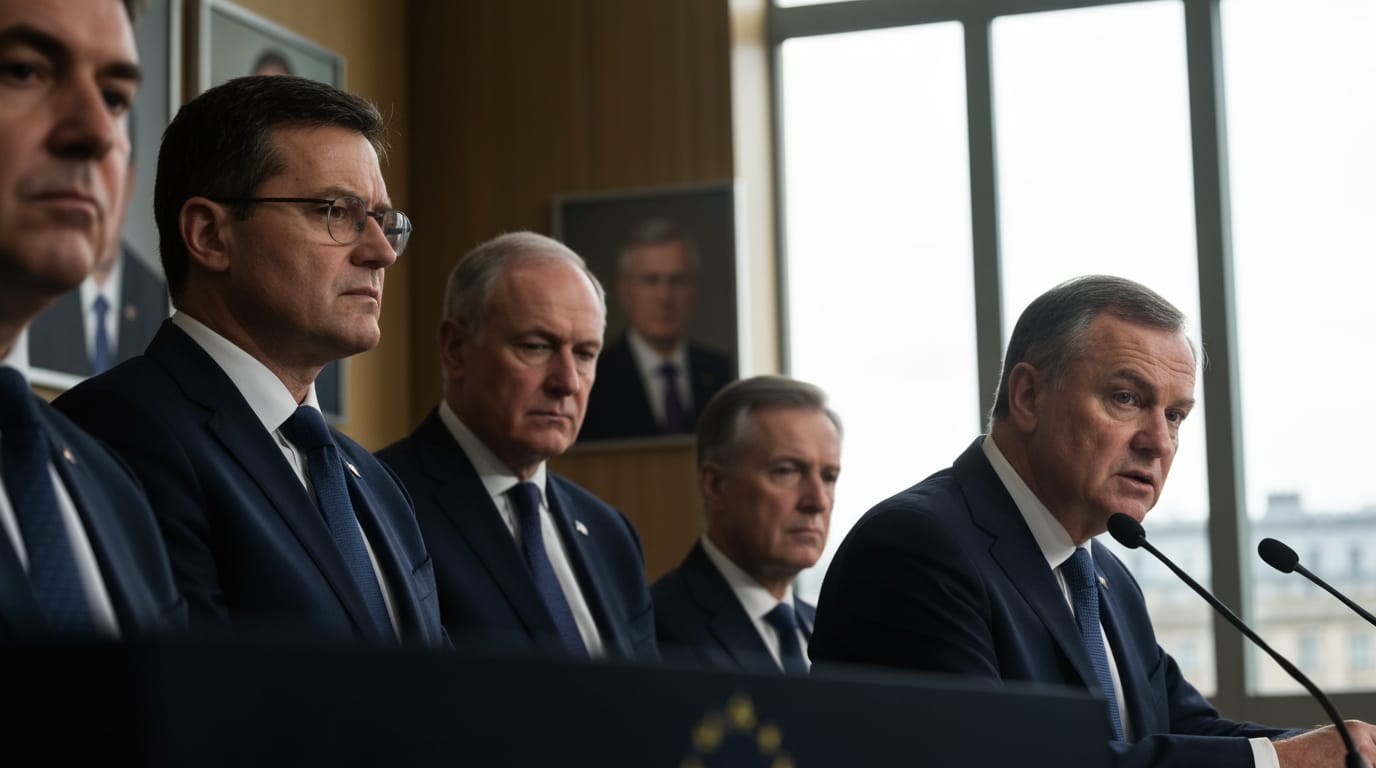
London, UK – The unexpected resignation of the British Prime Minister has sent ripples of uncertainty through European capitals, raising crucial questions about the continuity and direction of the United Kingdom's pivotal role in continental security. Coming at a moment of heightened geopolitical tension, marked by an ongoing conflict in Eastern Europe and evolving transatlantic dynamics, the leadership vacuum in London introduces a new layer of complexity to the collective efforts to safeguard peace and stability across the continent. Allies are closely watching, keen to ascertain whether the change in command will solidify or destabilize Britain's commitment to core defense alliances and its strategic partnerships.
The UK remains an indispensable pillar of European security, a reality underscored by its robust contributions to NATO, its independent nuclear deterrent, and its leadership in multinational rapid response forces. Britain's armed forces are recognized among Europe's most capable, possessing strengths in high-end war-fighting and providing critical enablers for international operations. The country significantly contributes to NATO, holding key leadership roles and forming a core component of its deterrence and operational activities. As the lead nation of the Joint Expeditionary Force (JEF), a ten-member Northern European military partnership, the UK orchestrates rapid response and expeditionary operations, enhancing the ability of like-minded allies to react to crises in the High North and beyond. This framework has been particularly vital in advocating for Ukraine's defense and pushing for a unified stance against Russia, with JEF members collectively committing substantial diplomatic, military, and humanitarian aid.
Instability at Home, Unease Abroad: The Policy Implications
The domestic political upheaval triggered by a Prime Minister's resignation, especially one that follows a pattern of frequent leadership changes—Britain is reportedly on its seventh Prime Minister in a decade—inherently shifts governmental focus inward. Leadership contests often prioritize internal party dynamics and domestic issues such as the cost of living, immigration, and public services, potentially sidelining pressing foreign policy and defense considerations. This inward turn risks creating a perception of distraction and potential policy paralysis at a time when allies require clear and consistent leadership. Allies and adversaries alike scrutinize such transitions, with the latter potentially viewing them as opportunities to test resolve or exploit perceived weaknesses.
A significant point of concern for European security stemming from recent internal political debates in the UK has been defense spending. The resignation of former Defence Secretary John Healey, citing a lack of funding for the delayed Defence Investment Plan, highlighted a profound strategic failure in the government's approach to defense. Healey argued there was "no path" to reaching NATO's target of spending 3.5% of GDP on core defense by 2035, a commitment made at the Hague Summit. NATO's former Secretary-General, Anders Fogh Rasmussen, has explicitly stated that a "spending gap" in the UK would be "a matter of concern" for the alliance. The incoming Prime Minister will inherit this critical challenge, needing to articulate a credible plan for meeting NATO targets and ensuring the UK's armed forces remain adequately resourced to fulfill their commitments.
Post-Brexit Security Cooperation Under Scrutiny
Since its departure from the European Union, the UK's relationship with the bloc on security and defense has been a complex, evolving landscape. While the initial Trade and Cooperation Agreement largely omitted dedicated foreign, security, or defense pillars, both sides have expressed a desire for continued close cooperation. A security and defense partnership was established in May 2025, aiming to foster structured dialogue and cooperation across areas such as regional security, crisis management, maritime security, and cyber issues. However, efforts towards deeper industrial cooperation, such as UK participation in the EU's €150 billion SAFE initiative, have faced setbacks due to disagreements over terms and value-for-money concerns.
The stability of leadership in London is crucial for maximizing the potential of this delicate post-Brexit "reset" in UK-EU relations. Political uncertainty could undermine efforts to bridge institutional separation and solidify lasting security cooperation. Despite the institutional shifts, the UK and EU continue to share strategic interests and face common threats, making collaboration imperative. On the intelligence front, cooperation remains robust. The UK makes leading contributions to European security through intelligence collection and analysis, particularly in counter-terrorism operations, and actively shares intelligence with European partners. Recent developments include accelerated access for UK police to European vehicle data to combat organized crime, building on existing frameworks like Prüm. However, the structural separation post-Brexit has sometimes led to parallel approaches rather than fully integrated strategies, a gap that geopolitical realities increasingly demand be closed.
Allied Confidence and Adversary Calculations
The perception of political stability is a cornerstone of international alliances. Frequent changes in leadership within a key NATO member can sow seeds of doubt among allies regarding the consistency and reliability of foreign policy commitments. For NATO, Britain is a vital contributor, not only militarily but also as one of only three nuclear-weapon states within the alliance and a permanent member of the UN Security Council. Any wavering in UK defense posture or sustained political turbulence can influence the broader alliance's strategic planning and cohesion, especially as the United States' long-term commitment to European security faces increased scrutiny.
Conversely, adversaries closely monitor such developments. Russia, for instance, has historically observed Western leadership transitions as opportunities to "probe" new leaders' resolve and calculate potential responses. A period of internal political focus in the UK could be interpreted as an opening, potentially encouraging more aggressive actions or undermining deterrence. Maintaining a strong, unified front against shared threats, particularly from Russia, requires uninterrupted strategic coherence from all major European security actors.
Charting a Course Through Turbulent Waters
The resignation of the British Prime Minister underscores the inherent fragility of political leadership in an increasingly volatile world. For European security, the implications are profound, touching upon defense spending, strategic direction, and the efficacy of multinational cooperation. The next UK leader faces the immediate task of restoring domestic political stability and articulating a clear, credible vision for Britain's role on the global stage. This must include concrete plans to uphold defense commitments, strengthen alliances like NATO and the JEF, and seek pragmatic solutions for deeper security cooperation with the European Union, ensuring that the UK remains a steadfast and predictable partner in the collective endeavor to secure Europe against evolving threats. The window for rebuilding and reinforcing European defense capabilities, with the UK playing a leading role, demands urgent and consistent attention.


