Ukraine Appoints Military Intelligence Chief Kyrylo Budanov as New Head of Presidential Office Amidst Wartime Reshuffle
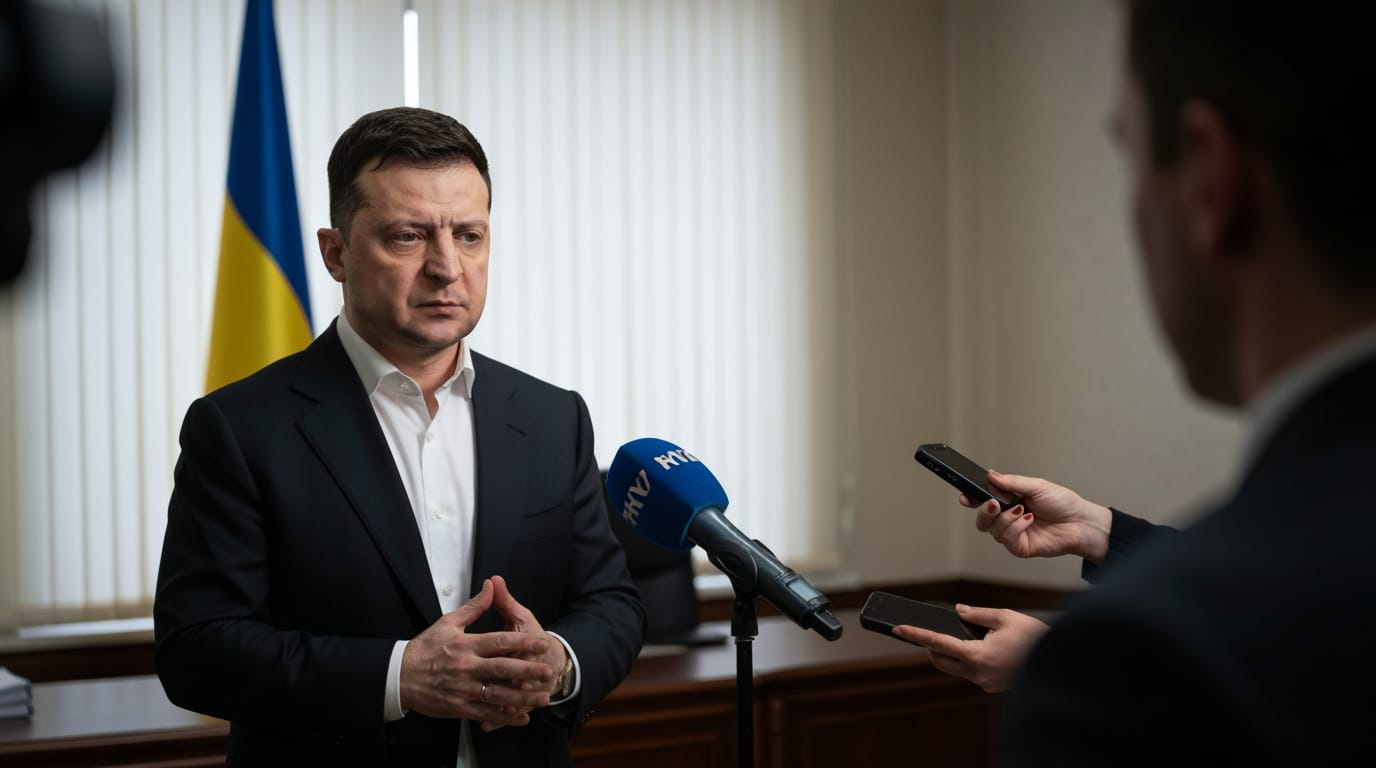
KYIV, Ukraine – In a significant leadership change, Ukrainian President Volodymyr Zelenskyy on Friday appointed Kyrylo Budanov, the revered head of Ukraine's military intelligence, as his new chief of staff. The move, announced on January 2, 2026, places a prominent wartime figure at the nexus of the nation's political and strategic decision-making, signaling a sharpened focus on security, defense development, and diplomatic efforts as the country continues to grapple with a nearly four-year-old invasion by Russia. Budanov, 39, replaces Andriy Yermak, who resigned in November 2025 following a corruption scandal, prompting a comprehensive restructuring within the presidential administration.
A Strategic Shift in Leadership
President Zelenskyy's decision to tap Kyrylo Budanov, a career military intelligence officer, for the pivotal role of Chief of Staff of the Presidential Office underscores a clear recalibration of Ukraine's wartime priorities. The appointment marks a departure from the traditional civilian-focused nature of the position, injecting a direct military and security perspective into the core of the nation's leadership. Zelenskyy articulated that Ukraine currently requires a heightened emphasis on security issues, the bolstering of its defense and security forces, and the diplomatic track of negotiations. He expressed confidence in Budanov's "specialized experience in these areas and sufficient strength to achieve results," according to statements made on social media. This strategic personnel change comes at a critical juncture, with the United States actively leading a diplomatic initiative aimed at concluding the protracted conflict.
Budanov himself acknowledged the gravity of his new responsibilities, stating via Telegram that his position is "both an honor and a responsibility — at a historic time for Ukraine — to focus on the critically important issues of the state's strategic security." His immediate instructions from President Zelenskyy involve collaborating with National Security and Defense Council Secretary Rustem Umerov and other key officials to update and present for approval the strategic foundations of Ukraine's defense and development, alongside outlining subsequent actions. This direct mandate highlights the operational and strategic nature of Budanov's new role, moving beyond administrative oversight to direct policy formulation related to national security.
The Departure of Andriy Yermak Amidst Scrutiny
The pathway for Budanov's appointment was cleared by the resignation of his predecessor, Andriy Yermak, in November 2025. Yermak's departure occurred amidst a high-profile corruption scandal that captivated public attention, involving investigations by anti-corruption officials into alleged graft within the energy sector. Although Yermak, a long-time confidante of Zelenskyy and Kyiv's lead negotiator in U.S.-backed peace talks, was not formally named as a suspect in the reported $100 million kickback scheme, the ongoing investigation and the searches conducted at his residence created an untenable situation.
Yermak had served as Chief of Staff since February 2020, playing a crucial role in shaping Ukraine's foreign policy and managing the presidential administration during the tumultuous period of the full-scale invasion. His influence, often described as that of a "grey cardinal" due to his behind-the-scenes power, made him a controversial figure in Ukrainian politics. His resignation was confirmed by Zelenskyy on November 28, 2025, although the official reasons were not publicly disclosed at the time. The incident underscored the persistent challenges Ukraine faces in combating corruption, even as it fights for its sovereignty.
Kyrylo Budanov: A Wartime Hero Takes Center Stage
Kyrylo Budanov brings a formidable reputation and extensive experience to his new role. Having served as the head of the Main Intelligence Directorate (GUR) of Ukraine's Ministry of Defense since 2020, he has become one of the country's most recognizable and popular wartime figures. A decorated war veteran, Budanov's career in military intelligence began after Russia's annexation of Crimea in 2014, where he participated in special operations and intelligence missions in eastern Ukraine. He was reportedly wounded during one such operation.
Under Budanov's leadership, the GUR significantly expanded its operational footprint, coordinating intelligence, sabotage, and special operations designed to degrade Russian military capabilities well beyond the front lines. Ukrainian officials have publicly credited the military intelligence agency with various successful operations targeting Russian command structures, logistics hubs, energy infrastructure, and naval assets, including strikes deep within Russian territory and occupied areas. Budanov's public appearances are often characterized by a restrained style and cryptic commentary, which he has described as a critical component of the "information battle" against Moscow. He has also been deeply involved in prisoner exchange negotiations with Russia and has served as chairman of a body coordinating the treatment of prisoners of war. His track record and popularity are expected to help restore public trust in the presidency, which has been challenged by recent corruption allegations.
Implications for Ukraine's Future Strategy
The appointment of Kyrylo Budanov as Chief of Staff signifies a profound strategic shift for Ukraine. By placing an intelligence chief at the heart of the presidential administration, Zelenskyy is signaling a proactive and security-centric approach to both domestic governance and the ongoing conflict. This move suggests an increased emphasis on military effectiveness, covert operations, and intelligence-led initiatives in the broader context of Ukraine's defense and diplomatic strategies. The timing of the appointment is particularly noteworthy, occurring amidst reports of Ukrainian forces facing increasing pressure in regions like Donetsk and battling in Russia's Kursk region.
Experts suggest that Budanov's experience in negotiating with the U.S. and his understanding of security dynamics could provide a more natural fit for the current geopolitical landscape, especially concerning peace talks. The focus on "security, defense development, and diplomacy" explicitly outlined by Zelenskyy suggests a more integrated approach, where intelligence gathering and military planning directly inform political and diplomatic efforts. This could lead to a more assertive and militarily informed diplomatic stance from Kyiv. The appointment also aligns with an ongoing "reset" of Ukraine's leadership, which President Zelenskyy had indicated was necessary to inject "new energy" into his administration and strengthen the state. This broader reshuffle has included changes in military leadership, such as the appointment of Andrii Hnatov as the new chief of the general staff of Ukraine's Armed Forces in March 2025, replacing Anatoliy Barhylevych, who himself replaced Serhiy Shaptala in February 2024.
Conclusion
Kyrylo Budanov's elevation to Chief of Staff of the Presidential Office represents a pivotal moment in Ukraine's wartime governance. The appointment of the highly respected military intelligence chief is a clear message from President Zelenskyy: Ukraine's immediate future will be heavily steered by a security-first agenda, prioritizing defense capabilities, intelligence operations, and a robust diplomatic approach to end the nearly four-year conflict. This significant leadership change, following the controversial departure of Andriy Yermak, aims to restore public confidence and streamline the nation's efforts to achieve strategic objectives while navigating complex domestic and international challenges. The coming months will reveal the full impact of this strategic realignment on Ukraine's battlefield performance, political stability, and diplomatic trajectory in its existential struggle.


