Ukraine Bolsters Railway Defenses Against Escalating Attacks
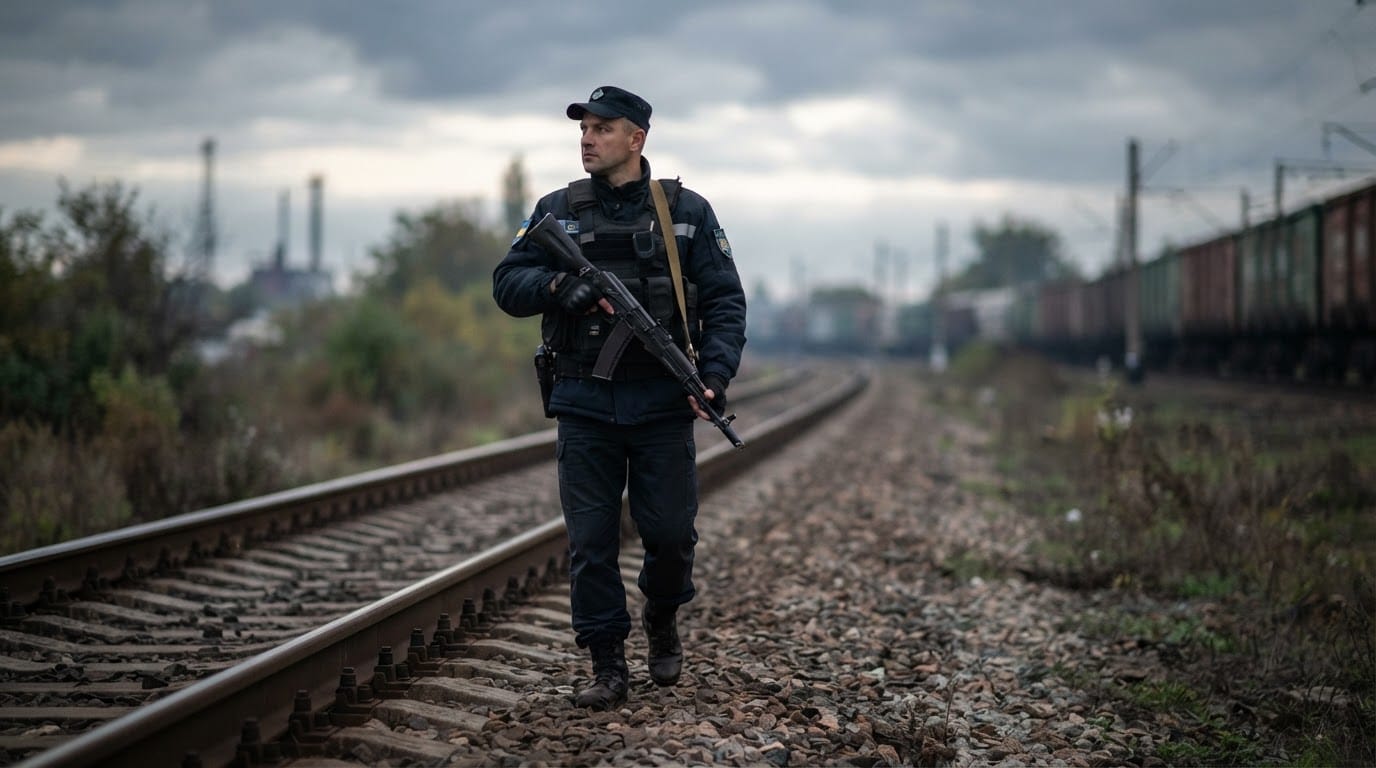
Ukraine is intensifying security measures across its national rail network, rolling out electronic warfare systems, reorganized air defense units, and hardened physical safeguards to defend its most critical logistical artery against an escalating campaign of drone and missile strikes.
The nationwide initiative comes as Russian forces increasingly target rail junctions, maintenance depots, and rolling stock. With civil aviation halted since the beginning of the full-scale invasion, the state railway operator, Ukrzaliznytsia, serves as the primary backbone of the nation's wartime economy. It transports millions of civilians, supplies the military, and carries vital exports to foreign borders. The newly announced measures aim to prevent logistical bottlenecks that could paralyze movement across the country.
A Multi-Layered Shield for Steel Tracks
The expanded defense initiative relies on a combination of high-tech countermeasures and dispersed rapid-response teams. National defense planners have allocated funds to procure advanced electronic warfare systems capable of disrupting long-range attack drones that track moving trains and stationary infrastructure.
Air defense formations, including specialized mobile fire teams, are being repositioned along critical corridors to protect rail hubs, border crossings, and high-priority freight paths. Government ministries and military leadership are working closely with railway authorities to introduce automated monitoring systems that detect airborne threats in real time. These early-warning tools recently allowed operators to evacuate passenger cars before incoming strikes, preventing casualties even when locomotives sustained direct hits.
Physical protections are also being upgraded. Key facilities now feature modular blast walls, anti-drone netting over power substations, and reinforced shelters for station workers and passengers. The operational model relies on dispersal: rolling stock and repair equipment are scattered across decentralized sidings rather than concentrated in large, vulnerable railyards.
Rising Attacks on Rolling Stock
The push to fortify the railway network comes in response to a sharp rise in targeted strikes. Russian attacks on locomotives and track sections have intensified, with operators logging more than 1,600 attacks against railway infrastructure during the first eight months of 2026 alone. Since 2022, several hundred locomotives have been damaged or destroyed.
Locomotives present an appealing target for attack drones due to their large thermal signatures and the logistical difficulty of replacing them. Ukraine’s network operates predominantly on broad-gauge tracks measuring 1,520 millimeters, meaning equipment cannot simply be imported from standard-gauge European systems without extensive conversion or specialized procurement.
Beyond drone and missile strikes, track crews face ongoing risks from ground-level sabotage. Railway inspectors have repeatedly discovered homemade explosive devices, derailment brackets, and concealed surveillance cameras placed along track beds. In response, Ukrzaliznytsia has intensified physical patrols and automated track scans, coordinating with domestic security agencies to detect tampering before trains arrive.
Preserving Evacuation and Trade Corridors
The survival of the rail system remains central to humanitarian and commercial viability. Rail lines are the primary exit route for civilians fleeing frontline bombardments, as well as the main conduit for essential goods entering contested regions.
To maintain transport continuity during disruptions, transit authorities are deploying combined rail-and-bus networks. When strikes damage tracks or overhead electric wires, passengers are transferred to backup motor coaches to bypass the blocked segment before boarding trains waiting on the other side.
At major transportation hubs, station platforms now operate under stricter boarding rules. During air alerts, passengers must move to underground passages and shelters, with boarding resumed only after clearances are granted. Digital booking systems and back-office networks have also been fortified against destructive cyberattacks intended to disrupt scheduling and ticket distribution.
The railway's trade corridors are equally vital. Heavy freight trains transport grain, metals, and industrial products to western border crossings connecting to Poland, Romania, Slovakia, and Hungary. Because maritime trade routes remain subject to disruption, these land border crossings represent a critical link to European and global markets.
International Coordination and the Road Ahead
Maintaining this logistical lifeline requires growing international assistance and domestic investment. Ukrainian officials are working with European partners and international financial institutions to finance the replacement of destroyed broad-gauge locomotives and secure specialized maintenance components. State-owned banks are also stepping in to provide direct liquidity for equipment acquisition and infrastructure repairs.
Engineering teams have built rapid-recovery units equipped with rail-mounted cranes, heavy equipment, and pre-positioned tracks to repair damaged sections within hours of an impact. Modular bridges and quick-assembly overhead wires have significantly reduced repair times, allowing trains to resume scheduled runs shortly after strikes.
While risks to passenger and freight transit remain high, the resilience of the rail system has become a central pillar of national endurance. By combining electronic warfare, hardened infrastructure, and rapid-restoration protocols, the state rail operator continues to keep supply chains and evacuation corridors moving despite daily threats from the air and on the ground.


