Ukraine Clears Major EU Hurdle as Hungary Lifts Accession Veto
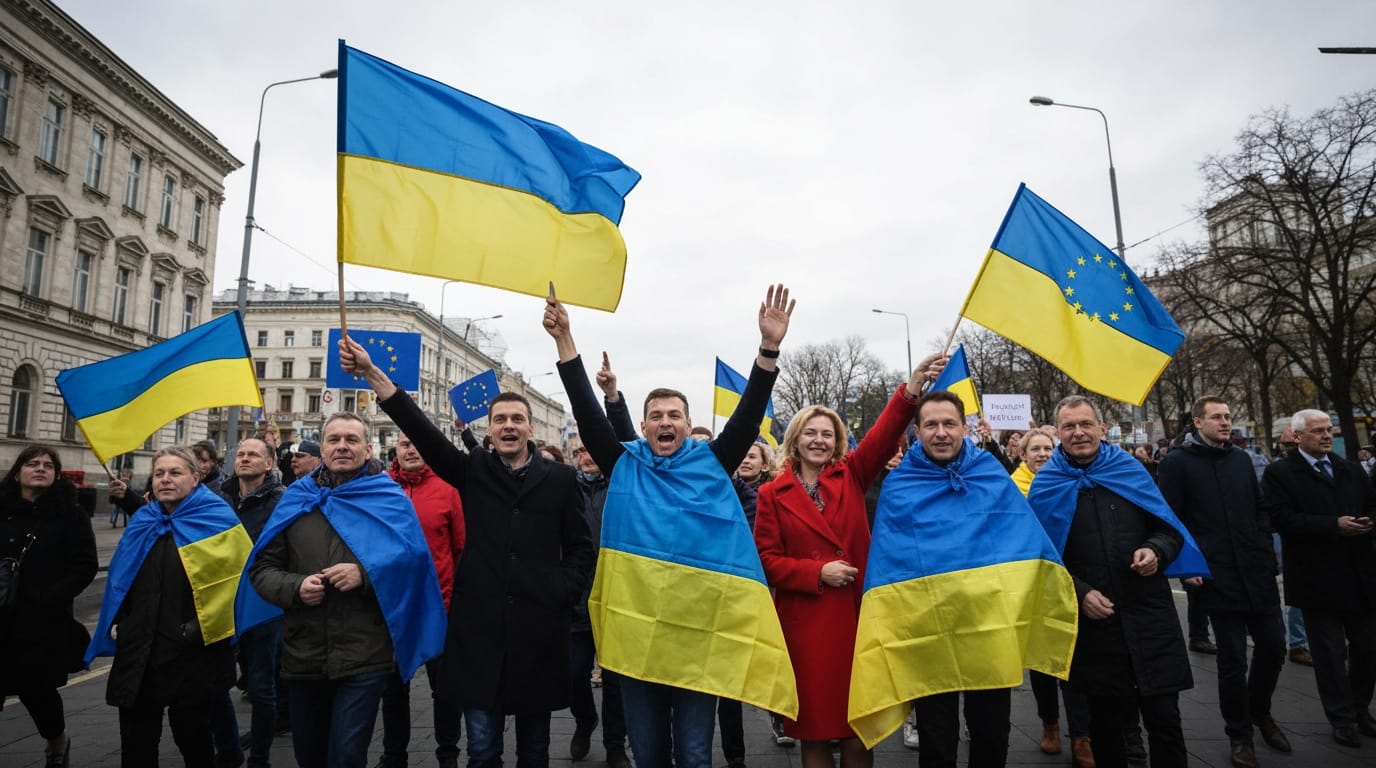
BRUSSELS, Belgium — Ukraine has taken a monumental step forward in its bid to join the European Union, following a breakthrough agreement with Hungary that removes a long-standing obstacle to formal accession negotiations. The deal, announced by Hungarian Prime Minister Péter Magyar on June 3, 2026, centers on the rights of the Hungarian-speaking minority in Ukraine and is set to unlock the crucial initial phase of Kyiv's path toward full EU membership. This development signals renewed momentum for Ukraine's European aspirations, even as the nation continues to grapple with ongoing conflict.
A Diplomatic Breakthrough on Minority Rights
The agreement reached between Kyiv and Budapest on June 3, 2026, marks a pivotal moment, resolving a dispute that had stalled Ukraine’s EU integration for nearly two years. Hungarian Prime Minister Péter Magyar declared that a "comprehensive agreement" had been secured with Ukraine regarding the linguistic, educational, cultural, and political rights of the approximately 100,000 ethnic Hungarians residing in Ukraine's Transcarpathia region.
This resolution comes after weeks of intensive technical-level negotiations involving experts from both nations, alongside representatives of Hungarian minority organizations in Transcarpathia. Under the terms of the accord, Ukraine has committed to integrating the agreed-upon measures into its legal framework in the near future. These commitments, which will form part of Ukraine's action plan submitted to the European Union, include restoring the minority school system, expanding the use of Hungarian in education—covering school administration, graduation examinations, and university entrance exams—and allowing for wider use of Hungarian national symbols in local communities where ethnic Hungarians constitute over 10 percent of the population.
The move represents a significant departure from the previous stance of former Hungarian Prime Minister Viktor Orbán, whose government had consistently blocked progress on Ukraine's EU bid. Orbán had previously presented an 11-point list of demands, primarily concerning minority rights, and voiced objections to Ukraine's rapid integration into the bloc, citing concerns about the financial implications and the ongoing war. The election of Péter Magyar ushered in a less confrontational approach, culminating in this critical agreement.
Unlocking the Accession Process: Opening the First Clusters
The immediate consequence of the Ukrainian-Hungarian agreement is the anticipated opening of the first "enlargement clusters" for Ukraine and Moldova. EU officials have confirmed that discussions among EU ambassadors took place on June 3 to formalize the process. While the exact date for the formal opening remains fluid, EU and national diplomats indicate a plan for this to occur around June 15 or 16, 2026, in Luxembourg, on the sidelines of meetings of EU foreign and European ministers.
This initial step will focus on "Cluster 1 – Fundamentals," which encompasses critical areas such as the rule of law, human rights, and judicial reform. These "clusters" are thematic groupings of the 33 policy chapters that candidate countries must negotiate and align with EU law, known as the acquis communautaire. The opening of this first cluster is a crucial procedural milestone, signaling a concrete progression from candidate status to active negotiations.
Ukraine officially applied for EU membership just four days after Russia's full-scale invasion in February 2022, receiving candidate status in June of that year. Accession negotiations were formally opened in June 2024, alongside Moldova, with Ukraine successfully completing its screening process—an assessment of its alignment with EU law—in September 2025. Despite these advancements, the Hungarian veto had acted as a bottleneck, preventing the substantive negotiations from moving forward. Beyond the first cluster, EU diplomats anticipate that the sixth cluster on "external relations" could also open without issues, and progress might be made on clusters two and three, covering broader economic concerns.
Hungary's Cautious Support and Persistent Conditions
While the agreement signifies a significant shift in Hungary's immediate obstruction, Budapest's long-term position on Ukraine's full membership remains nuanced. Prime Minister Magyar has explicitly stated that while his government will support the opening of Ukraine's first accession cluster, it continues to oppose an "accelerated" path to EU membership for the war-torn nation.
Magyar reiterated that if Ukraine successfully closes all 33 accession chapters within the next 10 to 15 years, Hungary would support its accession, subject to a legally binding national referendum. This condition underscores the cautious approach taken by the new Hungarian administration, which, despite resolving the immediate minority rights dispute, still emphasizes a thorough and potentially lengthy process for Ukraine's full integration. Previous concerns raised by Budapest under Orbán included the financial strain Ukraine's membership could place on the EU and the potential for the conflict to draw the bloc directly into war with Russia. The current agreement, however, focuses specifically on the rights of the Hungarian minority, indicating that the immediate block has been removed on those grounds.
The Long Road Ahead for Kyiv
Despite this diplomatic triumph, Ukraine's journey to full European Union membership remains a marathon, not a sprint. The opening of the first clusters marks the beginning of a rigorous and extensive process. Candidate countries must implement comprehensive reforms across all 33 policy chapters to align their laws and standards with those of the EU. This includes areas ranging from agriculture and environmental regulations to competition rules and judicial independence.
The process typically spans many years and requires unanimous approval from all existing member states at various critical junctures. For Ukraine, undertaking such profound reforms is made even more challenging by the ongoing full-scale war. Nevertheless, Kyiv has demonstrated an impressive capacity for reform, even under wartime conditions, as evidenced by its successful completion of the screening process in September 2025. The EU has recognized Ukraine's commitment, noting progress in areas such as justice system reform, developing a market economy, tackling money laundering, modernizing public administration, and protecting national minority rights.
This latest development not only highlights Ukraine's resilience and determination but also reaffirms the European Union's strategic commitment to its enlargement policy. While the path ahead is fraught with challenges and demands unwavering dedication from Kyiv, the agreement with Hungary represents a tangible and critically important step toward realizing Ukraine's European future. It underscores the evolving geopolitical landscape and the EU's continued resolve to integrate its Eastern partners, reinforcing stability and shared values across the continent.


