Ukraine Forges Decade-Long Defense Pact with Qatar Amidst Escalating Regional Tensions
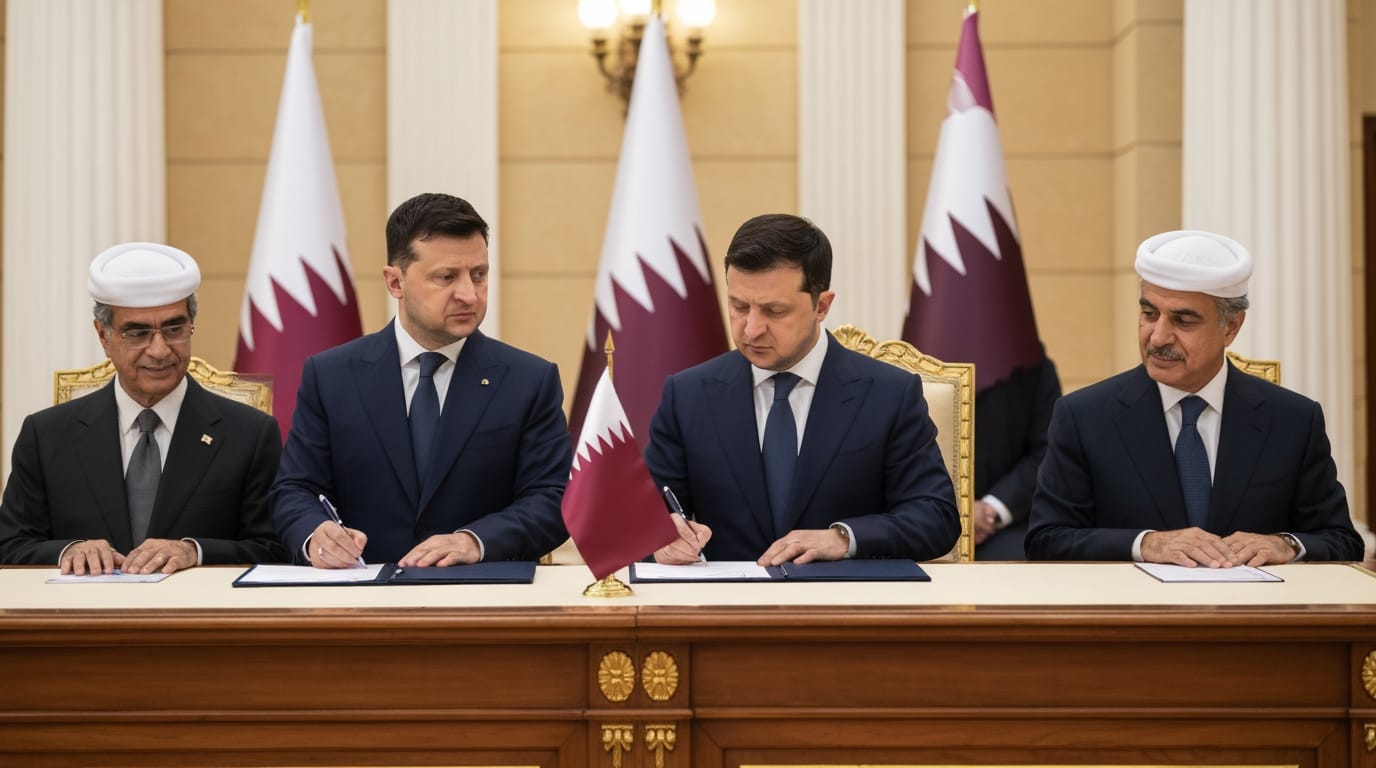
Doha, Qatar – In a significant diplomatic and strategic maneuver, Ukrainian President Volodymyr Zelenskyy concluded a working visit to Doha on Saturday, March 28, 2026, culminating in the signing of a comprehensive defense cooperation agreement with the State of Qatar. The landmark pact aims to bolster joint capabilities against missile and drone threats, marking a crucial step in Ukraine's ongoing efforts to secure international partnerships and share its battle-tested expertise in aerial defense. The agreement, signed by the chiefs of the general staff of both nations, establishes a mutually beneficial defense partnership for at least 10 years, encompassing technological collaboration, joint investments, and co-production facilities.
A New Era of Defense Collaboration
The newly inked defense cooperation agreement between Kyiv and Doha signals a deepening relationship between Ukraine and the strategically vital Gulf state. The pact specifically outlines collaboration in technological fields, the development of joint projects, defense investments, and the exchange of expertise in countering missiles and unmanned aerial systems. This focus directly addresses pressing security concerns for both nations. For Ukraine, the agreement represents another avenue for support and technological advancement as it continues to defend against persistent aerial attacks. For Qatar, and indeed the broader Gulf region, the partnership offers access to Ukraine's invaluable, real-world experience in mitigating sophisticated drone and missile threats, particularly in a period of heightened regional volatility. President Zelenskyy, meeting with Qatar's Amir Sheikh Tamim bin Hamad Al Thani and Prime Minister Sheikh Mohammed bin Abdulrahman Al-Thani at Lusail Palace, emphasized the long-term vision for this collaboration, which also includes the establishment of co-production facilities and technological partnerships between companies.
Leveraging Battlefield Experience Against Aerial Threats
Ukraine's motivation for such partnerships is rooted in its extensive and hard-won experience in air defense. The nation has developed advanced capabilities in shooting down Russian drones and missiles over four years of full-scale conflict, making its expertise highly sought after. During his discussions in Doha, President Zelenskyy briefed Qatari leadership on the current security situation in Ukraine, highlighting continued attacks by Russia and what he described as Moscow's growing cooperation with Iran. He underscored that strengthening air defense systems remains a top priority for Kyiv. Concurrently, the Gulf region faces its own significant aerial threats, with an ongoing aerial campaign by Iran against neighboring states contributing to heightened tensions. Ukraine has actively promoted its anti-drone capabilities as among the most advanced globally, offering a systematic approach and integration of experience to partners. Kyiv has even proposed exchanging its drone interceptors for the more expensive air-defense missiles used by Gulf nations, indicating a strategic synergy where both sides stand to gain from shared knowledge and technology.
Qatar's Expanding Diplomatic and Security Footprint
The defense pact also underscores Qatar's increasingly prominent role in global diplomacy and security affairs. Known for its active mediation efforts in various international conflicts since the 1990s, Qatar has recently gained significant recognition for its humanitarian mediation between Russia and Ukraine. These efforts have led to the successful reunification of Ukrainian children separated from their families due to the ongoing conflict. Qatari diplomats have maintained close contact with both Moscow and Kyiv, cultivating bilateral engagement even when other channels were closed. The signing of a defense cooperation agreement moves beyond humanitarian concerns to a direct security partnership, showcasing Qatar's willingness to engage in multifaceted international relations. This engagement aligns with Qatar's strategic foreign policy to position itself as a key mediator and contributor to regional and global stability, leveraging its resources and diplomatic ties. The agreement reflects a shared commitment to enhancing security between the two states.
A Broader Gulf Tour for Strategic Partnerships
President Zelenskyy's visit to Qatar was part of a broader tour of Gulf nations, which also included stops in Saudi Arabia and the United Arab Emirates. This diplomatic offensive aimed to forge and strengthen partnerships for security across the region. Similar defense cooperation agreements or discussions on security collaboration occurred in both Saudi Arabia and the UAE, emphasizing a concerted effort by Ukraine to leverage its expertise and seek support from a diverse range of international partners. Ukraine has even deployed anti-drone specialists to these Gulf countries, illustrating a practical dimension to these emerging partnerships. The emphasis across all these meetings was on countering the growing threat of drones and missiles, a challenge that both Ukraine and Gulf nations increasingly face. This strategic outreach highlights Ukraine's proactive approach to international security, transforming its battlefield experience into a valuable asset for global partnerships.
Conclusion
The signing of the defense cooperation agreement between Ukraine and Qatar represents a strategic milestone for both nations. For Ukraine, it provides a crucial long-term partnership that offers technological collaboration, investment, and a platform for sharing its hard-won expertise in aerial defense, vital for its ongoing struggle. For Qatar, the pact enhances its defense capabilities against evolving regional threats and further solidifies its position as an influential actor in global security and diplomacy. This mutually beneficial alliance, forged amidst complex geopolitical landscapes, underscores the adaptability of international relations and the growing importance of shared security interests in an interconnected world. The decade-long commitment to joint defense projects and technological exchange could have lasting implications for the security architecture of both regions, marking a significant development in the ongoing efforts to ensure stability and protect against modern aerial warfare.


