Ukraine Grapples With Wartime Election Dilemma: Democracy's Call Amidst Existential Threat
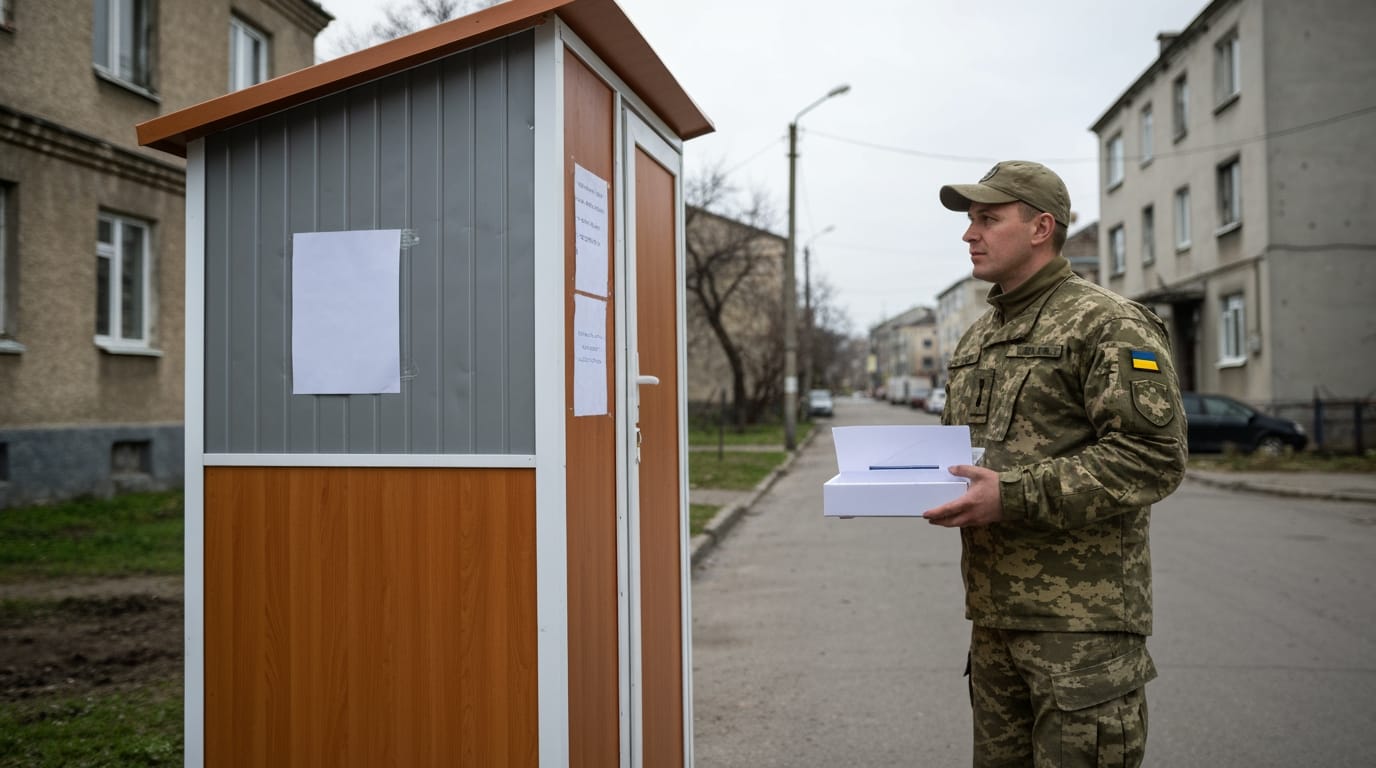
KYIV – Ukraine finds itself at a critical juncture, navigating the profound complexities of upholding democratic principles while locked in an existential struggle against Russian aggression. The question of holding elections under martial law has ignited a robust debate, juxtaposing constitutional mandates against the grim realities of a nation at war. While some international voices urge a swift return to the polls, a vast majority of Ukrainians and their leadership maintain that credible, free, and fair elections are simply unfeasible and dangerous as long as active hostilities persist. The overarching consensus within Ukraine is clear: elections are desirable, but only when safety and logistical integrity can be unequivocally guaranteed.
The Constitutional Imperative and the Reality of Martial Law
Ukraine has been operating under martial law since Russia's full-scale invasion in February 2022, a legal framework repeatedly extended by parliamentary votes, most recently until August 2025. This critical legal status, deeply embedded in the nation's constitution and specific laws, explicitly prohibits the conduct of national elections—presidential, parliamentary, or local—while it remains in effect. The rationale behind this prohibition is multifaceted and rooted in the need to ensure governmental continuity, bolster national defense, and prevent any disruption to the military command structure. Lifting martial law, even temporarily for elections, could introduce critical vulnerabilities, potentially undermining wartime logistics and security efforts and weakening control over strategically important regions. President Volodymyr Zelenskyy's five-year term, for instance, would have concluded in May 2024, and parliamentary elections were due in October 2023. However, the constitution allows for the legitimate continuation of the president's and parliament's powers until new elections can be lawfully conducted after martial law is lifted.
The Unanimous Ukrainian Stance: Unity Over Division
Despite the constitutional pathway for the current government to remain in power, the debate over elections has been fueled by external pressure. Some international figures, including former US President Donald Trump, have publicly called for elections, sometimes framing the absence of a vote as a sign of authoritarianism. However, these calls have largely been met with bewilderment and strong opposition from within Ukraine. Polling data consistently reveals that a significant majority of Ukrainian citizens are against holding elections during the ongoing war. A September-October 2024 survey indicated that 60 percent of Ukrainians did not support wartime elections, a figure that rose to 63 percent by February 2025. Other surveys show even higher opposition, with over 80 percent of respondents preferring to defer elections until the war concludes.
This overwhelming public sentiment is not born of apathy but rather a profound understanding of the current realities and a prioritization of national security and unity. Ukrainian civil society organizations, echoing public opinion, have issued statements asserting that democratic elections cannot genuinely occur without a lasting peace and the establishment of robust security guarantees. They underscore that simply holding elections does not guarantee their democratic integrity and that any premature vote would risk further destabilization and potential manipulation by hostile forces.
Logistical Nightmares and Security Catastrophes
The practical challenges of organizing national elections in a country under full-scale invasion are monumental, bordering on insurmountable. The security risks alone present a formidable barrier. Daily missile and drone attacks across Ukrainian cities mean that polling stations, voters, and election staff would be under constant threat, making the safety of the electoral process impossible to guarantee. The unstable security situation extends to threats of shelling, terrorist acts, sabotage, landmines, and unexploded ordnance, jeopardizing every stage of the electoral process from ballot delivery to safe vote counting.
Furthermore, the war has triggered an unprecedented displacement crisis. As of February 2025, approximately 6.9 million Ukrainians are displaced globally, with an additional 3.7 million internally displaced within the country. Ensuring the ability of these millions to register and cast their votes would necessitate a massive overhaul of the voter registration system and significant resources, neither of which Ukraine currently possesses while fighting for its survival.
Adding to the complexity, roughly one-fifth of Ukraine's territory remains under Russian occupation, rendering any elections in these areas impossible and disenfranchising millions of citizens. Moreover, a substantial portion of the adult male population—around one million individuals—is currently serving in the armed forces. Enabling their participation, either as voters or candidates, while they are engaged in combat operations on the front lines, poses immense practical and logistical hurdles that current electoral laws do not adequately address. Even if these hurdles could be overcome, the cost of a wartime election would be exorbitant, diverting billions of dollars from essential defense and reconstruction efforts.
The Shadow of Russian Interference
A critical consideration in the debate is the undeniable risk of Russian interference. Elections conducted under wartime conditions would be highly vulnerable to Moscow's extensive arsenal of hybrid warfare tactics, including disinformation campaigns, cyberattacks on electoral infrastructure, and attempts to destabilize the political landscape. Russia has a documented history of targeting Ukrainian government institutions with cyber operations and would undoubtedly seize the opportunity to disrupt vital systems like digital voter registration and election commissions. Disinformation and psychological operations would aim to sow discord, influence public opinion, and discredit outcomes. Some Ukrainian officials and experts believe that calls for wartime elections from outside Ukraine inadvertently play into the Kremlin's hands, which seeks to erode Ukraine's political stability from within. Russia has already attempted to delegitimize President Zelenskyy's leadership by using the absence of elections as propaganda.
Lessons from History and the Path Forward
Historically, democratic nations have often postponed elections during major conflicts, particularly when national security was gravely threatened or widespread hostilities made a fair process impossible. Countries like the United Kingdom and France postponed elections during World War II, and Israel has done so during its periods of intense conflict. These precedents highlight a pragmatic recognition that while elections are a cornerstone of democracy, their integrity and the safety of the populace must take precedence in times of existential crisis. The United States, while holding elections during its major wars, did so without direct warfare on its mainland disrupting the electoral process.
Ukrainian President Zelenskyy has expressed a willingness to hold elections if key conditions are met: international partners, particularly the United States and European allies, can help ensure the security of the polling process, and Ukraine's electoral laws can be appropriately altered. He has even suggested that with such guarantees, Ukraine could be ready for elections within 60-90 days. However, First Deputy Speaker of the Verkhovna Rada Oleksandr Kornienko has underscored the immense difficulties, emphasizing the need for a legal framework, guaranteed security, and mechanisms for military personnel and displaced citizens to vote. The Organization for Security and Co-operation in Europe (OSCE) acknowledges these complex challenges and is assisting Ukraine in preparing for post-conflict elections, recognizing that truly democratic and secure elections will require innovative solutions from Ukraine and its international partners.
Ultimately, Ukraine's journey toward its next elections remains contingent on the evolving security situation. The debate underscores a profound commitment to democratic values, even as the nation confronts the hard truth that upholding these values in wartime demands careful consideration of safety, practicality, and the very survival of the state. For now, the overwhelming sentiment is that the time for casting ballots will come, but only when the conditions allow for a vote that is truly free, fair, and above all, safe.


