Ukraine Navigates Wartime Reshuffle Amid Defense Leadership Controversy
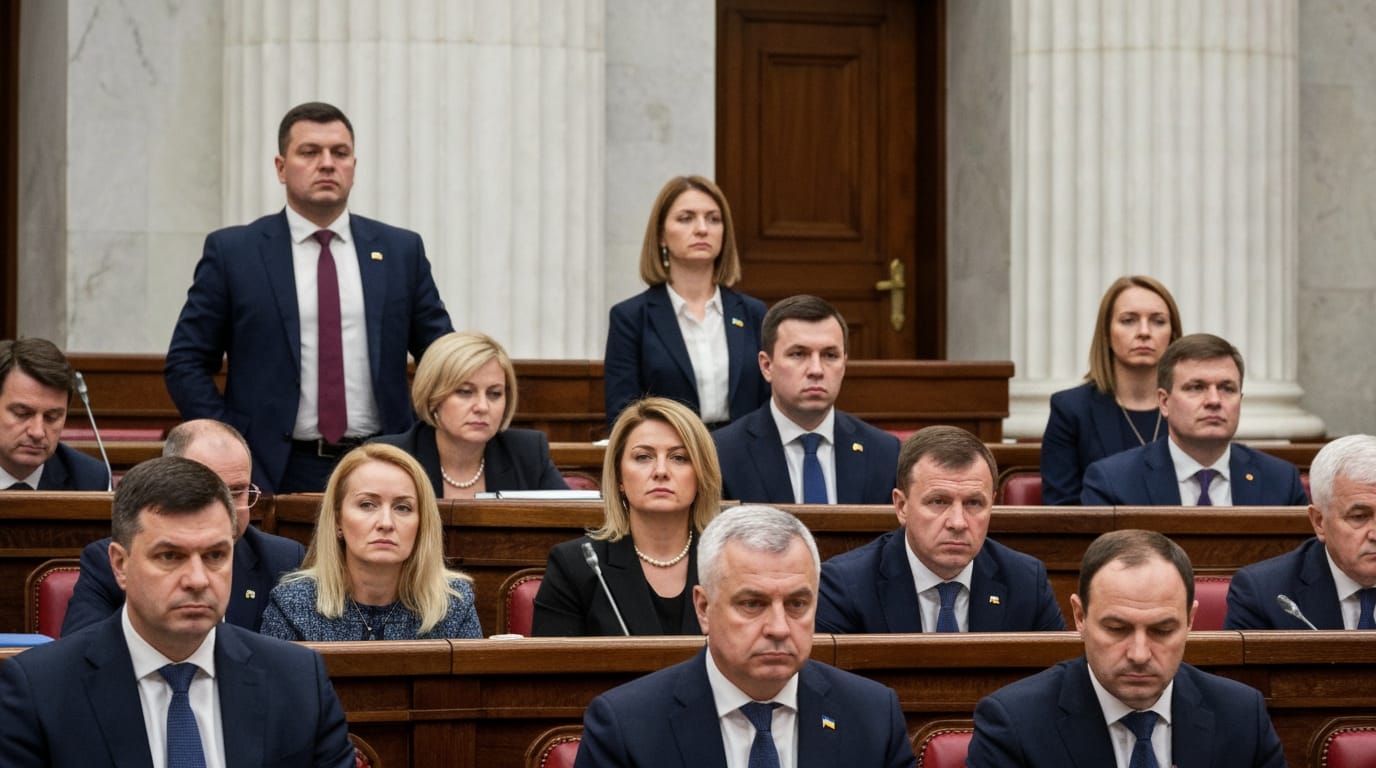
KYIV, Ukraine – Ukraine's parliament has approved a significant government overhaul, appointing a new Prime Minister and replacing its Defense Minister, a move that has ignited public protests and raised questions about stability during the ongoing conflict with Russia. The shake-up, President Volodymyr Zelenskyy's second major cabinet reorganization within a year, aims to strengthen governance and national preparedness, even as it sparks debate over the timing and rationale behind the dismissal of a key figure in military modernization.
The Verkhovna Rada, Ukraine's legislative body, on Thursday officially confirmed Sergii Koretskyi, former head of the state energy company Naftogaz, as the country's new Prime Minister. His appointment follows the resignation of Yulia Svyrydenko, who served as Prime Minister for approximately one year. This leadership transition comes at a critical juncture, with Ukraine facing persistent Russian aggression, internal challenges, and a looming winter that demands robust energy infrastructure and economic stability.
A New Face for the Premiership
Sergii Koretskyi steps into the demanding role of Prime Minister with a mandate focused on critical national priorities. As the former CEO of Naftogaz, Ukraine's largest oil and gas company, and Ukrnafta, the country's largest oil producer, Koretskyi brings a background in the energy sector. His key objectives, as outlined ahead of his appointment, include diligently preparing Ukraine for the upcoming winter, safeguarding vital energy and fuel infrastructure, stabilizing the national economy, and ensuring the effective management of international aid. These areas are particularly pertinent as officials anticipate the coming winter to be among the most challenging of the entire war. His prior experience as an effective crisis manager in the business world is reportedly a significant factor in his selection for the top government post.
The departure of former Prime Minister Yulia Svyrydenko on July 14, 2026, triggered the resignation of the entire Cabinet, in line with Ukrainian law. While President Zelenskyy praised Svyrydenko's "clear, steady and effective work," her exit has led to speculation that she may be offered a new, significant diplomatic role, possibly as Ukraine's ambassador to the United States. This comprehensive reshuffle, encompassing not only the Prime Minister but also other key ministerial positions, underscores President Zelenskyy's stated intent for a "renewal" across executive and law enforcement institutions.
The Defense Minister's Controversial Dismissal
Central to the ongoing political turbulence is the dismissal of Mykhailo Fedorov from his post as Defense Minister after a mere six months in office. Fedorov, a 35-year-old former technology minister, was widely credited with significantly enhancing Ukraine's defense capabilities. His tenure saw the expansion of domestic drone production, digitalization of military operations, streamlining of bureaucratic processes, and modernization of defense procurement. Many analysts attributed Ukraine's successful long-range drone campaigns against Russian targets, including oil facilities and logistics networks, to his reform efforts.
The lack of a public explanation from President Zelenskyy regarding Fedorov's dismissal has fueled considerable public and political scrutiny. Unconfirmed reports from sources within the "Servant of the People" faction suggest a "systemic conflict" between Fedorov and Oleksandr Syrskyi, the Commander-in-Chief of Ukraine's Armed Forces, which proved impossible to resolve. Some observers also speculated that Fedorov's growing popularity and reformist zeal, which was sometimes perceived as "too progressive" by elements of the military establishment, might have positioned him as a potential political rival to the President, leading to his removal.
The decision to oust Fedorov has not been met without resistance. More than 1,000 demonstrators gathered outside the presidential office in Kyiv to protest his dismissal, chanting "Shame!" and displaying signs that read, "The Russians are celebrating". Criticism also emerged from civil society and international partners who lauded Fedorov's contributions to defense reform and anti-corruption efforts. The controversy deepened with the resignation of Pavlo Yelizarov, a deputy commander of Ukraine's air force and a leading figure in drone warfare, who described Fedorov's removal as "a great evil" for Ukraine's defense, expressing concerns about potential disruptions to ongoing military reforms. Interior Minister Ihor Klymenko is expected to step into the role of Defense Minister, succeeding Fedorov.
Implications Amidst Continued Conflict
This extensive government reshuffle unfolds as Ukraine remains embroiled in intense fighting, particularly in its eastern regions, and grapples with ongoing shortages of troops and air defense systems. Despite these challenges, Ukrainian forces have achieved notable successes, including expanded long-range strikes against Russian oil facilities and military logistics, part of a "40-day campaign" to pressure Moscow. The political changes, therefore, carry significant implications for the country's war effort, its international standing, and internal stability.
Maintaining continuity in defense leadership is paramount during wartime, especially for a nation heavily reliant on military coordination, ongoing reforms, and sustained Western support. Fedorov's departure has sparked concerns about whether the momentum in drone development, procurement reform, and broader military modernization will be sustained under new leadership. The episode also highlights a delicate balancing act for Ukraine's wartime leadership: asserting political authority while ensuring the continuity and integrity of institutional reforms essential for national resilience and the effective prosecution of the war.
The parliamentary vote to approve the new government is expected to pass, yet the political fallout from these leadership changes may extend well beyond the immediate reshuffle. President Zelenskyy will likely face increasing pressure to provide clearer explanations for the decisions and reassure both the Ukrainian public and international allies that the nation's defense trajectory remains steadfast. As Ukraine navigates these internal political shifts, the effectiveness of the new cabinet in addressing both the immediate demands of the conflict and long-term national development will be closely watched by domestic and international observers alike.


