Ukraine Rings in New Year Under Barrage of 200 Russian Drones, Energy Infrastructure Targeted
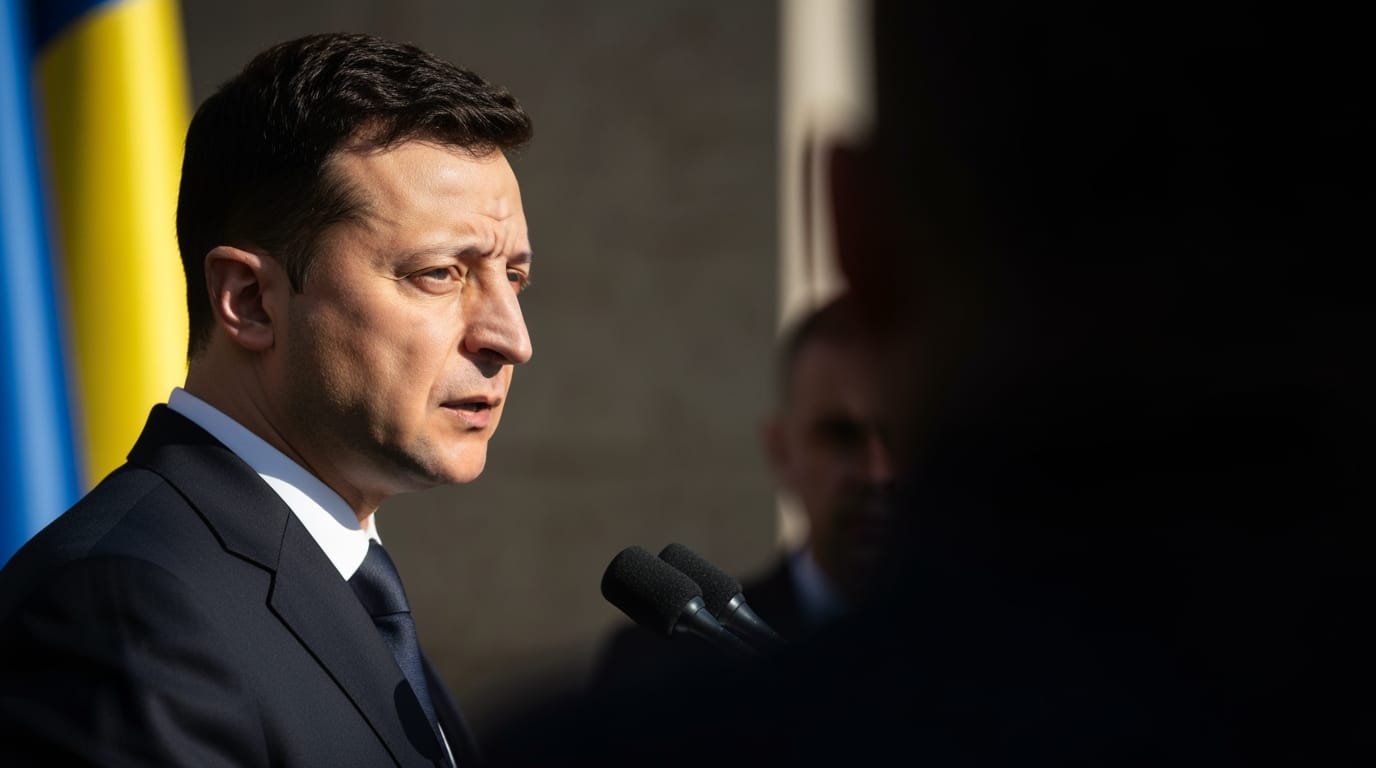
KYIV, Ukraine – Ukraine ushered in 2026 under a relentless aerial assault, as Russia launched over 200 attack drones across the country overnight on New Year's Eve, primarily targeting vital energy infrastructure. President Volodymyr Zelenskyy condemned the widespread assault, stating that Russia was deliberately extending the war "into the New Year," as millions of Ukrainians faced the dawn amidst fresh damage and power disruptions. The coordinated drone strike, one of the largest of its kind, underscored Russia's persistent strategy to cripple Ukraine's energy grid and test the nation's air defenses as the nearly four-year conflict continues.
The extensive overnight attack, commencing on the evening of December 31, 2025, and continuing into the early hours of January 1, 2026, saw a massive wave of unmanned aerial vehicles (UAVs) descend upon multiple Ukrainian regions. According to Ukraine's Air Force, a total of 205 drones of various types were launched, with approximately 130 of them identified as Iranian-made "Shahed" attack drones. These drones, known for their low cost and ability to overwhelm air defense systems, were directed at strategic energy facilities across at least seven regions: Volyn, Rivne, Zaporizhzhia, Odesa, Sumy, Kharkiv, and Chernihiv.
Despite the scale of the offensive, Ukrainian air defense forces reported a significant success rate, intercepting or suppressing 176 of the 205 incoming drones. However, the sheer volume of the attack meant that 24 strike drones still managed to hit their targets across 15 different locations. In the western Volyn region, the assault led to local blackouts, leaving over 100,000 households without electricity. The southern port city of Odesa also endured multiple waves of drone attacks, resulting in damage to a two-story residential building and a high-rise apartment, though no casualties were immediately reported in the city from these specific drone impacts. Emergency services and energy workers immediately mobilized to address the damage and restore power in affected areas, highlighting the ongoing resilience of Ukraine's infrastructure response teams.
This New Year's Day offensive marks a continuation of Russia's calculated strategy to degrade Ukraine's energy infrastructure, a tactic that has intensified significantly since the full-scale invasion began in 2022. By targeting power generation plants, substations, and distribution networks, Moscow aims to undermine civilian morale, disrupt industrial capacity, and strain Ukraine's ability to sustain its defense efforts, particularly during the harsh winter months. The deliberate timing of this massive drone strike on a major holiday underscores a psychological dimension to Russia's warfare, seeking to cast a pall over a time typically associated with hope and renewal. President Zelenskyy's assertion that Russia "deliberately brings war into the New Year" encapsulates this perceived intent.
The persistent and increasingly sophisticated nature of these drone attacks places immense pressure on Ukraine's air defense capabilities, which have been a critical factor in mitigating casualties and infrastructure damage throughout the war. Ukrainian officials have repeatedly emphasized the need for more advanced air defense systems to counter the diverse array of Russian aerial threats, which include not only drones but also cruise and ballistic missiles. The cost asymmetry between Russia's relatively inexpensive drones and the high-value interceptor missiles used by Ukraine further complicates the defensive effort, creating a constant challenge for resource allocation. Zelenskyy, following the New Year's attack, made an urgent plea to the international community, stressing that "there is scarce equipment available among our allies" and expressing the expectation that vital defense equipment, including systems agreed upon with the United States in late December, would arrive without delay.
Beyond the immediate damage to infrastructure, these attacks inflict a significant human toll, disrupting daily life, affecting access to essential services, and causing psychological distress among the population. The United Nations has previously highlighted that Russia's systematic drone attacks on civilians and civilian objects constitute potential war crimes and crimes against humanity. Despite the constant threat, Ukrainian citizens and emergency services continue to demonstrate remarkable resilience. Teams of energy workers labor tirelessly, often under dangerous conditions, to repair damaged networks and restore power, while humanitarian organizations strive to provide support to those affected by outages. The continuous cycle of destruction and reconstruction has become a grim reality for many across the nation.
As 2026 begins, the large-scale New Year's drone attack serves as a stark reminder of the unyielding nature of the conflict. Russia's unwavering focus on Ukraine's energy infrastructure signals its determination to continue its campaign of attrition, even as diplomatic efforts, including recent talks involving US, European, and Ukrainian officials, seek pathways to peace. For Ukraine, the incident underscores the critical and ongoing need for robust international military and financial support, particularly in strengthening its air defense capabilities, to protect its people and preserve its critical infrastructure against a relentless adversary. The resilience shown in the face of such adversity remains a testament to the Ukrainian spirit, yet the call for tangible, timely assistance from allies resonates with renewed urgency.


