Ukraine Seeks Vital Assurances in Warsaw as New Polish President Signals Shifting Dynamics
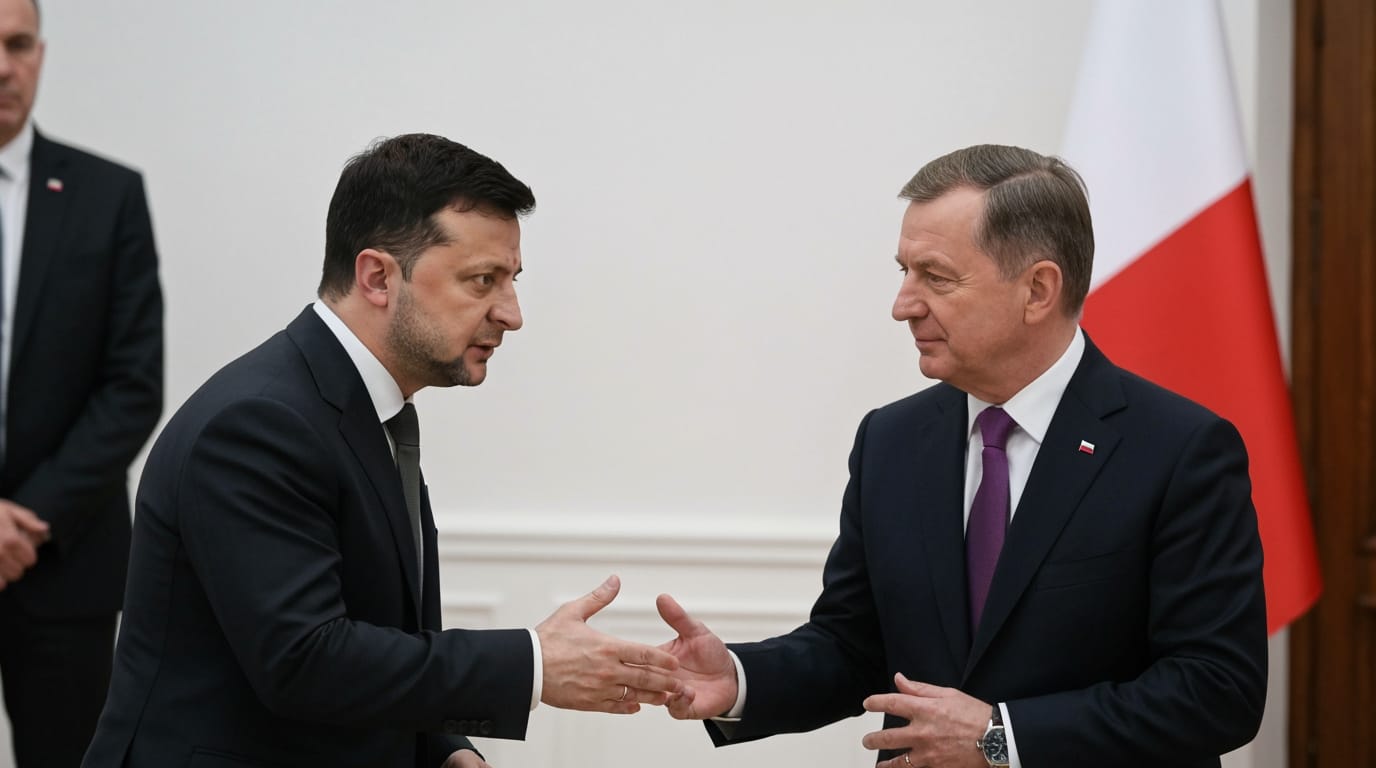
WARSAW, Poland — Ukrainian President Volodymyr Zelenskyy traveled to Warsaw today, December 19, 2025, for a crucial meeting with Poland's newly installed, Trump-aligned President Karol Nawrocki, at a pivotal moment for Ukraine's defense against ongoing Russian aggression. The high-stakes encounter in the Polish capital unfolded hours after European Union leaders finalized a substantial €90 billion loan package to support Ukraine's war effort over the next two years, underscoring the urgency of continued international solidarity. The discussions aimed to reinforce bilateral support, address regional security challenges, and navigate the complex geopolitical landscape influenced by the prospect of a more isolationist U.S. foreign policy.
A Shifting Alliance at a Critical Juncture
President Zelenskyy's visit to Warsaw on Friday, December 19, 2025, marked a significant diplomatic engagement, coming at a time when Ukraine is heavily reliant on sustained international aid. The meeting with President Nawrocki, who assumed office on August 6, 2025, after succeeding Andrzej Duda, was closely watched by international observers. The backdrop to these discussions included the recent commitment from EU leaders to provide a €90 billion loan to Ukraine, a critical financial lifeline for Kyiv. This aid package highlights Europe's resolve to support Ukraine, even as uncertainties linger regarding future trans-Atlantic cooperation, particularly from the United States. President Nawrocki's approach to relations with Kyiv is notably cooler than that of his predecessor, Andrzej Duda, reflecting increasing fractures within Polish politics and a more assertive stance on national interests.
The New Polish Leadership and its Stance on Ukraine
Karol Nawrocki's presidency has introduced a discernible shift in Poland's foreign policy approach, particularly concerning Ukraine. Described as "patriotic, pro-Christian, pro-NATO and favourable to president Donald Trump," Nawrocki's political alignment has drawn considerable attention. Prior to the meeting, Nawrocki had publicly insisted that President Zelenskyy should visit Warsaw to express gratitude for Poland's substantial support, rather than Nawrocki traveling to Kyiv. This demand, supported by public opinion in Poland, signals a more transactional and less unconditionally supportive phase in Polish-Ukrainian relations.
Nawrocki's stance, while emphasizing continued support for Ukraine against Russian aggression, also prioritizes Polish concerns and interests. He has been quoted saying, "We should support Ukraine, and we do. At the same time, we should... ensure that Ukraine treats Poland as a partner. The conflict has been going on for nearly four years, and I have the impression that we Poles often don't feel like partners in this relationship". This sentiment underscores a desire for reciprocity and a re-evaluation of the partnership, contrasting with the more unequivocal solidarity expressed by former President Duda. Nawrocki's interactions with former U.S. President Donald Trump, including a meeting in May 2025 and his representation of Poland in an online meeting with Trump and European leaders in August 2025, further solidify his "Trump-aligned" image.
Navigating Geopolitical Complexities: Aid, Security, and Bilateral Tensions
The agenda for the meeting between Zelenskyy and Nawrocki likely encompassed critical issues of defense assistance, security agreements, and broader regional stability. Ukraine has consistently sought to bolster its air defense capabilities and secure long-term security guarantees from its allies. While Poland under both Duda and Nawrocki has been a vital transit hub for military and humanitarian aid to Ukraine, and a strong advocate for Ukraine's EU and NATO integration, underlying bilateral tensions have occasionally surfaced.
Past disputes, such as those concerning Ukrainian grain exports and the treatment of Ukrainian refugees, have highlighted the complexities of the relationship. While these specific issues may not have been the primary focus of today's discussions, Nawrocki's more nationalistic approach suggests a greater emphasis on resolving such friction points in a manner perceived to be favorable to Poland. Cooperation on armaments production, particularly drones, and Poland's participation in initiatives to supply artillery shells were also anticipated topics, building on previous discussions between Ukraine and its allies. The strategic importance of Poland as a frontline state bordering Ukraine means its continued, robust support remains indispensable for Kyiv.
The 'Trump Factor' and Future Western Support
A significant dimension of President Nawrocki's rise to power and his current foreign policy posture is his alignment with Donald Trump. This "Trump factor" introduces an element of uncertainty into the broader Western support framework for Ukraine. Former President Trump has, in the past, expressed skepticism regarding extensive aid to Ukraine and questioned the utility of traditional alliances like NATO. President Duda, in an earlier conversation, had even suggested to President Zelenskyy "to remain committed to the course of calm and constructive cooperation with US President Donald Trump," believing that a good will and honesty form the foundation of the U.S. negotiation strategy.
With Nawrocki sharing a similar political wavelength with Trump, there is speculation that Poland could potentially serve as a bridge or an influential voice in shaping a future U.S. policy towards Ukraine, should Trump return to the White House. However, Nawrocki's tougher stance towards Kyiv also suggests that Poland's support might become more conditional, mirroring potential shifts in American foreign policy. This evolving dynamic places additional pressure on Ukraine to articulate its needs and demonstrate its value as a strategic partner to all allies, particularly those with strong ties to potential future U.S. leadership. The meeting today between Zelenskyy and Nawrocki can be seen as an early attempt to navigate these complex political currents and ensure a stable path for Ukraine's international backing.
Conclusion
President Zelenskyy's meeting with Poland's new, Trump-aligned President Karol Nawrocki underscores the evolving and increasingly complex diplomatic landscape surrounding Ukraine's defense. As Ukraine continues to battle Russian aggression, securing unwavering international support, both financial and military, remains paramount. The discussions in Warsaw, framed by the recent EU aid package and the backdrop of shifting political alliances, reflect Ukraine's ongoing efforts to solidify its partnerships. The "Trump factor" embedded in Nawrocki's leadership adds a new layer of strategic consideration, highlighting the need for Kyiv to adapt its diplomatic approach to ensure the continuity of critical Western assistance in the challenging years ahead.


