Ukraine Unleashes Deep Strikes into Russia, Eight Killed as Conflict Escalates
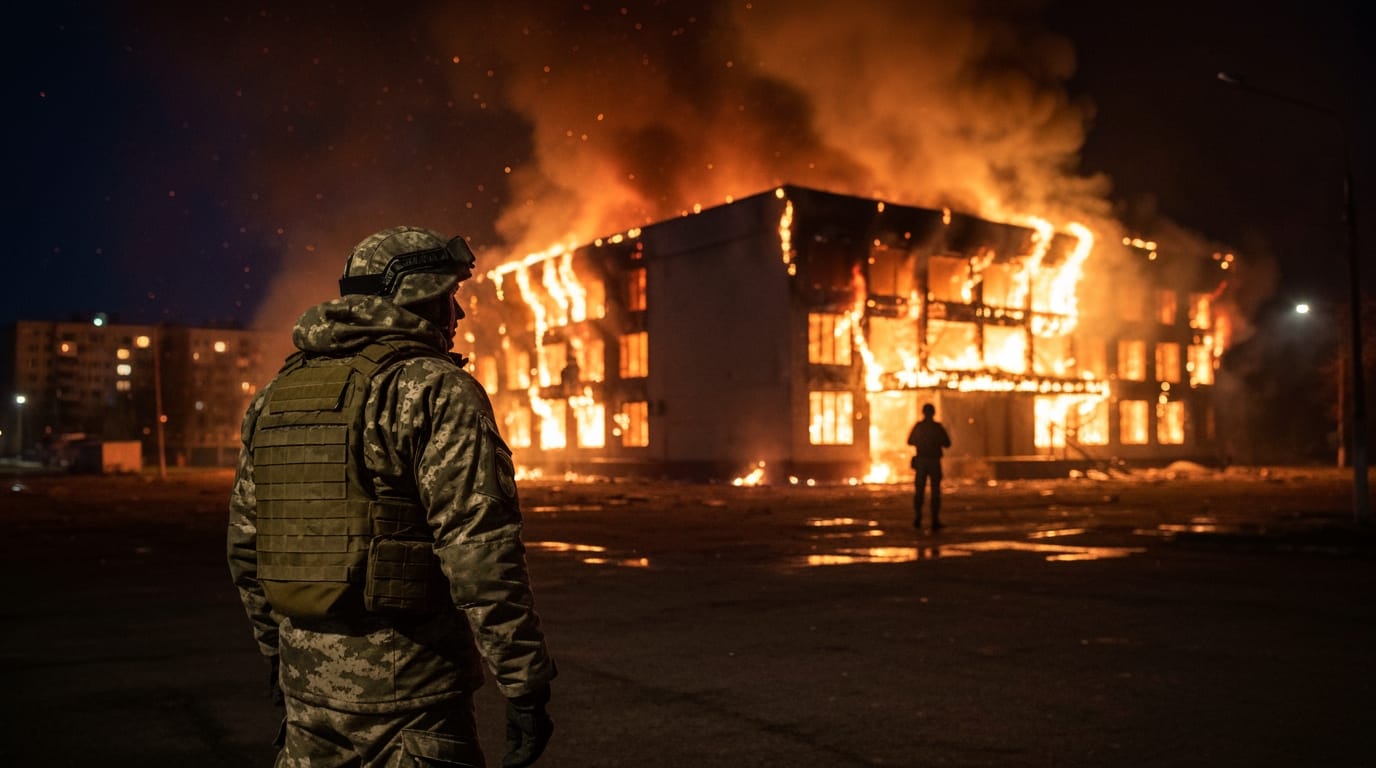
MOSCOW, Russia – August 2, 2026 – A series of coordinated Ukrainian drone and shelling attacks struck deep inside Russian territory on Sunday, resulting in the deaths of at least eight people across multiple regions and targeting both civilian infrastructure and strategic economic assets. The widespread assault, extending hundreds of kilometers from the front lines, signals a significant escalation in Kyiv’s campaign to bring the conflict’s direct consequences to Russia, as peace efforts remain stalled.
The attacks unfolded overnight and into Sunday, impacting regions along Russia's Volga River and stretching to areas bordering Ukraine. Russian authorities reported a high volume of attempted drone incursions, with the Ministry of Defense claiming to have intercepted 635 Ukrainian drones. However, several projectiles successfully reached their intended targets, causing fatalities and damage.
Civilian Casualties and Far-Reaching Impact
The human cost of Sunday’s cross-border operations was immediately apparent. In the Saratov region, two people were killed when a Ukrainian drone struck a residential building in the city of Engels. Engels, home to a military air base, and the nearby regional capital Saratov, which hosts a major oil refinery, have faced repeated Ukrainian attacks in recent years. Civil infrastructure in both cities sustained damage.
Further south, Ukrainian shelling in Russia’s Belgorod region, which shares a border with Ukraine, claimed the lives of three individuals. The Belgorod region has frequently been subjected to cross-border shelling and drone attacks since the onset of the wider conflict.
Perhaps most illustrative of the expanding geographical scope of the attacks, a drone strike on a car in Russia's Udmurtia region, more than 1,000 kilometers (600 miles) from the front line, killed three people. Olga Abramova, the acting governor of Udmurtia, condemned the incident, stating, "This act is monstrous in its senselessness. These people were definitely not a military target." These incidents collectively accounted for at least eight fatalities, underscoring the lethal reach of Ukraine’s current offensive capabilities.
Strategic Targets: Economy and Logistics Under Fire
Beyond the immediate civilian casualties, the strikes also focused on key economic and military logistics. A large warehouse belonging to Wildberries, Russia’s largest online retailer, was struck in the Samara region, approximately 800 kilometers (500 miles) from Ukraine’s advanced military positions. While authorities reported a fire, preliminary information indicated no casualties at the site. This attack marks the latest in a series of over a dozen strikes on Wildberries facilities since mid-July, a deliberate strategy by Kyiv to disrupt Russia’s consumer economy and undermine Moscow’s war efforts.
Ukraine's General Staff also claimed responsibility for striking the Ufa oil refinery, operated by Bashneft, in the Bashkortostan region, as well as an oil depot in the Kaluga region and a site used to launch attack drones in the Bryansk region. While the governor of Bashkortostan, Radiy Khabirov, stated that air defenses repelled a large-scale drone attack targeting industrial facilities in his region, acknowledging that a fire broke out from fallen debris, he reported no casualties. These military and energy targets represent critical components of Russia's logistical and operational capabilities, making them high-value objectives for Ukraine.
Escalation of Cross-Border Warfare
Sunday's extensive attacks are a stark reminder of the evolving nature of the conflict and Ukraine’s increasing ability to strike targets deep within Russia. Since the beginning of 2024, Ukraine has intensified its campaign of drone strikes against military and energy infrastructure across Russia, with many attacks occurring over a thousand kilometers from the Ukrainian border. This persistent campaign aims to overwhelm Russian air defenses and impose significant costs on Moscow.
Previous notable incursions and drone attacks include a significant offensive into Russia's Kursk Oblast in August 2024, which saw Ukrainian forces capture considerable territory, diverting Russian troops and resources. Similarly, drone strikes on Moscow in May and July 2026, though less fatal, demonstrated Ukraine's ability to penetrate defenses around the Russian capital, sending a strong political message to the Kremlin. Kyiv views these operations as "fair retaliation" for Russia's continued bombardment of Ukrainian territory and a means to pressure Moscow into negotiations.
Strategic Imperatives and International Scrutiny
These deep strikes carry multifaceted strategic implications for both warring nations and the international community. For Ukraine, the attacks serve several key purposes: inflicting economic pain, disrupting military logistics, boosting domestic morale, and signaling Kyiv's capacity to escalate the conflict if necessary. By making the war felt within Russia, Ukraine hopes to undermine Moscow's ability to wage war and encourage a shift in public sentiment. Analysts suggest these strikes aim to weaken Russia's economy by targeting energy infrastructure and military production, thereby imposing costs on Moscow.
Internationally, the escalation is viewed with a mix of understanding and concern. While Kyiv denies intentionally targeting civilians, the civilian casualties in Engels and Udmurtia are likely to draw condemnation. The United Nations and various world leaders have consistently called for de-escalation and an immediate cessation of hostilities, highlighting the mounting civilian toll and the disruption to global stability. Discussions among Ukraine's Western allies regarding the provision of long-range weaponry for strikes inside Russia have been ongoing, with some expressing reluctance due to fears of further escalation. However, a growing number of countries support Ukraine's right to use such weapons in response to Russian aggression. Some observers suggest that Ukraine's demonstrated ability to strike deep into Russian territory has influenced international perceptions, including potentially shifting views among U.S. policymakers regarding Russia's vulnerability.
Conclusion: A Deepening and Widening Conflict
Sunday's extensive Ukrainian attacks, resulting in the deaths of eight individuals and significant damage across multiple Russian regions, underscore the deepening and widening nature of the conflict. With both Moscow and Kyiv having "upped attacks on each other in recent months," and US-led peace talks remaining "largely frozen," the prospects for a diplomatic resolution appear distant. The targeting of both civilian areas and strategic economic sites marks a significant development, demonstrating Ukraine's evolving capabilities and resolve to impose costs directly on Russia. As the conflict grinds on, the increasing frequency and reach of these cross-border strikes suggest a protracted and increasingly destructive phase of hostilities.


