Ukraine War: Decoding Putin's Negotiation Strategy Amid Shifting Frontlines
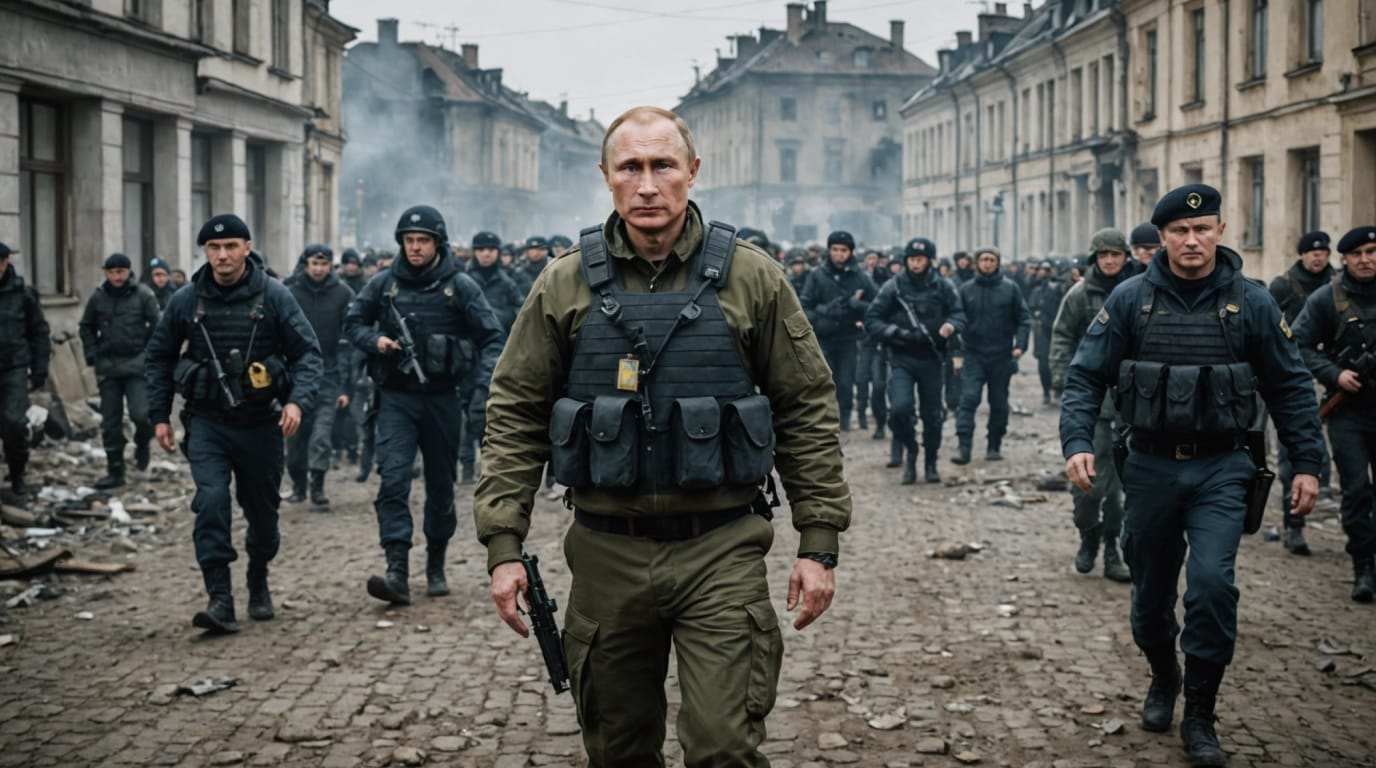
As the war in Ukraine enters its fourth year, the question of a negotiated settlement looms large, with the United States and other international actors attempting to bring both sides to the table. However, understanding Russian President Vladimir Putin's negotiation strategy is crucial to assessing the prospects for a lasting peace, or whether these efforts are merely a prelude to a protracted conflict. Putin's approach is multifaceted, driven by a combination of military objectives, domestic considerations, and a long-term vision for Russia's role in the world.
Maximalist Demands and Shifting Goals
Since the beginning of the invasion in February 2022, Putin's negotiation positions have been characterized by maximalist demands. These have included the recognition of Russia's annexation of Crimea, the cession of the four regions Russia declared to have annexed in September 2022 (Donetsk, Luhansk, Kherson, and Zaporizhzhia), guarantees that Ukraine would never join NATO, and the lifting of sanctions against Russia. These demands reflect Putin's broader strategic goals, which extend beyond territorial gains.
Initially, Putin stated the goals of the war were the "demilitarization and denazification" of Ukraine, as well as ending the alleged genocide of Russians in Ukrainian territory. As the war progressed and Ukrainian forces mounted a strong resistance, Russia shifted its focus to capturing southeastern regions of the country and establishing a land bridge to Crimea. A source familiar with Kremlin thinking stated Russia had weakened Ukraine's military and secured territorial control connecting mainland Russia to annexed Crimea.
The Illusion of Negotiation
Despite expressing openness to negotiations, Putin's actions often suggest a lack of genuine interest in a compromise. In December 2021, as Russia built up its invasion force on Ukraine's borders, Moscow presented draft "treaties" to the United States and NATO, demanding a permanent end to NATO's eastward expansion and a commitment that the United States would never establish military bases or deploy forces in any state that had once belonged to the Soviet Union. These demands were widely seen as an ultimatum that Russia knew was unacceptable to Ukraine and the West, using the offer to negotiate as a ploy to buy time for invasion preparations.
Even when ceasefire negotiations appeared to be making progress, as in the early months of the war, Russia has been accused of acting in bad faith. In March 2022, negotiations in Turkey created an agreement in which Ukraine would abandon plans to join NATO and have limits placed on its military, while having security guarantees from Western countries and not being required to recognize Russian ownership of Crimea. However, disagreements over security guarantees and the Bucha massacre ultimately led negotiations to stop. Deputy Kremlin Chief of Staff Dmitry Kozak said in 2022 that he had negotiated an agreement with Ukraine within a few days of the invasion. This settlement would have ended hostilities in exchange for guarantees that Ukraine would not join NATO. The agreement was however blocked by Putin, who "expanded his objectives to include annexing swathes of Ukrainian territory".
The Battlefield as Leverage
Putin's negotiation strategy is inextricably linked to the situation on the battlefield. Russia's military objectives are aimed at creating leverage for negotiations, with the goal of forcing Ukraine to capitulate on Russian terms. This involves maintaining pressure along the front lines to deplete Ukrainian forces and resources, while simultaneously working to undermine the resolve of Ukraine's international partners to continue providing military aid.
Russian units are tasked with conducting smaller tactical attacks that at minimum inflict steady losses on Ukraine and allow Russian forces to seize and hold positions. The Kremlin believes that it can sustain the current rate of attrition through 2025.
Domestic Considerations and Long-Term Goals
Putin's negotiation strategy is also shaped by domestic considerations and his long-term goals for Russia. He views the war in Ukraine as an existential conflict for Russia, with the outcome determining the country's future security architecture and its role in the world. Putin possesses leadership personality characteristics known as the 'three Rs' – rationality, ruthlessness, and resilience; one could also add revanchism, in which he sees himself as a world leader intent on restoring Russia's sense of greatness and importance on the world stage as a nuclear power and member of the UN's Permanent Five.
Putin's demands have included: no foreign troops as peacekeepers on Ukrainian soil; legal recognition of the four Ukrainian provinces 'annexed' by Russia; no NATO membership for Ukraine; complete lifting of sanctions against Russia; and the removal of Ukraine's President Zelensky (whom he considers illegitimate).
Challenges and Obstacles to Negotiation
Several factors pose significant challenges to any potential negotiation between Russia and Ukraine. Mistrust between the two sides is deep-seated, stemming from Russia's history of violating diplomatic agreements and ceasefires. Ukraine is skeptical of Moscow in general, and of an easy accommodation with the current Kremlin leadership in particular.
Even if a ceasefire or peace deal is agreed, it is unlikely that US and European sanctions on Russian would be unwound fully with immediate effect.
The Path Forward
Given the complexities of Putin's negotiation strategy and the numerous obstacles to a settlement, the path forward is uncertain. Some analysts believe that a negotiated end to the war is unlikely, arguing that Putin's maximalist goals and his determination to subjugate Ukraine make compromise impossible. Others suggest that a settlement is possible, but only if the United States and its allies adopt a more comprehensive approach that addresses Russia's underlying security concerns and provides incentives for de-escalation.
The United States can expand or constrain its force posture in Europe depending on Russia's willingness to compromise over Ukraine. The prospect of Russia's return to Western diplomatic forums would accord with its self-image as a great power, provide it with a voice in a region it sees as vital to its security, and decrease its dependence on China. Sanctions relief is a key incentive to make a settlement stick.
Ultimately, the success of any negotiation will depend on a clear understanding of Putin's objectives, a willingness to address the underlying causes of the conflict, and a commitment to maintaining pressure on Russia until a just and lasting peace can be achieved.


