Ukrainian Drones Unleash Barrage on Russian Oil Facilities, Igniting Crisis and Disrupting War Economy
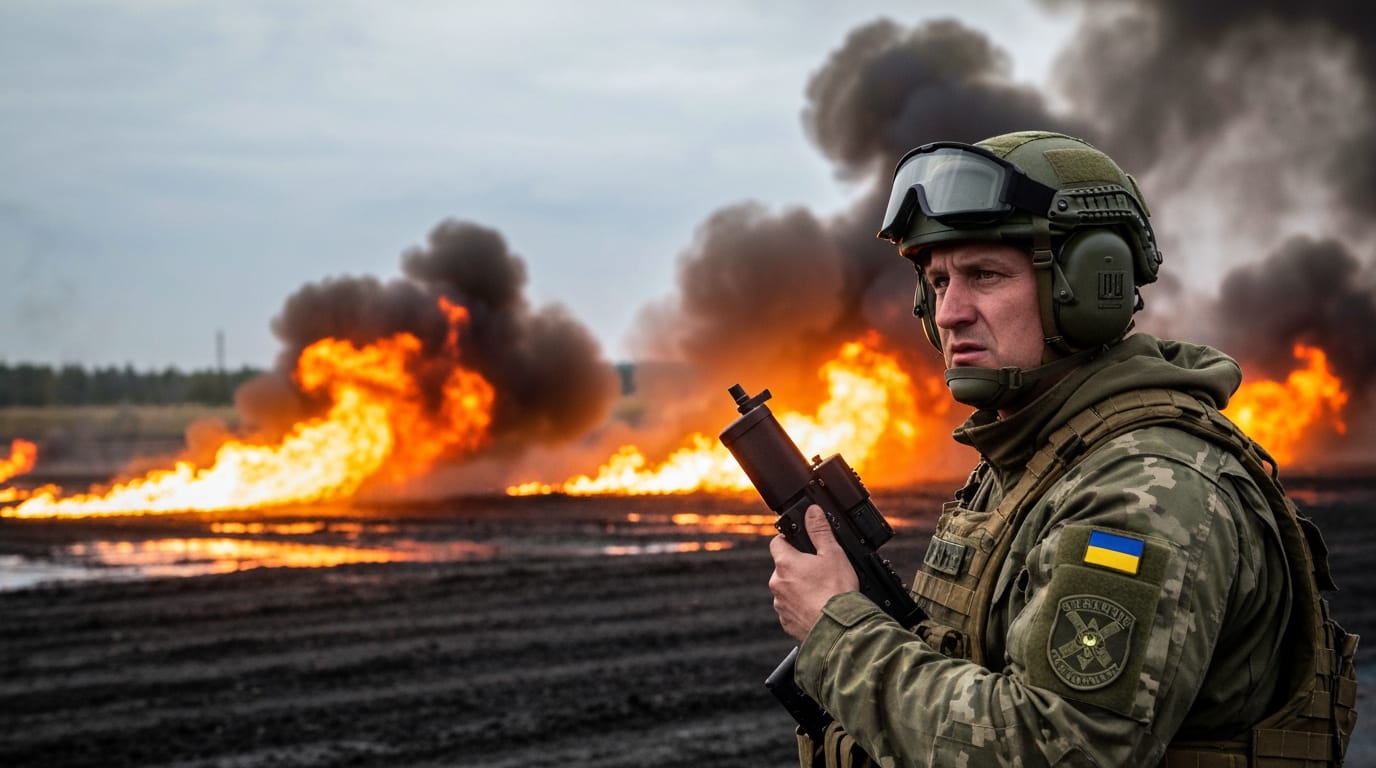
KYIV, Ukraine – July 10, 2026 – A relentless campaign of Ukrainian drone strikes has continued to hammer Russia's vital oil infrastructure, igniting widespread fires, disrupting production, and triggering an escalating fuel crisis across the vast nation. In a series of coordinated attacks this week, Ukrainian unmanned aerial vehicles (UAVs) struck deep into Russian territory, targeting oil depots, refineries, and even sea-based oil tankers, underscoring Kyiv's intensified strategy to cripple Moscow's war economy and logistics. The assaults have prompted significant operational setbacks for Russia's energy sector and brought the economic ramifications of the conflict home to millions of ordinary Russian citizens.
Escalation Reaches Critical Mass
The latest wave of attacks saw Ukrainian drones ignite fires at an oil depot in the western Russian city of Tver and oil reservoirs in Vyazniki, located in the southern Stavropol region, on July 9. Simultaneously, in the Sea of Azov, two oil tankers were set ablaze, part of an ongoing effort by Ukraine to cut off fuel supplies to the illegally annexed Crimean Peninsula. Ukrainian President Volodymyr Zelenskyy confirmed strikes on fuel infrastructure deep inside Russia, including in Ufa, and an oil-loading terminal in the Rostov region. The Security Service of Ukraine (SBU) explicitly stated its continued mission to target Russia's oil sector, identifying it as a crucial financial lifeline for the ongoing conflict. This comes on the heels of a July 6 strike on the Omsk oil refinery, Russia's largest, located an unprecedented 2,500 kilometers from Ukrainian borders. This deep penetration marked a significant milestone, meaning all 11 of Russia's largest oil refineries have now been targeted by Ukrainian forces.
The scale and frequency of these strikes have dramatically escalated throughout 2025 and into 2026. Since the beginning of 2026 alone, Russian refineries have been hit at least 194 times, an eleven-fold increase compared to the same period last year. May 2026 recorded a peak of 16 successful strikes on refineries in a single month. This sustained pressure has profoundly impacted Russia's oil refining capabilities.
Crippling Russia's Energy Lifeline
The cumulative effect of Ukraine's drone campaign has been a substantial reduction in Russia's oil refining capacity. Analysts estimate that between 20% and 40% of the country's total refining capacity has been knocked offline. Ukraine's General Staff reported that as of early July, 42.7% of Russia's designed oil refining capacity had been disabled. This operational disruption has translated into tangible economic consequences. In June, Russia's oil processing averaged 4.1 million barrels per day, a 28% decrease from the five-year average and 35% below its nominal capacity.
The International Energy Agency (IEA) has downgraded its projections for Russian oil production, directly attributing this to the Ukrainian attacks on energy infrastructure. The IEA now anticipates Russian processing rates to remain below 5 million barrels a day through June 2026, with a slower recovery than previously forecast. In response to the growing shortages, Russia has reportedly imposed fuel export restrictions.
A Fuel Crisis Grips the Nation
The strategic targeting of refineries and depots has cascaded into a widespread domestic fuel crisis across Russia. By July 2026, gasoline shortages, rationing, and lengthy queues at petrol stations had become a common sight in the majority of Russian regions. An estimated 50 million Russians, roughly 35% of the population, are now directly affected by these fuel restrictions. The critical situation forced Russian-controlled Crimea to declare a state of emergency in June, imposing a ban on fuel sales. Reports from regions like Irkutsk highlight the human toll, with residents enduring waits of up to 18 hours to refuel their vehicles. Beyond individual inconveniences, the fuel crisis has contributed to rising food and transportation costs, impacting daily life for many Russians.
The Kremlin has attempted various mitigation strategies, including permitting the production of lower-grade Euro-3 gasoline instead of the standard Euro-5, and importing fuel from countries like India, Belarus, and Kazakhstan. However, these measures have yet to fully alleviate the pervasive shortages.
Ukraine's Strategic Offensive
Ukraine's sustained campaign against Russia's energy infrastructure represents a calculated strategy aimed at undermining Moscow's ability to wage war. Kyiv views these attacks as "long-range sanctions," designed to impose significant economic costs on Russia and disrupt its military supply lines. By targeting key refineries and logistics hubs, Ukraine seeks to degrade Russia's capacity to produce and transport fuel for its armed forces, thereby impacting its battlefield operations. The psychological impact on the Russian populace, demonstrating that the war is not an abstract distant conflict, also appears to be a factor.
The effectiveness of this campaign is attributed to Ukraine's significant advancements in drone technology, including the mass production of long-range UAVs and improved guidance systems. The record-breaking strike on Omsk, 2,500 kilometers away, exemplifies these enhanced capabilities, with some analysts suggesting the actual flight path could have been over 3,000 kilometers. Reports also indicate that U.S. intelligence data has assisted Ukraine in optimizing drone routes and evading Russian air defenses.
Russian Defenses Under Strain
Despite Moscow's claims of intercepting hundreds of Ukrainian drones, the consistent success of these attacks highlights the strain on Russia's air defense networks. For instance, on July 9, Russia's Defense Ministry reported downing 73 Ukrainian drones, while on July 10, they claimed to have intercepted 376 UAVs over Russia and annexed Crimea. However, many still reach their targets, with protective measures like anti-drone netting proving ineffective in some instances.
Ukrainian President Zelenskyy suggested that Russia is redirecting significant air defense assets to protect high-value targets like Moscow and the Kerch Bridge, potentially leaving other regions more vulnerable to attack. This reallocation reflects the growing threat perceived by the Kremlin, as Ukraine's ability to strike deep inside Russia has become a critical element of the ongoing conflict.
Conclusion
The ongoing Ukrainian drone attacks on Russian oil facilities mark a significant phase in the protracted conflict. What began as intermittent strikes has evolved into a comprehensive, strategic campaign, fundamentally impacting Russia's energy sector and domestic stability. The widespread fuel shortages, economic disruptions, and the palpable strain on Russian air defenses demonstrate the effectiveness of Ukraine's kinetic sanctions. As Kyiv continues to refine its drone capabilities and extend its reach, these strikes are likely to remain a central feature of the war, persistently challenging Russia's capacity to sustain its military efforts and creating unforeseen ripple effects across its economy and society.