UN Chief's Renewed Push for Cyprus Resolution Navigates Deep-Seated Divisions
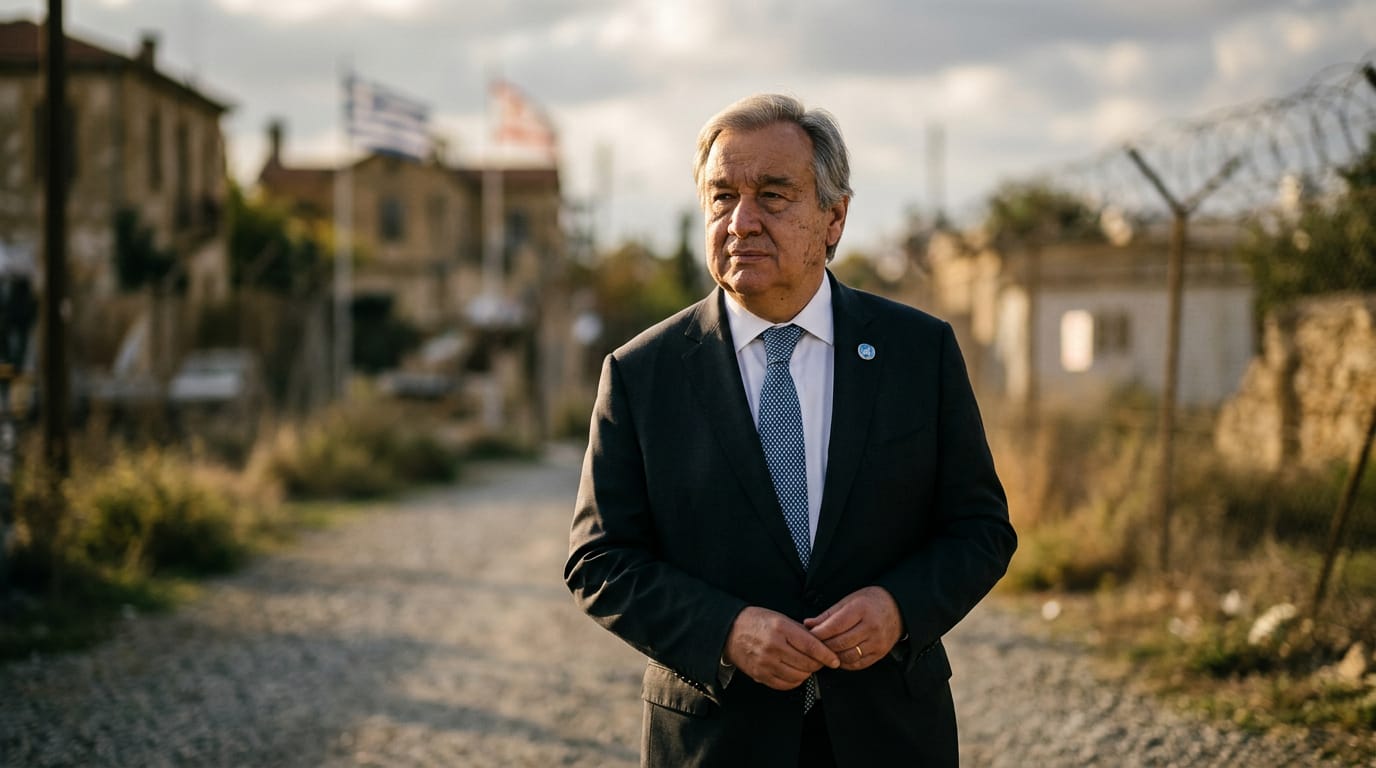
NICOSIA — United Nations Secretary-General António Guterres has embarked on a determined diplomatic offensive to rekindle long-stalled peace talks on Cyprus, proposing a new "5+1" meeting in a critical effort to bridge the island's decades-long division. His recent visit to Nicosia, the first in over a decade, underscores the international community's renewed focus on resolving a conflict that has plagued the Eastern Mediterranean for nearly half a century, with the UN chief emphasizing the "crucial" need for a solution to stabilize an increasingly turbulent region.
A Legacy of Division: The Cyprus Problem's Enduring Roots
The Cyprus issue, often termed the "Cyprus problem," stems from deep-seated tensions between the island's Greek Cypriot and Turkish Cypriot communities, which escalated dramatically in 1974. Following a coup orchestrated by Greek Cypriot nationalists aiming to unite the island with Greece, Turkey launched a military intervention, occupying the northern third of Cyprus. This division led to the mass displacement of populations and the eventual establishment of the Turkish Republic of Northern Cyprus (TRNC) in 1983, a self-declared entity recognized solely by Turkey. While the 1974 events mark the modern crisis, the roots of the conflict trace back to the island's independence from Britain in 1960, when power-sharing arrangements proved fragile, and inter-communal violence flared. Since 1968, the United Nations has consistently engaged in efforts to mediate a comprehensive, sustainable solution, with numerous rounds of talks failing to achieve reunification, most notably the collapse of the Crans-Montana negotiations in Switzerland in 2017.
Guterres Catalyzes New Momentum with "5+1" Format
Secretary-General Guterres's recent two-day visit to Cyprus from July 28 to 29, 2026, marked a significant personal investment in reviving the dormant peace process. During his stay, Guterres held separate and joint meetings with Greek Cypriot leader Nikos Christodoulides and Turkish Cypriot leader Tufan Erhürman, engaging in what he described as "frank and constructive discussions." A primary outcome of these discussions was the Secretary-General's decision to convene another "5+1 meeting." This format brings together the Greek Cypriot and Turkish Cypriot leaders, along with representatives from the three guarantor powers—Greece, Turkey, and the United Kingdom—plus the United Nations. The proposed meeting aims to build confidence, establish a shared methodology, and define the substance of future negotiations. Guterres stressed the need for "adequate preparations" to avoid a repeat of previous fruitless talks, asserting that "this is the moment when all efforts must be made to rebuild trust." The Secretary-General's Personal Envoy on Cyprus, María Ángela Holguín, is playing a pivotal role in these preparatory stages, engaging in extensive consultations with all parties, including EU officials, to lay the groundwork for substantive discussions. Concurrently, UN experts are reportedly drafting a foundational document that compiles all agreed convergences on the Cyprus problem, intended to serve as a crucial backbone for future talks, rather than a formal peace plan. This document, once prepared, will be reviewed by an EU team to ensure alignment with the bloc's legal framework.
Overcoming Deep-Seated Obstacles and Strategic Divergences
Despite the renewed diplomatic vigor, significant hurdles persist. The most formidable challenge lies in the fundamental divergence over the desired outcome of any settlement. The United Nations and the Greek Cypriot side continue to advocate for a comprehensive settlement based on a bizonal, bicommunal federation with a single, indivisible sovereignty, adhering to the EU acquis. However, the Turkish Cypriot side, with the backing of Turkey, has increasingly moved away from this federal framework, instead promoting a two-state solution rooted in "sovereign equality" and "equal international status." This shift became particularly pronounced after the collapse of the Crans-Montana talks in 2017, posing a strategic contradiction that has prevented meaningful progress. Beyond this foundational disagreement, issues such as security and guarantees remain highly contentious. Greek Cypriots seek the removal of the 1960 guarantor system and Turkish military presence, viewing them as relics of the past. Conversely, Turkish Cypriots consider Turkey's involvement and guarantees as essential for their security and safety. Power-sharing arrangements, including the concept of a rotating presidency and the precise territorial boundaries between constituent states, also present complex negotiation points. Moreover, a general lack of trust and political will among community leaders has historically hindered efforts to find common ground. The role of the European Union further complicates the landscape, as Ankara has shown resistance to a stronger EU presence, even though the Republic of Cyprus is a member state.
A Crucial Moment for Regional Stability and Future Prospects
The stakes for a resolution in Cyprus extend far beyond the island itself. Secretary-General Guterres underscored that a solution is "absolutely crucial not only to preserve the interests and the peace of the Cypriot people, but also as a factor of stability in what is becoming a dangerously unstable region." The continuation of the division risks deepening rifts in the Eastern Mediterranean and could further strain already complex relations between Turkey and the European Union. Conversely, a successful resolution could unlock significant economic and energy opportunities, particularly given the ongoing development of natural gas fields within Cyprus's Exclusive Economic Zone. Environmental challenges, such as climate change, also necessitate island-wide cooperation, which is currently hampered by the political divide. Ultimately, the United Nations cannot impose peace, as Guterres himself noted, but remains "fully committed to supporting the people of Cyprus." The success of the current initiative hinges on the willingness of both Cypriot communities and the guarantor powers to move beyond entrenched positions and engage in genuine political convergence.
The Secretary-General's recent visit and the proposed "5+1" meeting have injected a cautious sense of hope into the long-dormant Cyprus peace process. While the path to reunification remains fraught with historical grievances and strategic contradictions, the international focus and the diplomatic framework established by the UN provide a vital avenue for dialogue. The upcoming preparations and subsequent high-level meeting will test the resolve of all parties to prioritize a common future over past divisions, holding the potential to transform a persistent regional flashpoint into an emblem of diplomatic success.


