UNESCO Adds Lebanese, West Bank Heritage Sites to Endangered List Amid Regional Tensions
Busan, South Korea – The United Nations Educational, Scientific and Cultural Organization (UNESCO) has moved to place several vital heritage sites in Lebanon and the occupied West Bank on its List of World Heritage in Danger, a decision underscoring escalating concerns over cultural preservation amidst ongoing conflict and political pressures in the Middle East. The designations, made during the 48th session of the World Heritage Committee in Busan, South Korea, highlight severe threats ranging from military bombardment and structural damage to land expropriation and plans that could alter the historical integrity of ancient sites. The decision has been met with both commendation from Lebanese and Palestinian officials and sharp condemnation from Israel, which accused the cultural body of weaponizing heritage.
Lebanon's Ancient Strongholds Under Siege
Among the sites added to the endangered list on July 24 are five medieval castles located in Lebanon's Jabal Amel region, a mountainous area in the south that has endured repeated bombardment during the recent conflict between Israeli forces and militant group Hezbollah. These fortresses, recognized for their layered architectural heritage spanning Crusader, Ayyubid, Mamluk, and local influences, have sustained damage and face ongoing threats from the hostilities, prompting UNESCO to utilize an emergency procedure for their listing.
One of the most prominent inclusions is Beaufort Castle, also known as Qalaat al-Shakif, a Crusader fortress captured by Israeli forces in May as part of their war with Hezbollah. Lebanese Culture Minister Ghassan Salame hailed the endangered listing as a "remarkable achievement" in efforts to protect these significant historical landmarks. Salame also accused Israel of having already destroyed Shamaa Castle and threatening to demolish Beaufort, asserting that only two of the listed castles were "within the Lebanese government's reach". Israeli officials, however, countered by claiming that Iran-backed Hezbollah had converted Beaufort Castle into a military stronghold, digging tunnels and launching rockets from the surrounding area. Both UNESCO and the Lebanese embassy in South Korea declined to comment on these security allegations, keeping the focus on safeguarding these irreplaceable sites.
Just days prior, on July 22, the ancient city of Tyre in southern Lebanon was also added to the World Heritage in Danger list. A UNESCO World Heritage site since 1984, the 4,700-year-old Phoenician city has been directly impacted by Israeli strikes, with one of its two protected areas suffering a direct hit in June. Lebanese authorities reported that the attack damaged a historic building, electrical generators, offices belonging to Lebanon's Directorate General of Antiquities, and parts of an archaeological site, leading the Lebanese government to request the site's inclusion on the danger list. UNESCO noted that "optimal conditions are no longer in place to ensure the conservation and protection of the property's outstanding universal value". Minister Salame emphasized that the decision signifies the international community's stance that "no damage to world heritage can remain unseen or unanswered".
Sebastia: A Crossroads of History and Conflict in the West Bank
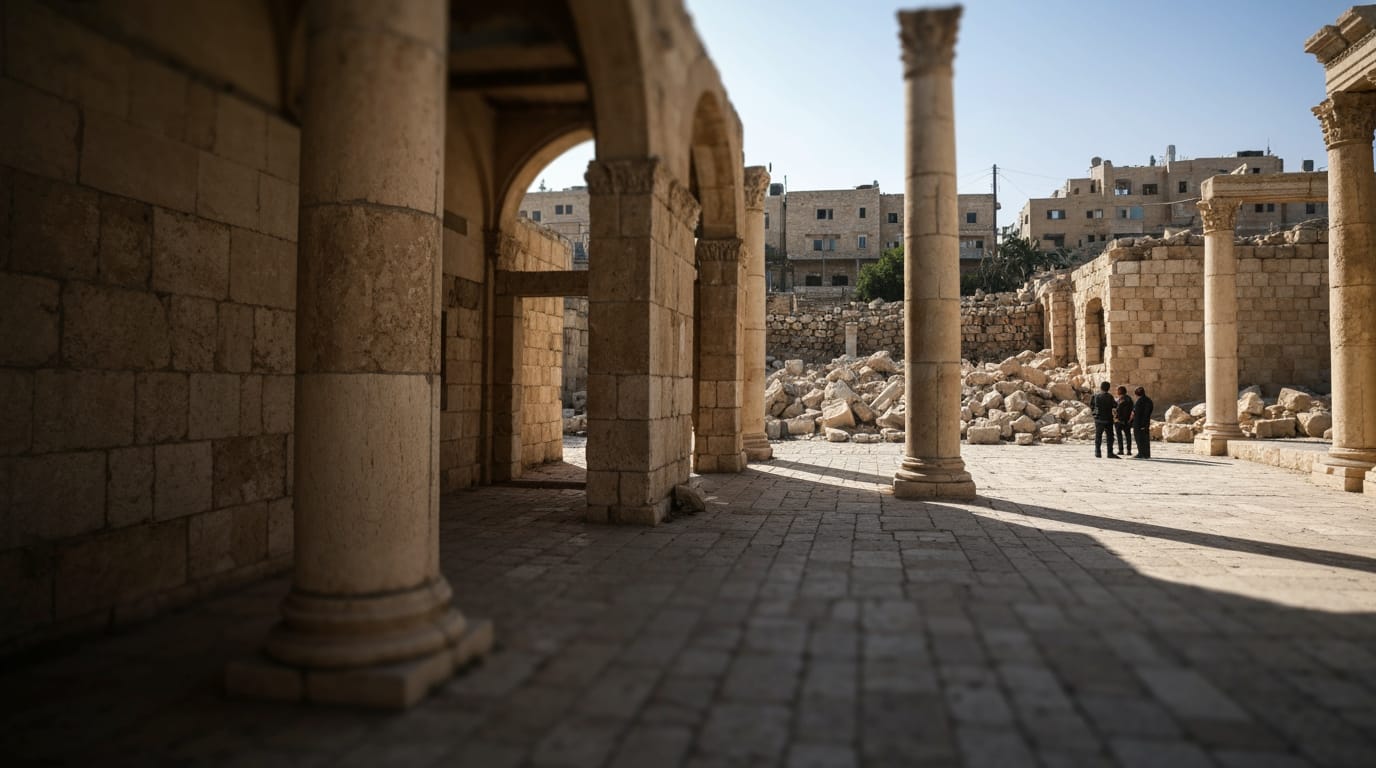
In the occupied West Bank, the archaeological site of Sebastia, near the city of Nablus, also received the emergency "in danger" designation on July 24. Identified by scholars as ancient Samaria, the capital of the biblical Kingdom of Israel, Sebastia boasts a rich archaeological landscape encompassing the Iron Age, Roman, Byzantine, and Islamic periods, with Christian and Islamic traditions also honoring it as the burial site of John the Baptist.
The Palestinian delegation to UNESCO first submitted Sebastia's nomination in 2012, arguing that World Heritage status was essential for its preservation, given its largely undeveloped state under Israeli control. UNESCO's decision cited "serious threats, including Israeli occupation-related measures, land seizure plans, projects aimed at altering the historical and archaeological character of the site, and restrictions affecting protection, management, and preservation efforts". In 2025, Israeli authorities expropriated approximately 200 hectares of Palestinian land near the site, purportedly for preservation and development purposes. However, these plans threaten to bypass the Palestinian town of Sebastia with an Israelis-only road, a fence, and entry fees, and to create a "Samaria" (Shomron) National Park, thereby subdividing the property and undermining its integrity. The Palestinian Tourism and Antiquities Ministry welcomed the designation, calling it a "national achievement" in protecting cultural heritage.
Israel, which does not recognize a Palestinian state and withdrew from UNESCO in 2019, vehemently objected to the listings. Israeli Foreign Minister Gideon Saar criticized the decision, blaming it on Palestinians and labeling it an attempt at "erasing and denying the Jewish connection to this land". Israel had lobbied the World Heritage Committee to reject the bids, calling the nominations a "weaponization of cultural heritage".
The Significance of the "In Danger" Listing
Inclusion on the List of World Heritage in Danger is not intended as a reprimand but rather as a mechanism to galvanize international attention and support for sites facing severe threats. According to UNESCO World Heritage Centre director Lazare Eloundou Assomo, while the organization "may not have the means to deploy peacekeepers," it can "send a message to the entire world" that "these sites are important, and everything must be done to prevent their destruction". The designation aims to help states secure funding, partners, and international expertise for conservation efforts.
Threats to cultural and natural heritage can stem from various sources, including armed conflicts, natural disasters, pollution, unsustainable tourism, and inadequate management. For cultural properties, these dangers can manifest as serious deterioration of materials, structure, or architectural coherence, as well as the loss of historical authenticity or cultural significance. Before a site is inscribed on the danger list, its condition is assessed, and a program for corrective measures is developed in cooperation with the involved state party.
The current additions underscore a growing global challenge where cultural treasures are increasingly vulnerable to geopolitical tensions and armed conflicts. UNESCO's move signals a commitment to upholding the principle that the world's diverse treasures require protection, as they cannot protect themselves. This action provides a critical spotlight on the imperiled heritage of Lebanon and the West Bank, appealing for a concerted international effort to safeguard these irreplaceable testaments to human history.
Conclusion: A Call for Preservation in Turbulent Times
The recent decision by UNESCO to add multiple sites in Lebanon and the West Bank to its List of World Heritage in Danger serves as a stark reminder of the profound impact of conflict and political disputes on irreplaceable cultural heritage. From the Crusader castles of southern Lebanon, scarred by recent warfare, to the ancient layers of Sebastia in the West Bank, threatened by land disputes and development plans, these sites represent tangible links to millennia of human civilization. While the listings have stirred political controversy, they fundamentally represent an international appeal for the protection of universal values. By drawing global attention to these endangered treasures, UNESCO aims to mobilize resources and diplomatic efforts necessary to prevent their further deterioration or loss, reinforcing the idea that cultural preservation is a shared responsibility transcending immediate geopolitical divides. The future of these sites, steeped in history and profound significance, now rests on the collective will of the international community to act decisively in their defense.