Unidentified Drone Explodes Near Vital Gas Pipeline on Bulgaria-Romania Border
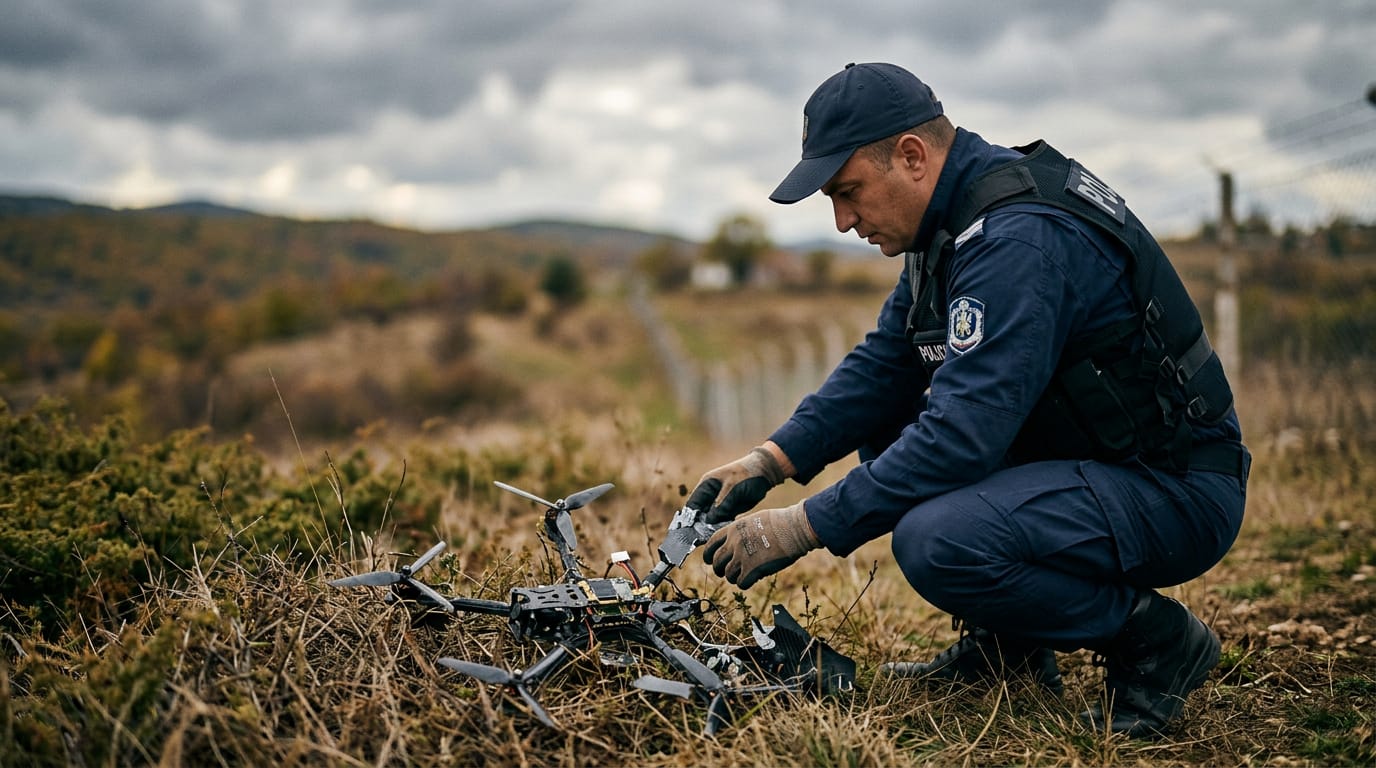
Kardam, Bulgaria – An unidentified drone carrying a significant amount of explosives detonated early Saturday in a sunflower field just inside Bulgarian territory, mere meters from the border with Romania and critically close to the Trans-Balkan gas pipeline. The incident, which occurred around 8:10 a.m. local time (0510 GMT), has prompted an urgent investigation by Bulgarian authorities and raised immediate concerns about regional security and critical infrastructure protection. While no casualties or damage to buildings were reported, the explosion of an armed, unidentifiable aerial vehicle underscores the escalating challenges posed by unmanned systems in the Black Sea region, a geographical area increasingly impacted by the ongoing conflict in Ukraine.
Border Breach and Unforeseen Detonation
The drone reportedly entered Bulgarian airspace from Romania, coming to rest and exploding approximately 100 to 200 meters from the former Kardam border checkpoint in Bulgaria's northeastern region, close to the Black Sea. The explosion site was also identified as being about one kilometer from a Bulgarian compressor station vital to the Trans-Balkan gas pipeline, and roughly 200 meters from a Romanian compressor station. Bulgarian Prime Minister Rumen Radev confirmed the event following an emergency meeting of the Security Council, stating that the drone was not an amateur device and contained a "solid amount of explosive." The loud explosion and subsequent column of thick black smoke were observed by border police in the General Toshevo area, leading to the immediate cordoning off of the site.
Crucially, neither Romanian nor Bulgarian air defense systems, nor NATO's Combined Air Operations Centre in Torrejón, which monitors Southern European airspace, detected the drone during its flight. This failure to identify the inbound threat has become a focal point of the ongoing inquiry. Romanian border police reportedly registered the sound of the drone before the blast. The wreckage, severely burned, has complicated efforts to determine its origin and specific type, though initial assessments indicate it was not a recreational drone.
Escalating Tensions in the Black Sea Region
This incident marks a continuation of a series of drone-related occurrences that have heightened regional anxieties, particularly in countries bordering the Black Sea. In recent months, NATO member states, including Bulgaria, Romania, and Türkiye, have reported encounters with unidentified drones, some of which have been found carrying explosives or exhibiting characteristics of military-grade unmanned aerial vehicles.
Just weeks prior, on July 21, the Bulgarian Navy discovered a drifting drone with a broken wing in the Black Sea, approximately 21 nautical miles east of Ahtopol. Following an inspection that could not rule out the presence of explosives, military commanders ordered its controlled destruction. A day earlier, a similar explosive-laden drone was found and destroyed off Türkiye's coast, visually resembling a Russian Gerbera drone, though its origin was not officially confirmed. In early June, a naval drone, identified as being "of the type used in the war in Ukraine," self-detonated in Romania's civilian port of Constanța. These repeated incidents underscore the pervasive nature of drone threats emanating from the conflict in Ukraine and the inherent difficulties in monitoring and neutralizing these airborne objects, especially those flying at low altitudes.
Robust Response and Enhanced Security Measures
In the wake of Saturday's explosion, Bulgarian Prime Minister Rumen Radev emphasized the urgent need for heightened vigilance and strategic adjustments to national defense protocols. The Ministry of Defense has already initiated steps to bolster security measures along the border, including the deployment of electronic warfare systems and surface-to-air missile systems. This move follows an earlier decision on July 31 to strengthen airspace surveillance in the region due to prior "events in Romania," which had already seen the deployment of additional radar stations, Cougar helicopters, and Su-25 aircraft.
Furthermore, in a decisive security enhancement, Bulgaria announced plans to reallocate its border police's anti-drone detection and countermeasure capabilities from its border with Türkiye to the Romanian frontier. This strategic repositioning highlights the immediate prioritization of the northern border in response to the perceived threat. The incident is also slated to be brought before a meeting of the North Atlantic Council early next week, indicating the gravity with which NATO allies are treating the ongoing drone incursions and their implications for collective security. The challenges of detecting small, low-flying drones, as acknowledged by Prime Minister Radev, remain a significant hurdle for integrated air defense systems.
Implications for Regional Stability and Infrastructure Safety
The explosion on the Bulgarian-Romanian border, while causing no physical harm, reverberates with serious implications for regional stability and the safety of vital energy infrastructure. The Trans-Balkan pipeline, a critical artery for gas transport linking Türkiye to Ukraine, was directly threatened by the drone's proximity. Such infrastructure is often a target in modern conflicts, and the ability of an armed drone to penetrate airspace undetected poses a substantial security risk.
The ongoing investigations aim to definitively establish the drone's origin, intended target, and operator. Without clear attribution, speculation will continue to fuel concerns about deliberate destabilization efforts. Both Bulgaria and Romania, as front-line NATO and European Union members, find themselves on the periphery of an active conflict zone, grappling with the spillover effects of a war that increasingly relies on unmanned aerial systems. The incident serves as a stark reminder of the evolving nature of threats in the 21st century and the imperative for robust, integrated defense strategies to protect national sovereignty and civilian safety.


