United in Flame: How Europe's Civil Protection Mechanism Coordinates a Pan-Continental Firefight
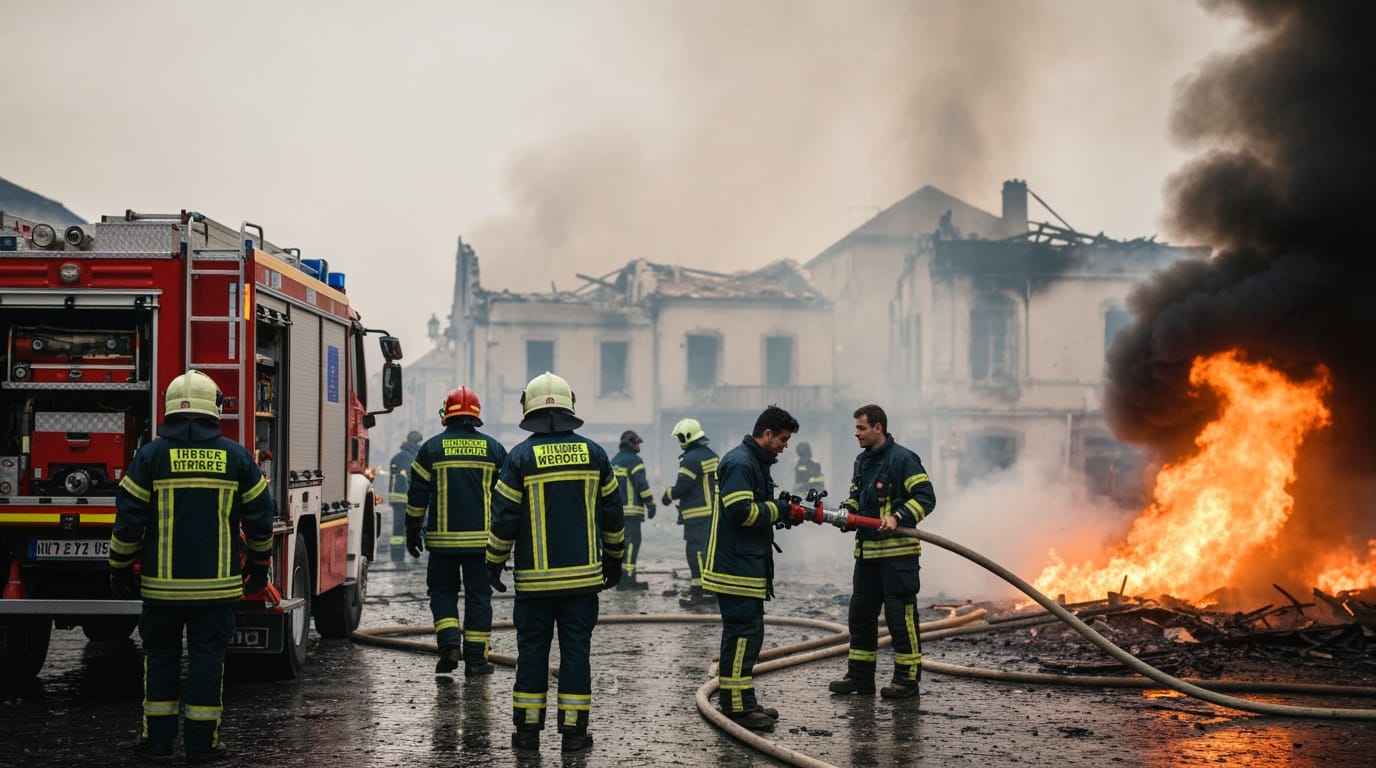
As unprecedented heatwaves and prolonged droughts fuel increasingly devastating wildfires across Europe, the European Union's Civil Protection Mechanism (UCPM) stands as a critical bulwark, orchestrating a complex, cross-border response to protect lives, livelihoods, and landscapes. This vital framework, designed to foster solidarity and efficiency in disaster management, has become indispensable in coordinating Europe's firefighting forces, transforming localized crises into a collective continent-wide effort.
Established in October 2001, the EU Civil Protection Mechanism was conceived to enhance prevention, preparedness, and response to a wide array of disasters. Its initial mandate focused on strengthening cooperation among EU countries, a mission that has since expanded to include 10 additional participating states, encompassing a vast geographical area from Albania to Ukraine. Any nation, whether within or outside the EU, can solicit emergency assistance through the mechanism, which has been activated over 880 times since its inception, including 64 activations in 2025 alone. At its core, the European Commission plays a pivotal role, coordinating these responses and providing crucial co-financing for the transport and operational costs of deployments, ensuring that aid reaches where it is most needed. This foundational framework received a significant upgrade in 2019 with the introduction of rescEU, an initiative designed to further bolster Europe's capacity to confront burgeoning threats.
Mobilizing Europe's Firefighting Power Through rescEU
The cornerstone of the UCPM's enhanced firefighting capabilities lies within rescEU, a strategic reserve of disaster response assets fully funded by the European Union. This crucial addition provides an extra layer of protection, particularly in situations where national resources are overwhelmed or unavailable. The rescEU fleet specifically includes a range of firefighting planes and helicopters, forming a dedicated aerial force readily deployable across the continent.
For 2026, the combined rescEU fleet and the European Civil Protection Pool (ECPP) boast an impressive arsenal of 22 firefighting airplanes—14 medium amphibious aircraft and 8 light aircraft—along with 5 helicopters. Beyond these directly managed assets, the EU also co-finances the standby availability of additional aerial firefighting resources, ensuring a robust capacity to address potential shortfalls during major and overlapping emergencies. Recognizing the human element's critical importance, the EU has also strategically pre-positioned firefighters from various European nations in the continent's southern regions during the high-risk summer months since 2022, enabling rapid deployment and immediate reinforcement of national responders.
Efforts to expand and modernize this vital fleet are ongoing. The European Commission has initiated the acquisition of 12 new amphibious firefighting planes, slated to become the backbone of a permanent rescEU fleet. These aircraft are set to be hosted by Croatia, France, Greece, Italy, Portugal, and Spain, with the first deliveries anticipated by the end of 2027. Similarly, three new helicopters are being procured for Slovakia, Czechia, and Romania, with the first already delivered to Romania earlier this year. Recent deployments underscore the mechanism's operational effectiveness: in a single July week, France received seven planes and four helicopters from a consortium of countries, while Spain was supported by six planes and a significant ground contingent of 134 personnel and 41 vehicles from Portugal, with many of these assets originating from the rescEU fleet.
The ERCC: Europe's Operational Nerve Centre
At the very heart of the EU Civil Protection Mechanism's operational efficiency is the Emergency Response Coordination Centre (ERCC), a 24/7 nerve centre based in Brussels. Staffed around the clock, the ERCC tirelessly monitors global events, allowing for real-time reactions to potential emergencies worldwide. Its primary function is to process requests for assistance, mobilizing resources and expertise with critical speed.
The ERCC engages proactively with national authorities even before the onset of wildfire seasons, facilitating crucial information exchange on prevention, preparedness, and response activities. Throughout the wildfire season, the centre maintains close contact with these authorities, ensuring effective coordination of efforts. Furthermore, the ERCC leverages sophisticated tools such as the EU's Copernicus satellite service, which provides rapid emergency maps to support ground operations and assess damage. This comprehensive monitoring and coordination capability ensures that assistance is not only swift but also precisely tailored to the specific needs of each unfolding disaster.
Addressing Escalating Threats and Future Outlook
The escalating frequency and intensity of wildfires have transformed them into a pan-European concern, with the risk projected to further increase due to the undeniable impacts of climate change. Extreme weather phenomena, including prolonged heatwaves and severe droughts, are stretching national response capacities to their limits, particularly when multiple Member States face simultaneous crises. The summer of 2025, for instance, witnessed record-breaking burnt areas in Portugal, Spain, Cyprus, Germany, and Slovakia, starkly illustrating the growing challenge.
The sheer scale and rapid spread of some recent blazes have, at times, exceeded the capacity of available resources, underscoring the urgent need for strategic deployment and optimized use of every asset. Commissioner Hadja Lahbib encapsulated this sentiment, stating, "No country should ever have to face a disaster of this scale alone." This recognition underpins the UCPM's mission to foster collective resilience. Moving forward, the focus extends beyond immediate response to encompass robust prevention and preparedness measures. The European Commission is actively exploring enhanced forest and field management strategies to reduce the accumulation of combustible vegetation, thereby mitigating the fuel available for wildfires. Such proactive approaches are deemed essential, as officials acknowledge that even a hundredfold increase in aerial assets would be insufficient without addressing the root causes of increased fire intensity.
In an era defined by increasingly complex and frequent natural disasters, the EU Civil Protection Mechanism stands as an indispensable testament to European solidarity. By pooling resources, coordinating efforts, and continuously adapting its strategies, the mechanism not only provides vital immediate relief but also lays the groundwork for a more resilient continent. As climate change continues to intensify environmental threats, the UCPM's role in coordinating Europe's firefighters and broader emergency responses will remain more critical than ever, embodying the principle that a united Europe is a stronger Europe in the face of adversity.


