United States Unleashes Sweeping Airstrikes on ISIS Targets in Syria Following Deadly Attack on Personnel
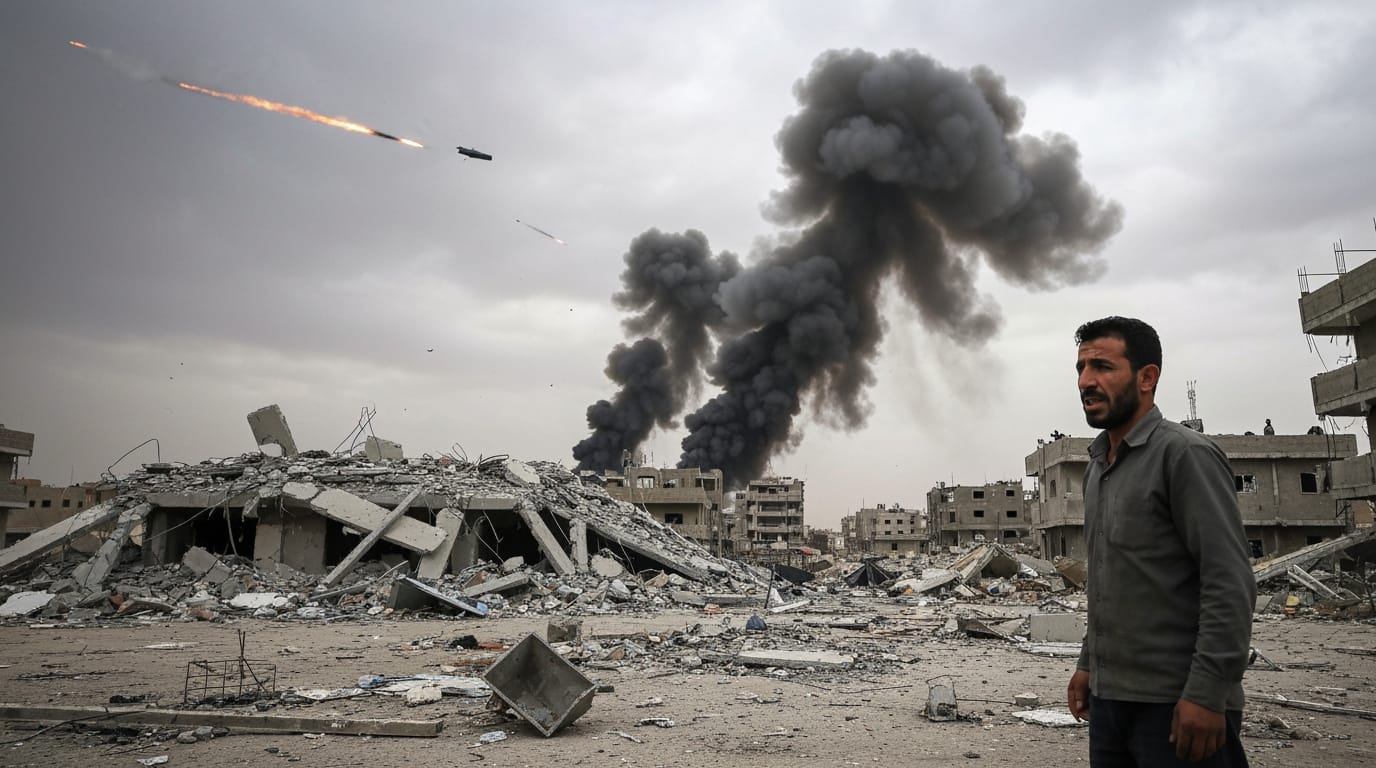
The United States military launched a significant wave of airstrikes against Islamic State targets across central Syria on Friday, December 19, marking a forceful retaliation for a recent ambush that claimed the lives of two U.S. soldiers and a civilian interpreter. This large-scale operation, dubbed "Operation Hawkeye Strike," struck dozens of ISIS sites, infrastructure, and weapons caches, underscoring Washington's resolute commitment to counter-terrorism efforts in a region grappling with persistent extremist threats and a recently transformed political landscape.
The Palmyra Ambush: A Costly Attack
The retaliatory strikes were precipitated by a deadly attack on Saturday, December 13, in the central Syrian town of Palmyra. A lone ISIS gunman ambushed a convoy of American and Syrian forces engaged in a "key leader engagement" as part of ongoing counter-terrorism operations. The assault resulted in the deaths of two members of the Iowa National Guard, Sgt. William Howard, 29, of Marshalltown, and Sgt. Edgar Torres Tovar, 25, of Des Moines, along with a U.S. civilian interpreter, Ayad Mansoor Sakat, from Macomb, Michigan. Three other U.S. soldiers sustained injuries in the ambush. The assailant, reportedly a member of Syria's domestic security forces who had been under investigation for extremist sympathies, was subsequently killed by partner forces. This incident marked the first U.S. casualties in Syria since the fall of the Bashar al-Assad regime in December 2024, highlighting the enduring danger posed by ISIS remnants despite significant territorial losses.
Operation Hawkeye Strike: A Declaration of Vengeance
In the wake of the Palmyra attack, U.S. leadership signaled an unequivocal response. President Donald Trump, who attended the dignified transfer of the fallen service members at Dover Air Force Base, vowed "very serious retaliation" against those responsible, indicating a promise of substantial damage to the perpetrators. Defense Secretary Pete Hegseth articulated the administration's stance, characterizing Operation Hawkeye Strike not as the beginning of a new war, but as "a declaration of vengeance." He affirmed that U.S. forces would "eliminate ISIS fighters, infrastructure, and weapons sites" and declared, "Today, we hunted and we killed our enemies. Lots of them. And we will continue." The operation involved an array of sophisticated military assets, including F-15 Eagle fighter jets, A-10 Thunderbolt ground-attack aircraft, and AH-64 Apache helicopters, with Jordanian Royal Air Force F-16s also reportedly joining the strikes. Officials confirmed that dozens of targets across central Syria were hit, with some reports indicating over 70 or 75 distinct sites were struck, particularly concentrating around Palmyra.
The Persistent ISIS Threat in a Shifting Syrian Landscape
The U.S. has maintained a military presence in Syria, currently around 1,000 troops, with the primary mission of preventing the resurgence of ISIS. This objective has gained renewed urgency following the dramatic political shifts in Syria, most notably the collapse of the Bashar al-Assad regime in December 2024. While Assad's departure initially led to a significant drop in ISIS's operational tempo and lethality in early 2025, the terrorist group has demonstrated a persistent and adaptive threat. Throughout 2024, ISIS attacks in Syria surged, tripling compared to the previous year, with approximately 700 attacks recorded. These attacks grew in sophistication, lethality, and geographical dispersion, underlining ISIS's ability to exploit instability and regroup.
The current U.S. actions occur amidst a complex geopolitical backdrop, including the establishment of a new interim Syrian government under Ahmed al-Sharaa, which has shown a willingness to cooperate with the U.S. in counter-ISIS operations. This nascent partnership aims to leverage shared interests in stability, particularly after the U.S. and Syrian forces conducted joint airstrikes and ground operations in November 2025, destroying ISIS weapons depots and explosives. Despite these efforts, the group continues to operate as a mobile and decentralized insurgent force, with an estimated 2,500 active fighters in Syria and Iraq, alongside thousands of incarcerated militants posing a constant risk of prison breaks.
Navigating a Volatile Future
The recent U.S. airstrikes reaffirm Washington's unwavering commitment to degrade and defeat ISIS, especially in light of direct attacks on American personnel. The operation sends a clear message that such assaults will be met with decisive force. However, the underlying challenges of regional stability and ISIS's enduring capacity to exploit vacuums of power remain significant. The delicate balance of security in Syria, now without the Assad regime, necessitates sustained vigilance and strategic cooperation with local partners to prevent a full-scale resurgence of the terrorist group. The ongoing mission is not merely about suppressing current threats but also about fostering long-term stability to deny ISIS any opportunity to rebuild its caliphate and resume its campaign of terror.