Unprecedented Heights: The Story Behind Alex Honnold's El Capitan Free Solo and Its Cinematic Capture
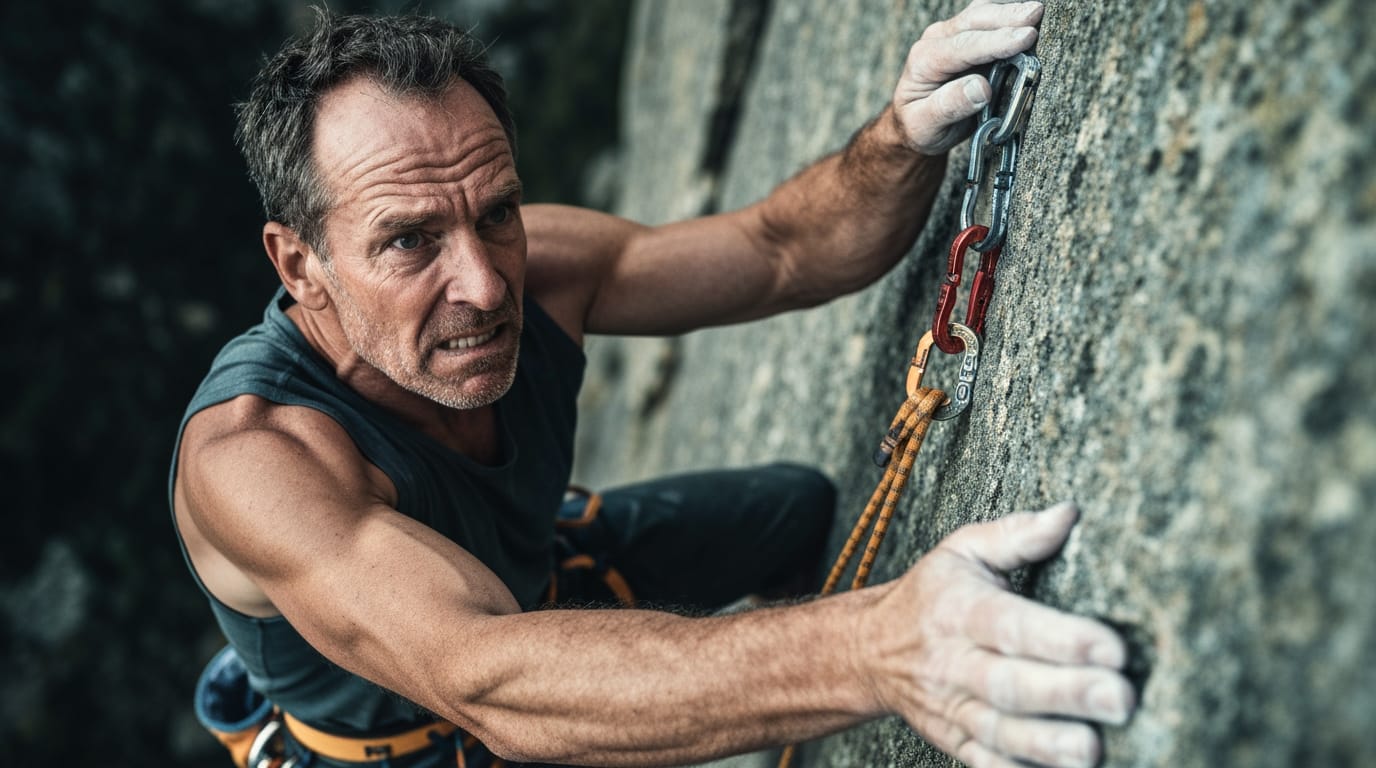
In an extraordinary testament to human will and physical prowess, rock climber Alex Honnold accomplished what many considered the impossible: the first-ever free solo ascent of El Capitan's Freerider route in Yosemite National Park. This death-defying feat, executed without ropes, harnesses, or protective gear, captivated the world and became the subject of the critically acclaimed 2018 documentary "Free Solo," now streaming on Netflix, which brings the intense reality of such an endeavor into sharp focus for a global audience. The film, laden with raw tension and breathtaking visuals, not only chronicles Honnold's audacious climb but also delves into the profound psychological landscape of an athlete pushing the boundaries of human capability, where, as the stark reality of the sport dictates, a single misstep can be fatal.
The Ascent of an Icon: Alex Honnold and El Capitan
On June 3, 2017, Alex Honnold etched his name into the annals of climbing history with a groundbreaking ascent that redefined the limits of the sport. The American rock climber, already renowned for his big-wall free solo ascents, embarked on a journey up the 2,900-foot (884-meter) granite face of El Capitan, specifically tackling the Freerider route. This particular route, rated 5.13a for its technical difficulty, represents a significant challenge even for experienced climbers using safety equipment. Honnold completed the monumental climb in a remarkable 3 hours and 56 minutes, an achievement described by The New York Times as "one of the great athletic feats of any kind, ever."
To fully grasp the magnitude of Honnold's accomplishment, it is crucial to understand the distinct discipline of free soloing. Unlike "free climbing," which involves ascending a rock face using only hands and feet but with ropes for protection against falls, or "soloing," which means climbing alone but potentially using ropes or aid, "free soloing" eliminates all safety equipment. The climber relies solely on their strength, skill, and mental fortitude. In this context, Honnold's ascent was not merely a climb; it was a carefully choreographed dance on a vertical stage, with the highest possible stakes. He had previously practiced the Freerider route with ropes for years, including more than 50 times in preparation for his free solo attempt, meticulously memorizing every hold and movement.
The Perilous Prowess: The Psychology of Free Soloing
Free solo climbing is unequivocally regarded as the most dangerous form of climbing. The inherent risk is absolute; without ropes or protective gear, even the slightest error carries the ultimate consequence. This stark reality often leads to the perception that free soloists are adrenaline junkies with a disregard for their lives. However, the psychological profile of an elite free soloist like Honnold reveals a more complex narrative. While Honnold scored above average in sensation-seeking measurements, his approach is characterized by rigorous preparation and a profound dedication to minimizing risk.
Neuroimaging studies conducted on Honnold, as featured in the documentary, indicated that his amygdala, the brain region associated with processing fear, showed reduced activation in response to intense stimuli compared to most individuals. Honnold himself articulates this, noting, "If you don't have any fear to begin with, there's a lot less to control." This biological predisposition, combined with years of calculated training and precise execution, allows him to cultivate a state where he perceives the risk as "almost zero" due to his preparation. He views his endeavors not as gambling with his life, but as a deep satisfaction derived from mastering something that appears impossible and making it feel "normal" and even "joyous" through meticulous practice. This mindset is a testament to an extraordinary level of psychological flexibility, enabling focus on the task at hand even in the face of immense danger.
Capturing the Unthinkable: The Filmmaking Journey
The documentary "Free Solo" was brought to life by the directorial talents of Elizabeth Chai Vasarhelyi and Jimmy Chin, a filmmaking duo known for their expertise in capturing high-stakes athletic endeavors. However, filming Honnold's free solo presented unique ethical challenges, a central theme explored within the film itself. Both directors openly grappled with the profound moral dilemma of documenting an event where their subject could perish on camera. Chin, an accomplished climber himself, articulated concerns about the potential for the film crew to distract Honnold or create undue pressure, thereby increasing the already astronomical risks.
The filmmakers and their crew, many of whom were also experienced climbers, went to extraordinary lengths to ensure their presence did not interfere with Honnold's concentration. They planned meticulously, strategically placing cameras and discussing contingencies, all while carrying the immense "burden" of knowing the potential consequences. Despite these ethical considerations, Honnold himself expressed a desire for his climb to be "film-worthy" and documented for posterity, viewing the film as a means to capture and preserve his incredible athletic feat. The documentary, therefore, became not just a record of a climb, but also a raw, honest portrayal of the complex relationship between subject and filmmaker in the pursuit of an extraordinary story.
Acclaim and Impact: The Documentary's Legacy
"Free Solo" premiered at the Telluride Film Festival on August 31, 2018, and quickly garnered widespread critical acclaim. Its powerful narrative and stunning cinematography resonated with audiences and critics alike, earning it numerous prestigious awards. The film's most significant accolade came at the 91st Academy Awards, where it won the Oscar for Best Documentary Feature. This was complemented by a People's Choice Award at the Toronto International Film Festival, a BAFTA, and seven Creative Arts Emmy Awards, including for directing, cinematography, and sound editing.
The documentary's critical reception was overwhelmingly positive, boasting high scores on platforms like Rotten Tomatoes. Beyond critical success, "Free Solo" achieved significant commercial triumph, grossing over $29.4 million worldwide at the box office. Its release on Netflix further expanded its reach, introducing the demanding world of free solo climbing and the singular mind of Alex Honnold to a vast global audience. The film sparked widespread discussion about human limits, the nature of fear, and the pursuit of seemingly impossible dreams, solidifying its place not just as a remarkable sports documentary, but as a profound exploration of the human spirit.
The story of Alex Honnold's free solo of El Capitan, as powerfully captured in "Free Solo," transcends the realm of extreme sports. It is a narrative that probes the depths of human ambition, the meticulous preparation required for extraordinary feats, and the complex interplay between courage and calculated risk. The documentary serves as a compelling window into a world where absolute focus and an unwavering commitment to a goal can transform the seemingly suicidal into an art form, leaving viewers to ponder the true boundaries of human potential.