Unprecedented Winter Storm Grounds Thousands, Grips Nation in Arctic Freeze
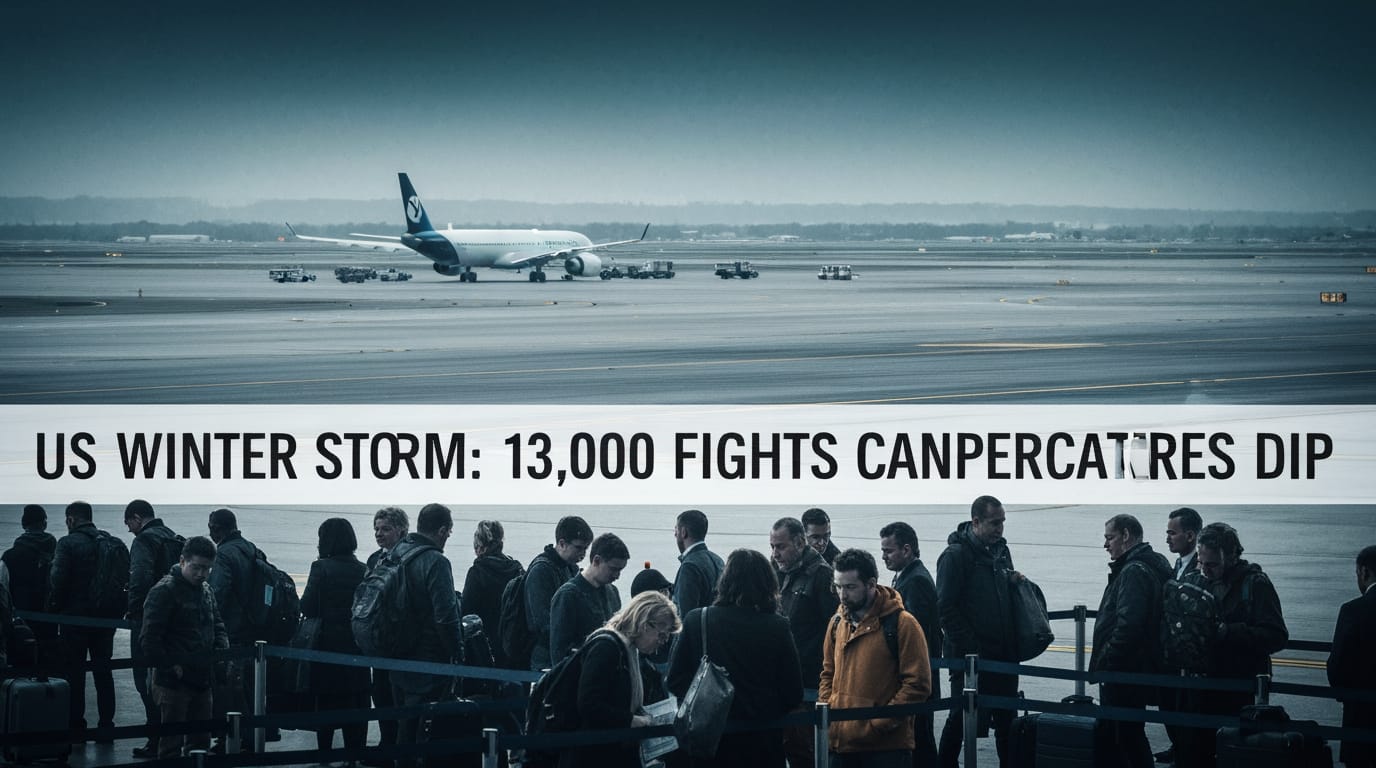
A colossal winter storm, dubbed "Fern" by forecasters, has unleashed a paralyzing assault across the United States this weekend, leading to the cancellation of more than 13,000 flights and plunging vast regions into a dangerous deep freeze. The expansive weather system, characterized by historic snowfall, crippling ice, and life-threatening arctic temperatures, has impacted an estimated 200 to 240 million people across 24 to 40 states, prompting widespread emergency declarations and severe disruptions to daily life and critical infrastructure. As air travel grinds to a halt and millions brace for prolonged hazardous conditions, the storm represents one of the most widespread winter weather emergencies in nearly two decades.
A Nation Grounded: Air Travel Paralyzed
The most immediate and visible impact of Winter Storm Fern has been the unprecedented disruption to air travel. Over 13,000 flights were canceled across the U.S. on Saturday and Sunday, according to flight tracking website FlightAware, marking Sunday's cancellations as the most on any single day since the coronavirus pandemic. Aviation analytics firm Cirium confirmed the severity, noting the growing number of grounded planes. While initial forecasts predicted 6,000 to 8,000 cancellations, the storm's intensity quickly surpassed these estimates, with some reports indicating totals climbing to nearly 15,000.
Major aviation hubs nationwide have been severely affected. Dallas-Fort Worth International Airport, a critical transit point, experienced hundreds of departing and arriving flight cancellations. Other major airports grappling with extensive disruptions include Atlanta's Hartsfield-Jackson International, New York, Chicago, Boston, Oklahoma City, Nashville, and Charlotte. At Will Rogers International Airport in Oklahoma City, all Saturday flights were canceled, with Sunday morning services also called off. Airlines such as American, Delta, United, Southwest, and JetBlue have implemented widespread travel waivers, allowing passengers to rebook flights without additional fees. Even international carriers like Singapore Airlines have canceled flights to and from affected U.S. destinations. The Federal Aviation Administration (FAA) had warned of potential delays due to gusty winds, snow, and freezing conditions, particularly in the Northeast and Mid-Atlantic regions. The combination of frozen equipment and the extensive de-icing procedures required for remaining departures has tripled the average turnaround time for aircraft, exacerbating delays and cancellations.
Icy Grip and Arctic Blast Sweeps Across States
Beyond the grounded aircraft, Winter Storm Fern has delivered a brutal combination of heavy snow, dangerous ice, and bone-chilling cold across a vast swathe of the country. An 1,800-mile corridor stretching from North Texas into the Carolinas is forecast to receive destructive freezing rain and black ice, with accumulations potentially reaching up to 1.5 inches. This level of icing is considered "catastrophic" and capable of overwhelming power infrastructure, snapping trees, and paralyzing transportation networks. Georgia officials specifically warned residents to prepare for what could be the state's "biggest ice storm in more than a decade."
Further north, from the Midwest to the Great Lakes and into the Northeast, record-breaking Arctic cold has set in. Cities from Oklahoma City to Boston are bracing for significant snowfall, with some areas potentially receiving up to 30 inches. Temperatures have plummeted dramatically; Dallas, typically mild in January, saw mercury drop to -6°C (21°F) due to freezing rain. Wind chills in the Midwest have reached as low as minus-40 degrees Fahrenheit, a level where frostbite can occur in as little as 10 minutes. Forecasters have warned of "life-threatening" cold, with some regions facing temperatures as low as -50°C. Over 43 million people are currently under an extreme cold warning, indicating wind chills below 5 degrees Fahrenheit. The National Weather Service described the storm's snowfall reach from New Mexico to Maine as an "astonishingly long swath."
Infrastructure Under Siege and Emergency Response
The extreme weather conditions have placed immense strain on infrastructure and emergency services across the affected regions. Widespread power outages are a significant concern, with ice accumulations threatening to bring down power lines and trees. Over 95,000 power outages were reported as the storm intensified, with more than 100,000 utility customers losing power, particularly in Louisiana and Texas. Utilities have warned that the damage from ice could rival that of a hurricane.
In anticipation of the severe impacts, at least 16 states and Washington D.C. declared states of emergency. These declarations allow for the activation of emergency plans and resources. Federal agencies, including FEMA, have stocked distribution centers with millions of meals, liters of water, blankets, and generators to aid affected communities. Officials are urging residents to take the storm seriously, advising them to secure essential supplies and avoid all non-essential travel. Houston Mayor John Whitmire encouraged residents to "hunker down" for at least 72 hours. The cold has also triggered "critical energy alerts" in several states, impacting airport operations and ground transportation. The National Weather Service emphasized that "prolonged hazardous travel and infrastructure impacts" will persist in the wake of the storm.
The economic toll of Winter Storm Fern is also expected to be substantial. Early estimates suggest the storm could result in up to $24 billion in damage and economic losses. This figure underscores the profound and multifaceted impact of severe winter weather on a complex, interconnected economy.
Resilience and Recovery in the Face of a Historic Storm
As the widespread storm continues to unfold, communities are demonstrating resilience while grappling with the unprecedented conditions. Warming centers have been activated in many cities, providing refuge for vulnerable populations, including the homeless. Transportation departments are deploying crews around the clock to treat highways with brine and clear roads, though the nature of ice makes such efforts particularly challenging.
Winter Storm Fern's broad footprint, multi-day duration, and interaction with densely populated areas have made it a historic event, marking the most extensive winter storm warnings seen in nearly two decades. The event highlights the significant and often underestimated peril of winter storms, which are classified alongside hurricanes and earthquakes in catastrophe risk frameworks due to their potential for widespread disruption and economic losses. While the immediate focus remains on safety and recovery, the storm serves as a stark reminder of the critical importance of preparedness and robust infrastructure in the face of increasingly severe weather events.


