Upbeat Spirits Prevail at Hanover Trade Fair Despite Trump's Tariffs
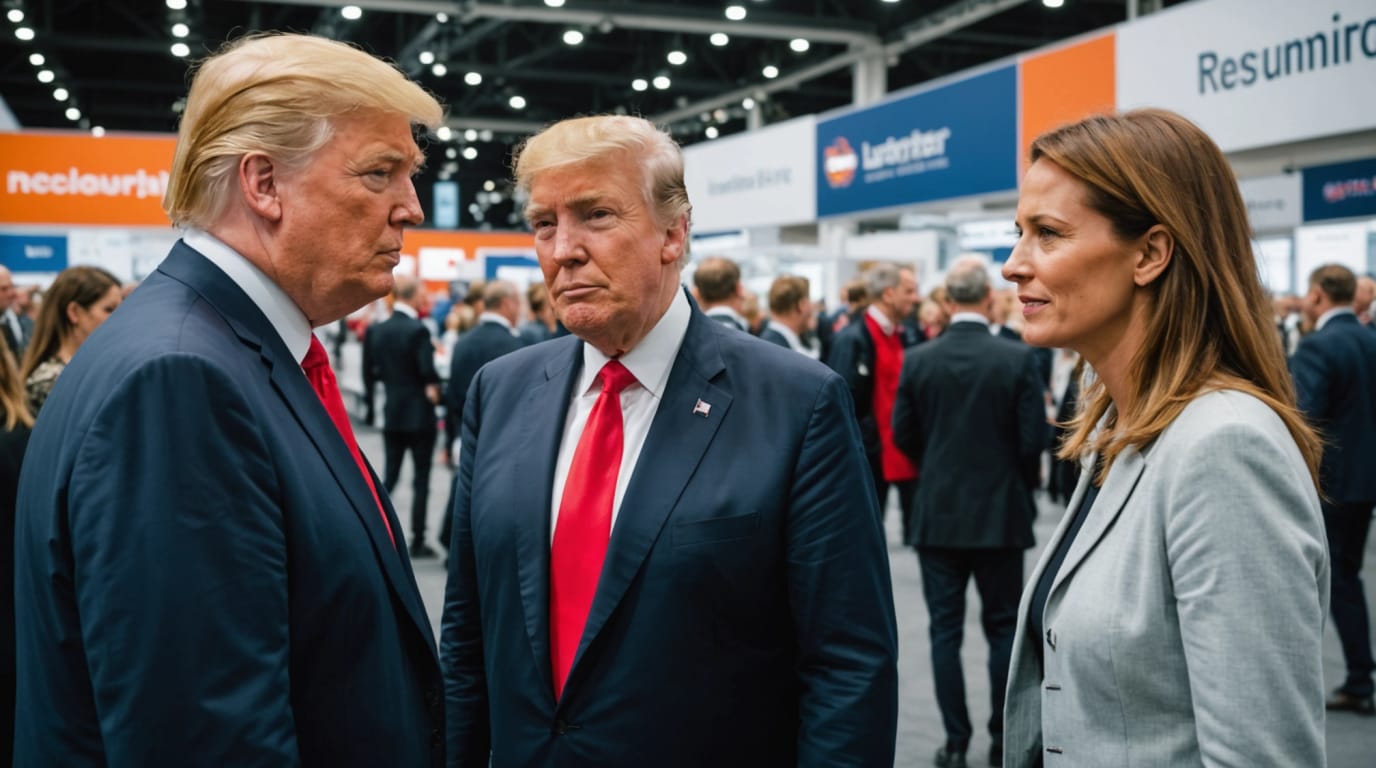
Despite the shadow cast by President Donald Trump's recently imposed tariffs, a sense of optimism and resilience permeated the opening days of the Hanover Messe, one of the world's largest industrial trade fairs. Exhibitors and attendees alike expressed concerns about the potential disruptions to global trade, but remained committed to fostering international collaboration and showcasing innovative technologies.
Tariffs a Hot Topic
The Trump administration's tariffs were a prominent topic of discussion at the Hanover Messe. Missy Hughes, secretary and CEO of the Wisconsin Economic Development Corp. (WEDC), noted that tariffs featured heavily in conversations with German officials and were referenced in multiple speeches during the opening ceremony. The tariffs, particularly those impacting steel and aluminum, have sparked concerns about unpredictability and instability in the global market.
Chancellor Olaf Scholz of Germany addressed the issue directly during the fair's opening, emphasizing the European Union's readiness to respond to the U.S. if necessary. He asserted Europe's commitment to cooperation but underscored its resolve to act as one if Washington imposes tariffs on steel and aluminum. Scholz advocated for more free trade, greater competitiveness, and increased technological sovereignty as the appropriate response to protectionist policies.
Canada Stands Strong
This year's partner country at the Hanover Messe is Canada. The timing is particularly significant given the trade tensions between the U.S. and Canada. While Trump has mused about annexing Canada, Scholz affirmed Canada's independence, stating, "Canada is not a state that belongs to anyone else. Canada is a proud, independent nation."
Despite the U.S. imposing tariffs on Canadian products, the Canadian delegation, led by Stéphane Dion, special envoy for Europe and the EU, expressed a commitment to maintaining strong economic ties with both Europe and the U.S. Dion's presence underscored the importance of international partnerships in navigating the current trade landscape.
Wisconsin Businesses Forge Ahead
A delegation of Wisconsin businesses, led by Gov. Tony Evers, attended the Hanover Messe as part of a WEDC trade mission. These companies, including Advanced Ionics, Scanalytics Inc., Sabhya Technologies, and Dedicated Computing, are using the fair as an opportunity to connect with potential partners from around the world.
Hughes emphasized the importance of building relationships that can endure political challenges. Despite concerns about tariffs, the Wisconsin delegation reported a warm reception and appreciation for their willingness to engage in international commerce. The fair provides these companies with a platform to showcase their advanced manufacturing technologies and explore new market opportunities.
Global Trade Concerns
The tariffs imposed by the U.S. are not limited to Canada and the EU. President Trump recently announced a 46% reciprocal tax on 90% of total imported goods from Vietnam, the second highest after Cambodia. Similar tariffs have been applied to a range of countries, including China, the European Union, Sri Lanka, and India.
These actions have drawn criticism from various international leaders. Italian Prime Minister Giorgia Meloni described the new U.S. tariffs on imports from the EU as "wrong," warning that a trade war would only weaken the West. Australian Prime Minister Anthony Albanese called the tariffs on Australia "completely unfounded" and not "the act of a friend."
A Path Forward
Despite the challenges posed by tariffs and trade tensions, the prevailing sentiment at the Hanover Messe remains optimistic. Businesses and government leaders are actively seeking ways to mitigate the impact of these policies and promote international cooperation. The focus on innovation, technological advancement, and building strong relationships is seen as crucial for navigating the current economic climate.
The Hanover Messe serves as a reminder of the interconnectedness of the global economy and the importance of open trade. While the future remains uncertain, the commitment to collaboration and the pursuit of new opportunities offer a path forward in the face of protectionist pressures. The fair continues to be a vital platform for fostering dialogue, forging partnerships, and showcasing the technologies that will shape the future of industry.


