US Airstrikes Hit Islamist Militants in Nigeria: A Turning Point or a Temporary Reprieve?
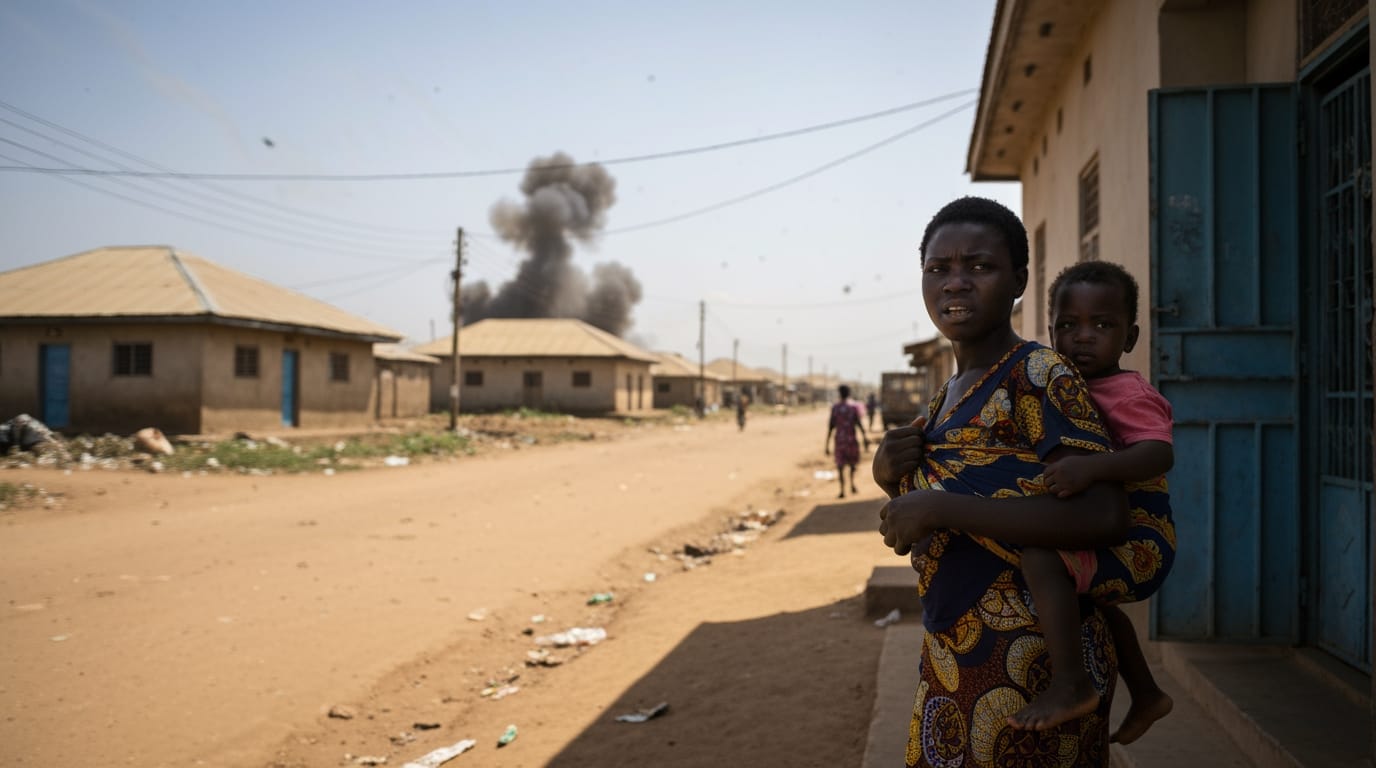
ABUJA, Nigeria – In a significant escalation of international efforts against Islamist militancy in West Africa, the United States launched airstrikes against Islamic State targets in northwestern Nigeria on Christmas Day, December 25, 2025. The precision strikes, confirmed by U.S. Africa Command (AFRICOM) and conducted at the request of Nigerian authorities, aimed to degrade the capabilities of groups like the Islamic State-Sahel Province (ISSP) and its local affiliate, Lakurawa, operating in Sokoto State. While officials in Washington and Abuja hailed the action as a crucial step in combating persistent terrorism, the long-term efficacy of such military intervention in a complex, multifaceted conflict remains a subject of intense debate among security analysts and regional observers.
Escalation in the Sahel: US Strikes Northwestern Nigeria
The unexpected Christmas Day intervention saw the U.S. military target militant camps in the Bauni forest area of Sokoto State. U.S. President Donald Trump publicly announced the strikes, stating they were directed against "ISIS Terrorist Scum" responsible for "targeting and viciously killing, primarily, innocent Christians" in Nigeria. This framing, however, has been met with skepticism by some analysts who argue it misrepresents the broader nature of the conflict. U.S. Africa Command confirmed the operation, indicating it was carried out in coordination with the Nigerian government and resulted in the deaths of multiple militants. Secretary of Defense Pete Hegseth hinted at further actions, stating, "More to come."
Nigerian officials, including the Ministry of Foreign Affairs, confirmed the strikes were part of ongoing security cooperation with the United States, involving intelligence sharing and strategic coordination to target militant groups. They emphasized that these were "precision hits" against terrorist targets in the North West. The strikes were reportedly conducted by a U.S. Navy warship, likely the USS Paul Ignatius, firing Tomahawk missiles at two identified IS camps. This direct military action marks a notable shift in the U.S. approach, which has historically focused on security assistance, training, and intelligence support for Nigerian forces rather than overt combat roles.
Nigeria's Enduring Insurgency: A Complex Threat Landscape
Nigeria has been grappling with a devastating insurgency for well over a decade, primarily in its northeastern region, where Boko Haram and its more lethal offshoot, the Islamic State West Africa Province (ISWAP), have caused widespread death, displacement, and instability. ISWAP alone is responsible for tens of thousands of Nigerian deaths between 2016 and 2025. However, the recent U.S. strikes targeted groups in the northwestern region, specifically the Islamic State-Sahel Province (ISSP) and Lakurawa. These groups, while affiliated with the Islamic State, have distinct origins and operational dynamics. ISSP has grown in strength in 2025, controlling more territory and conducting deadlier attacks across the Sahel region, including Mali, Burkina Faso, Niger, and now increasingly in Nigeria. Lakurawa, a local group, emerged with ties to ISSP and became more active in border states like Sokoto and Kebbi, often initially forming as an anti-bandit force before becoming oppressive.
The violence in Nigeria, however, is not solely driven by these ideologically motivated groups. The security crisis is complex, intertwining religious extremism with rampant banditry, farmer-herder conflicts, and competition over scarce resources, particularly in the Middle Belt and Northwest regions. Data from the Observatory for Religious Freedom in Africa (ORFA) indicates that between October 2019 and September 2024, Fulani ethnic militias were responsible for a significantly higher percentage of civilian killings (47%) than Boko Haram and ISWAP combined (11%). This highlights a nuanced threat landscape that defies simple categorization as purely religious persecution. By the end of 2024, an estimated 3.4 million Nigerians had been forcibly displaced by conflict and violence.
The Debate Over Efficacy: Can Airstrikes Deliver Lasting Peace?
While the U.S. airstrikes represent a direct military response, their long-term effectiveness in weakening Islamist militants in Nigeria is a point of contention among experts. Some security analysts suggest that isolated strikes, while delivering a temporary setback, are unlikely to significantly reduce the overall terrorist threat or reverse Nigeria's deepening insecurity. The targeted groups, particularly ISSP, are estimated to have thousands of fighters and operate across vast, remote areas, making it challenging for a few missile strikes to cripple their operations entirely. Previous military operations by Nigerian forces have also struggled with sustaining pressure, as militants often move to new locations through extensive forests.
Critics also point to the potential for unintended consequences. Bombing campaigns against non-state actors often risk civilian casualties, which can fuel resentment and inadvertently aid militant recruitment efforts. The timing of the strikes on Christmas Day and President Trump's emphasis on protecting Christians also risks inflaming religious tensions and bolstering narratives of a "Western crusade" against Muslim communities, particularly in symbolically significant locations like Sokoto, a historical center of Islamic authority. The perception of military action as the sole or primary solution also risks overlooking the ideological motivations of groups like Boko Haram and ISWAP, whose ideas cannot be bombed out of existence.
Beyond Kinetic Solutions: Addressing Root Causes and Strategic Partnership
Nigeria's counter-terrorism efforts have long faced substantial challenges, including issues of governance, corruption, and the limited presence of the state in rural communities. Many experts argue that the absence of effective governance and basic services in these areas creates a vacuum that militant groups exploit, offering protection or a semblance of order. The Nigerian Minister of Defense, Christopher Musa, has previously stated that military action accounts for only 30% of the solution to the country's security crisis, with the remaining 70% dependent on good governance.
The United States has been a long-standing security partner to Nigeria, providing significant assistance in the form of military education and training, foreign military financing, and defense trade, including the sale of A-29 Super Tucano aircraft. It also provides intelligence, surveillance, and reconnaissance support. However, reversing the increases in northern Nigeria's insecurity requires more than just military hardware or isolated strikes. It necessitates a comprehensive approach that includes strengthening local authorities, rebuilding trust between citizens and government institutions, investing in community-based policing, and providing pathways for deradicalization. The U.S. has also engaged in efforts to promote accountability and justice within the Nigerian Armed Forces, focusing on civilian harm mitigation.
Conclusion
The recent U.S. airstrikes in Nigeria underscore the persistent and evolving threat posed by Islamist militants in the region, marking a direct, albeit controversial, intervention by a major global power. While the strikes may offer a temporary disruption to targeted groups like ISSP and Lakurawa, the consensus among many analysts is that kinetic operations alone are insufficient to resolve Nigeria's deep-seated security crisis. The multifaceted nature of the conflict, intertwined with governance failures, socio-economic grievances, and complex local dynamics, demands a holistic strategy. Lasting stability will likely hinge on Nigeria's ability to implement comprehensive reforms, address the root causes of radicalization, and build resilient state institutions, complemented by sustained and judicious international partnerships that prioritize long-term capacity building over episodic military interventions.


