Khaleda Zia, Bangladesh's Pioneering Female Prime Minister, Dies at 80
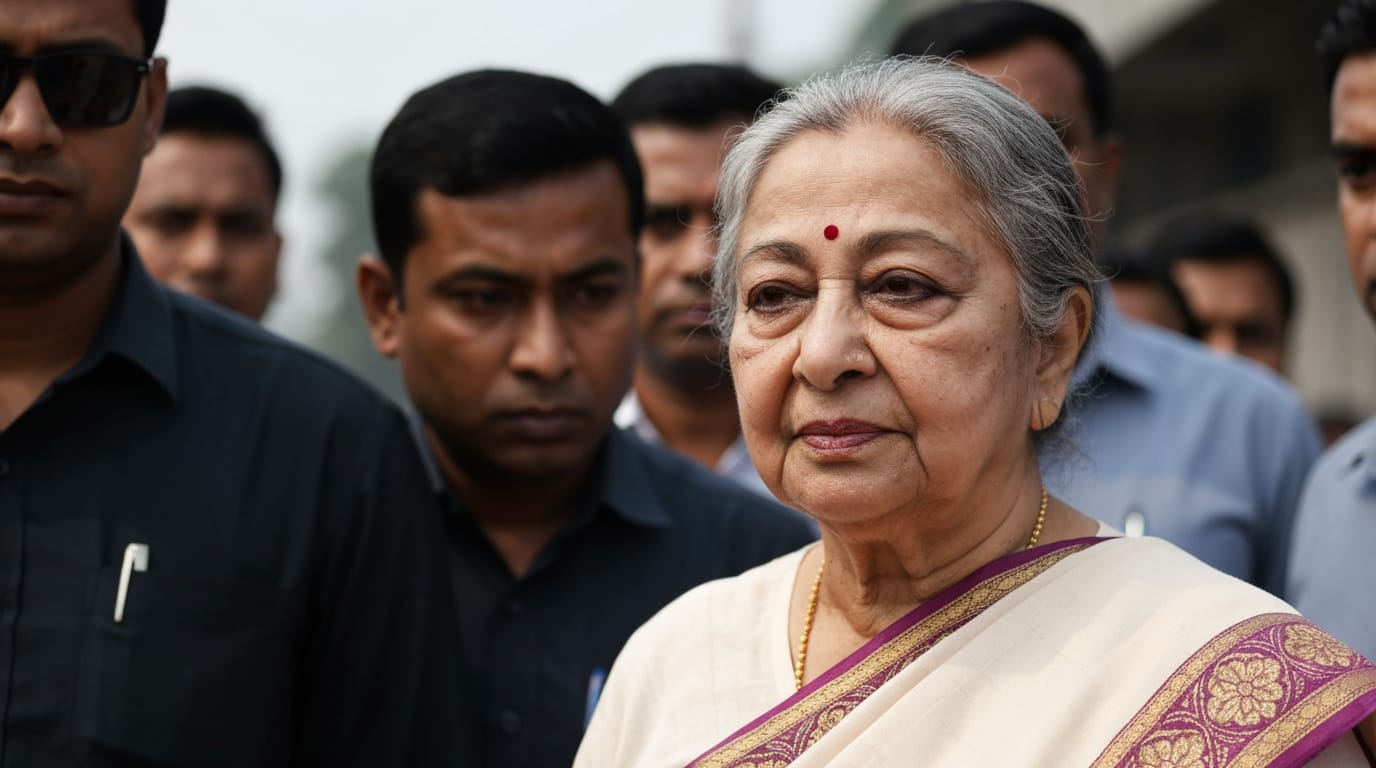
Dhaka, Bangladesh – Begum Khaleda Zia, the iron-willed politician who shattered patriarchal norms to become Bangladesh's first female prime minister and whose enduring rivalry with Sheikh Hasina shaped the nation's political landscape for decades, has died at the age of 80. The Bangladesh Nationalist Party (BNP), which she led for over four decades, confirmed her passing early Tuesday morning, marking the end of an era in Bangladeshi politics. Zia's life was a testament to resilience, transforming from a reluctant homemaker into a formidable political force who championed democracy and oversaw significant reforms during her three terms as head of government. Her death leaves a profound void in a country she led through periods of both progress and intense turmoil.
From Quiet Life to Political Dynamo
Born on August 15, 1945, in Dinajpur, East Bengal (now Bangladesh), Khaleda Zia's early life was far removed from the political arena. She married Ziaur Rahman in 1959, a military officer who would later rise to prominence as a leader in Bangladesh's fight for independence and ultimately become president. Despite her husband's high-profile career, Zia remained largely outside the political spotlight, even during his presidency from 1977 until his assassination in 1981. It was the abrupt and tragic death of her husband that propelled her into public life, transforming her from a grieving widow into a determined political leader.
In 1982, just months after her husband's assassination, Khaleda Zia joined the Bangladesh Nationalist Party (BNP), which her late husband had founded. Her ascent within the party was swift; she became vice-chairperson in March 1983 and was elected chairperson in August 1984. This period coincided with the autocratic rule of General Hussain Muhammad Ershad, who had seized power in a military coup. Zia emerged as a vocal and unyielding opponent of Ershad's dictatorship, leading a seven-party alliance that relentlessly campaigned for the restoration of democracy. Her steadfast refusal to compromise with the military regime led to her repeated arrests and earned her the moniker "Uncompromising Leader," solidifying her image as a champion of democratic principles among the populace.
Breaking Barriers and Shaping a Nation
Khaleda Zia's unwavering commitment to democracy culminated in the 1991 general election, where she led the BNP to victory. On March 20, 1991, she made history by becoming Bangladesh's first female prime minister, and only the second woman in the Muslim world, after Pakistan's Benazir Bhutto, to head a democratic government. Her assumption of office also marked a pivotal moment in Bangladesh's governance, as she effectively returned the nation to a parliamentary system, granting significant powers to the prime minister.
During her initial term, Zia's administration focused on economic liberalization and social development. She initiated policies aimed at privatizing industries and encouraging private investment to address the country's dire economic challenges. Education became a cornerstone of her agenda, with her government implementing free and mandatory primary education for all children and extending free education for girls up to the 10th grade. The education budget saw a substantial increase, and these policies were credited with significantly boosting student pass rates, particularly among female students, and expanding economic opportunities for women, notably in the ready-made garment (RMG) sector. Despite these achievements, her government also grappled with immense challenges, including the devastating 1991 cyclone that claimed over 130,000 lives and inflicted billions in damages.
The Defining Rivalry and Tumultuous Terms
Khaleda Zia's political career was inextricably linked to her intense and often bitter rivalry with Sheikh Hasina, daughter of Bangladesh's founding father Sheikh Mujibur Rahman. This deep-seated political antagonism, frequently dubbed the "Battle of the Begums," defined Bangladeshi politics for a generation, leading to cycles of alternating power, boycotts, and political instability.
After a brief second term in 1996, which lasted only weeks before her resignation amid opposition boycotts and protests demanding a non-partisan caretaker government for elections, Zia returned to power with a landslide victory in 2001. Her third term, spanning from 2001 to 2006, was marked by promises to eliminate corruption and terrorism. However, this period also drew international scrutiny, as Bangladesh was ranked by the Corruption Perceptions Index as the most corrupt country in the world for several consecutive years. Political polarization intensified during this time, with frequent protests and infighting that often disrupted governance and hindered economic progress.
Legal Battles, Illness, and Acquittal
Following the end of her last term in 2006, Bangladesh entered a period of political uncertainty, leading to the installation of an army-backed caretaker government in 2007. This interim administration launched a wide-ranging anti-graft campaign, resulting in Zia's arrest on corruption charges in September 2007. Throughout the subsequent years, she faced numerous legal challenges, culminating in her conviction in 2018 in two high-profile cases—the Zia Orphanage Trust and Zia Charitable Trust corruption cases—receiving sentences totaling 17 years. Zia consistently denied any wrongdoing, maintaining that the charges were politically motivated attempts to sideline her from politics.
Her imprisonment took a heavy toll on her health. She suffered from a multitude of chronic ailments, including advanced liver cirrhosis, arthritis, diabetes, and various heart and lung problems, requiring extensive medical care. In March 2020, on humanitarian grounds and amidst the global pandemic, she was granted a conditional release from prison, with a stipulation that she refrain from political activities. Despite her health struggles, her legal battles continued, and in a significant development in January 2025, Bangladesh's Supreme Court acquitted her in the final corruption case against her. This acquittal not only cleared her name but also potentially paved the way for her return to active politics, though her health remained a primary concern. She had returned to Bangladesh in May 2025 after undergoing medical treatment in the United Kingdom.
A Complex Legacy
Khaleda Zia's passing marks the conclusion of a political narrative deeply intertwined with Bangladesh's democratic journey. Her transformation from a political novice to a three-time prime minister cemented her status as a formidable figure and a symbol of resilience. She will be remembered as a trailblazer who broke barriers for women in leadership within Bangladesh and the wider Muslim world, and as an "Uncompromising Leader" who fought against autocratic rule.
Yet, her legacy is also characterized by intense political polarization, a fierce rivalry that often overshadowed national unity, and persistent accusations of corruption during her time in power. Her final years were spent battling illness and legal challenges, a stark reminder of the tumultuous nature of Bangladeshi politics. As Bangladesh looks to its future, the departure of Khaleda Zia represents the closing chapter on an era defined by her powerful presence and an enduring political saga.


