India's Ambitious Leap: Billions Pour Into AI Data Centers to Fuel Global Tech Dominance
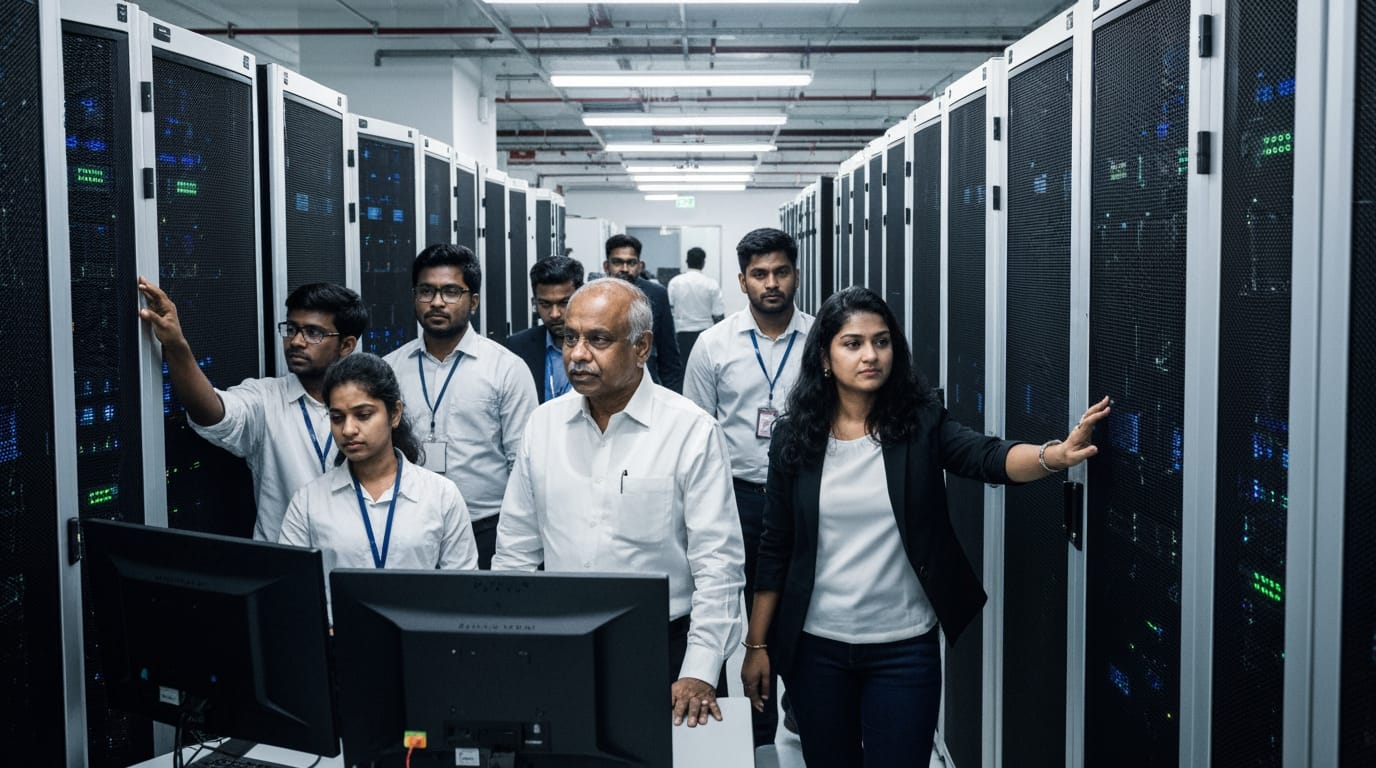
India is strategically positioning itself as a pivotal global hub for artificial intelligence (AI), actively attracting international technology giants and committing massive investments to bolster its data center infrastructure. The nation aims to become a crucial nexus for AI development and deployment, driven by a convergence of proactive government policies, ambitious corporate strategies, and a rapidly expanding digital economy. This concerted effort reflects India's intent to lead the next wave of technological transformation, providing affordable and development-focused AI solutions to nations across the Global South.
A Vision for AI Leadership and Unprecedented Investment
India's ambition to emerge as a global AI leader is underpinned by a projected investment target of up to $200 billion in data centers over the next few years. This forms a critical part of an anticipated $250 billion AI infrastructure ecosystem set to develop within the decade. Global technology powerhouses and Indian conglomerates are making substantial commitments to this vision. Google announced a $15 billion investment plan over five years to establish its first AI hub in India. Microsoft followed with a $17.5 billion pledge to advance India's cloud and AI infrastructure over four years. Amazon has committed $35 billion by 2030, specifically targeting AI-driven digitization.
Domestically, Indian industry leaders are also making significant moves. Reliance Industries has announced a $110 billion commitment to construct AI infrastructure, including gigawatt-scale data centers and a nationwide edge computing network, over seven years. The Adani Group plans to invest $100 billion by 2035 to build renewable-powered, AI-ready hyperscale data centers. These colossal investments underscore the strategic importance India places on securing a leading role in the global AI landscape, with the government's IndiaAI Mission emphasizing accessible computing facilities and sector-specific solutions through public-private partnerships. A recent AI Impact Summit in New Delhi drew global leaders and tech executives, serving as a platform for these major announcements and solidifying India's position on the global AI stage.
Luring Global Tech and Fostering Domestic Growth
To attract this scale of investment, the Indian government has implemented a suite of incentives and policy reforms. A significant measure is a long-term tax holiday, extended until March 31, 2047, for eligible foreign companies that procure services from India-based data centers to serve overseas customers. Data centers have also been granted "infrastructure status," facilitating easier access to financing. State governments complement these central policies with their own incentives, including subsidies on land acquisition, reduced power tariffs, and streamlined single-window clearance systems for projects. Many states also encourage the use of renewable energy sources for data center operations, aligning with national sustainability goals.
These policies are designed to create an attractive environment for both foreign and domestic players. Notable collaborations include the Adani Group partnering with Google to build a gigawatt-scale AI data center campus in Visakhapatnam and with Microsoft for major campuses in Hyderabad and Pune. The Tata Group has also entered a strategic partnership with OpenAI to develop AI infrastructure. Furthermore, the tightening of data localization requirements necessitates significant investments in local infrastructure, which increasingly makes sovereign data processing a strategic imperative for enterprises rather than merely a cost burden.
The AI-Driven Data Center Boom
The surge in AI development is a primary catalyst for India's data center boom. India's data center market, valued at approximately $13.39 billion in February 2025, is projected to reach $57.67 billion by 2030. This growth is mirrored in capacity expansion, with installed power capacity expected to climb from 1.5 GW in 2025 to 6.5 GW by 2030. The AI-optimized data center market alone, valued at $1.19 billion in 2025, is anticipated to grow at over 21% annually to reach $3.10 billion by 2030.
This rapid expansion is driven by the increasing performance capabilities demanded by AI workloads, which require significantly higher power densities, GPU-heavy infrastructure, and advanced cooling systems compared to traditional data centers. While major metropolitan areas like Mumbai, Chennai, Delhi-NCR, and Bengaluru currently account for nearly 90% of the data center capacity, there is a concerted effort to promote more balanced regional expansion. The demand for cloud computing, the rollout of 5G technology, and the overall digital transformation across various sectors also contribute significantly to this accelerated growth.
Navigating Challenges for Sustainable Growth
Despite the immense opportunities, India's data center expansion faces considerable challenges, particularly concerning environmental sustainability and infrastructure. Data centers are highly energy-intensive, and the proliferation of AI-focused facilities will dramatically increase electricity demand. Experts project that data centers could account for 3-5% of India's total grid load by 2030, a substantial increase from 0.5% in 2025. AI-focused racks can consume 10-15 times more power than conventional ones, intensifying energy requirements.
Water scarcity is another critical concern, as data centers require vast amounts of water for cooling systems. India's data centers consumed approximately 150 billion liters of water in 2025, a figure projected to more than double by 2030. Several existing data center hubs are located in regions already facing water stress, raising community concerns about resource depletion. Infrastructure bottlenecks, including issues with land acquisition, regulatory hurdles, and limitations in grid stability and transmission capacity, pose further challenges to scaling operations effectively. While India benefits from relatively lower construction costs, ensuring a reliable and sustainable power supply remains paramount. The focus on integrating renewable energy sources, such as solar and wind hybrid models with storage solutions, is critical to addressing these environmental and infrastructural hurdles.
In conclusion, India is charting an aggressive course to become a global leader in artificial intelligence and data center infrastructure. The unprecedented financial commitments from both global tech giants and domestic conglomerates, coupled with supportive government policies, indicate a clear strategic intent. As the nation rapidly scales its digital capabilities, effectively managing the colossal energy and water demands, alongside resolving infrastructural bottlenecks, will be crucial to ensuring a sustainable and successful future as a leading AI hub.


