US and Iran Engage in High-Stakes Nuclear Talks Amidst Tensions
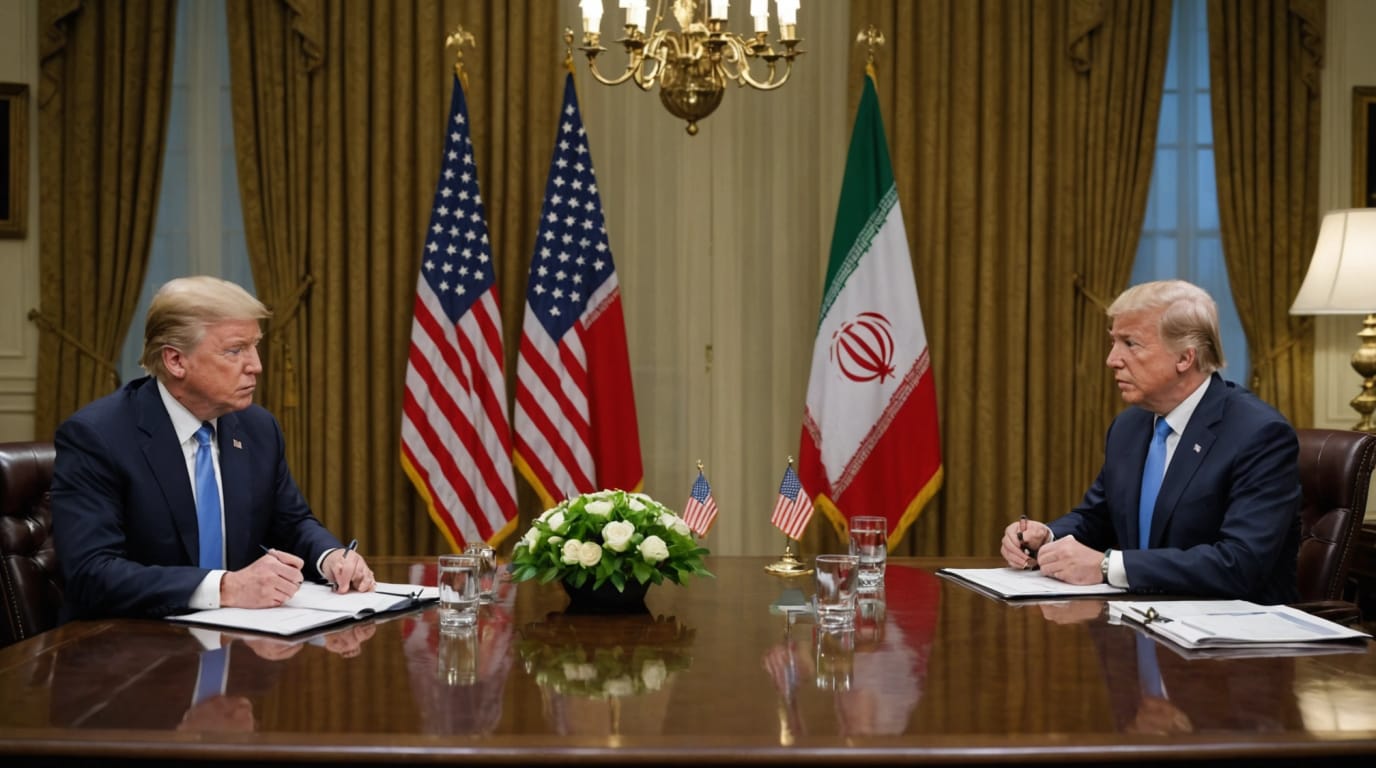
In a significant diplomatic move, the United States and Iran have commenced indirect negotiations aimed at addressing Tehran's rapidly advancing nuclear program. The initial round of talks, held in Oman on Saturday, marks the first engagement between the two nations since President Donald Trump's return to the White House. With both sides expressing a desire for progress, the negotiations are viewed as a critical juncture in managing the long-standing tensions between Washington and Tehran.
Omani Mediation and Indirect Engagement
The talks in Muscat were conducted indirectly, with Omani officials mediating between the U.S. and Iranian delegations. Representatives from both countries were situated in separate rooms, communicating through the Omani Foreign Minister, Sayyid Badr Albusaidi. This format is reminiscent of previous negotiations facilitated by Oman, which has historically played a neutral role in mediating between the U.S. and Iran. According to Iranian state television, U.S. Mideast envoy Steve Witkoff and Iranian Foreign Minister Abbas Araghchi "briefly spoke in the presence of the Omani foreign minister" at the end of the talks, marking a rare direct interaction.
Stakes are High
The stakes of these negotiations are exceptionally high. President Trump has repeatedly stated his determination to prevent Iran from acquiring a nuclear weapon, even suggesting the possibility of military action if a deal cannot be reached. Conversely, Iranian officials have warned that they could pursue nuclear weapons development, particularly given their current stockpile of uranium enriched to near weapons-grade levels.
Key Issues at the Forefront
Several key issues are expected to dominate the discussions. A primary concern for the U.S. is Iran's uranium enrichment program. Under the 2015 nuclear deal, formally known as the Joint Comprehensive Plan of Action (JCPOA), Iran was limited to a small stockpile of uranium enriched to 3.67%. However, since the U.S. unilaterally withdrew from the JCPOA in 2018, Iran has significantly expanded its enrichment activities. Tehran now possesses a stockpile that, if further enriched, could be used to construct multiple nuclear weapons. Some material is enriched up to 60%, a short technical step from weapons-grade levels.
Iran, on the other hand, is likely to seek sanctions relief from the U.S. The Trump administration reimposed sweeping sanctions on Iran's oil sector and other industries after withdrawing from the JCPOA, severely impacting the Iranian economy. While the U.S. may be willing to offer some sanctions relief, the extent of these concessions remains uncertain. Iran may also seek to maintain some level of uranium enrichment, potentially up to 20%, a level it has previously pursued in negotiations.
Trump's Approach: Diplomacy with a Threat
President Trump has adopted a dual-track approach to Iran, combining diplomatic engagement with the threat of military force. Prior to the talks, Trump sent a letter to Iranian Supreme Leader Ayatollah Ali Khamenei, expressing a desire for diplomacy but also warning of potential military action if Iran refuses to negotiate in good faith. Trump has stated that he wants Iran to be a "wonderful, great, happy country," but insists that "they can't have a nuclear weapon."
Building Trust and Setting Parameters
U.S. envoy Steve Witkoff emphasized the importance of "trust building" in the current talks. He suggested that the initial focus would be on establishing a framework for future negotiations rather than hammering out the specific terms of a deal. Witkoff acknowledged that the U.S. position begins with demanding the complete dismantling of Iran's nuclear program, but hinted at potential compromises.
Iranian Perspective: A "Real and Fair" Agreement
Iranian officials have stated that they are seeking a "real and fair" agreement that respects their nation's interests. Ali Shamkhani, an advisor to Ayatollah Khamenei, affirmed that Foreign Minister Araghchi was attending the talks "with full authority for indirect negotiations with America." Shamkhani expressed optimism that progress could be made if Washington demonstrates goodwill.
Next Steps and Potential Outcomes
Following the initial round of talks, both sides have agreed to continue negotiations next week. The location and specific details of these future discussions have yet to be announced. The outcome of these negotiations remains highly uncertain. A successful agreement could de-escalate tensions in the Middle East, prevent Iran from developing nuclear weapons, and pave the way for improved relations between the U.S. and Iran. However, failure to reach an agreement could lead to increased tensions, potentially escalating into military conflict.


