US and Russia Seek to Restore Communication Amidst Ukraine Conflict
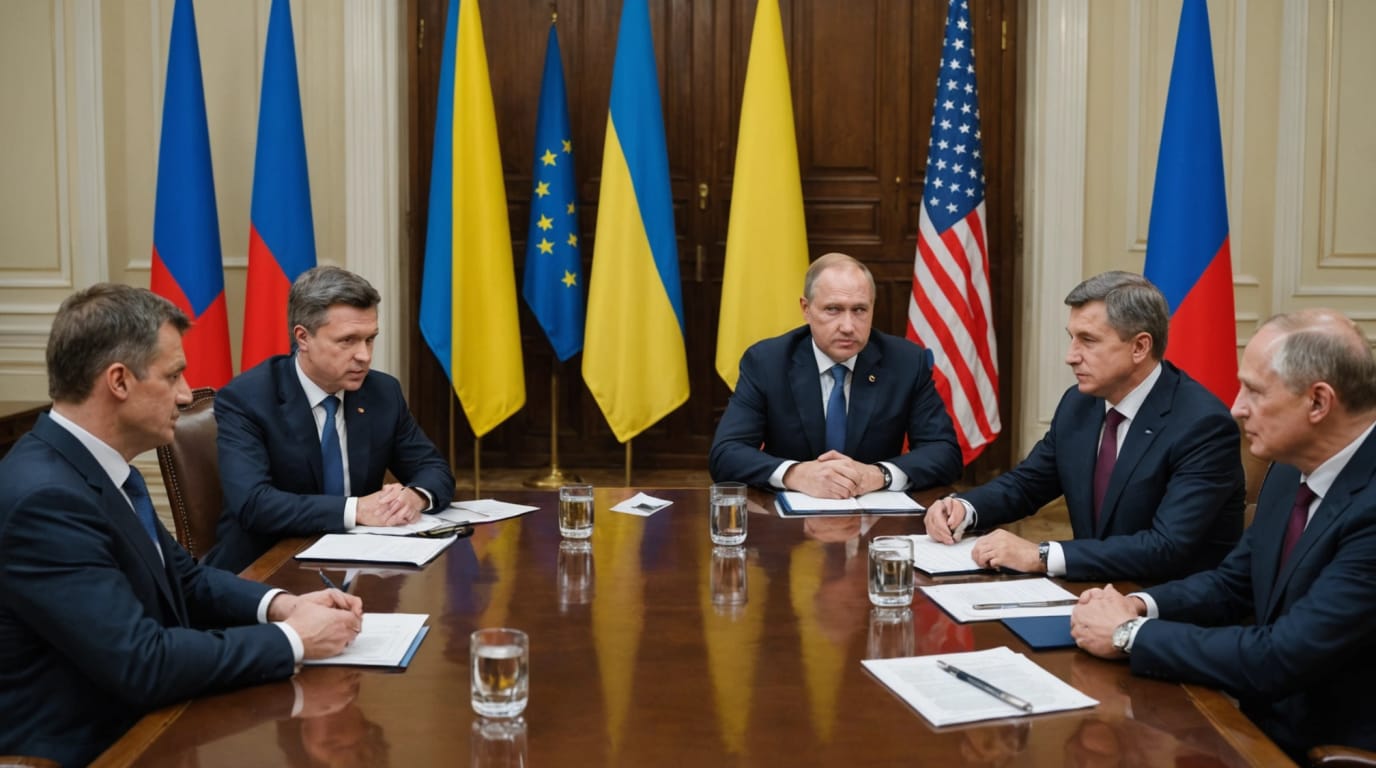
Washington D.C. - In a significant development in the ongoing conflict in Ukraine, top diplomats from the United States and Russia engaged in discussions Saturday aimed at de-escalating tensions and finding a path toward a resolution. The talks, between U.S. Secretary of State Marco Rubio and Russian Foreign Minister Sergei Lavrov, focused on the next steps in negotiations to end the war.
The meeting comes amidst a backdrop of strained relations between Washington and Moscow, exacerbated by the conflict in Ukraine, which began with Russia's full-scale invasion in February 2022. Despite these challenges, both sides have expressed a willingness to maintain a dialogue, signaling a potential shift in diplomatic strategy.
Agreement to Continue Communication
According to State Department spokeswoman Tammy Bruce, Secretary Rubio and Minister Lavrov "agreed to continue working towards restoring communication between the United States and Russia." This agreement, while broad, represents a crucial first step in re-establishing a working relationship between the two nations. The statement released by the State Department did not provide specific details regarding the timeline or agenda for future discussions.
The restoration of communication channels is viewed by many experts as essential for managing the risks associated with the conflict in Ukraine, including the potential for miscalculation and escalation. Direct dialogue can also facilitate the exchange of information and perspectives, which could help to identify areas of common ground and potential compromise.
Ceasefire Agreement
Despite recent friction between President Donald Trump and Ukrainian President Volodymyr Zelenskyy, Kyiv has reportedly agreed in principle to a U.S.-brokered 30-day unconditional ceasefire, contingent on Moscow halting its attacks in eastern Ukraine. However, Russian President Vladimir Putin has not yet agreed to any truce, setting conditions that were described as beyond what was called for in the U.S. agreement with Ukraine. The specific conditions set by Putin have not been publicly disclosed, adding uncertainty to the prospects for a ceasefire.
The potential for a ceasefire, even a temporary one, could provide an opportunity to de-escalate the conflict and create space for further negotiations. However, the differing positions of Ukraine and Russia on the terms of a ceasefire highlight the challenges involved in reaching a lasting resolution.
Middle East Tensions
In addition to the situation in Ukraine, Secretary Rubio updated Minister Lavrov on military activity in the Middle East, where U.S. forces carried out strikes against Houthi rebel targets in Yemen on Saturday. The U.S. military action in Yemen comes in response to continued attacks by the Houthis on Red Sea shipping, which the U.S. and its allies view as a threat to international trade and security.
The inclusion of the Middle East in the discussions between Rubio and Lavrov underscores the interconnectedness of global security challenges and the need for cooperation between major powers to address them. Russia has long maintained a significant presence in the Middle East, particularly in Syria, and its views on regional security issues are of importance to the United States. The US has informed Russia of strikes on the Yemeni capital of Sanaa that killed at least 20 people. President Trump warned that “hell will rain down” if the group continues attacks on Red Sea shipping.
Saudi Arabia's Role
The next round of U.S.-Russia talks is expected to be hosted by Saudi Arabia, although the specific date has not yet been announced. Saudi Arabia has emerged as a key mediator in the Ukraine conflict, leveraging its relationships with both Washington and Moscow to facilitate dialogue and seek common ground.
Saudi Arabia's involvement reflects its growing role as a regional power and its ambition to play a more prominent role in international diplomacy. The kingdom's willingness to host the talks underscores its commitment to finding a peaceful resolution to the conflict in Ukraine.
Implications and Future Outlook
The agreement between the U.S. and Russia to continue communication represents a positive step towards de-escalation and potential resolution of the conflict in Ukraine. However, significant challenges remain, including differing views on the terms of a ceasefire and the broader political and security issues at stake.
The success of future negotiations will depend on the willingness of all parties to compromise and find common ground. The role of Saudi Arabia as a mediator could prove crucial in bridging the gap between the U.S. and Russia and fostering a more constructive dialogue.
The situation remains fluid, and the outcome of the conflict in Ukraine is far from certain. However, the resumption of high-level communication between the U.S. and Russia offers a glimmer of hope for a peaceful resolution.


