US Brands Reshape China Strategy Amid Shifting Market Tides
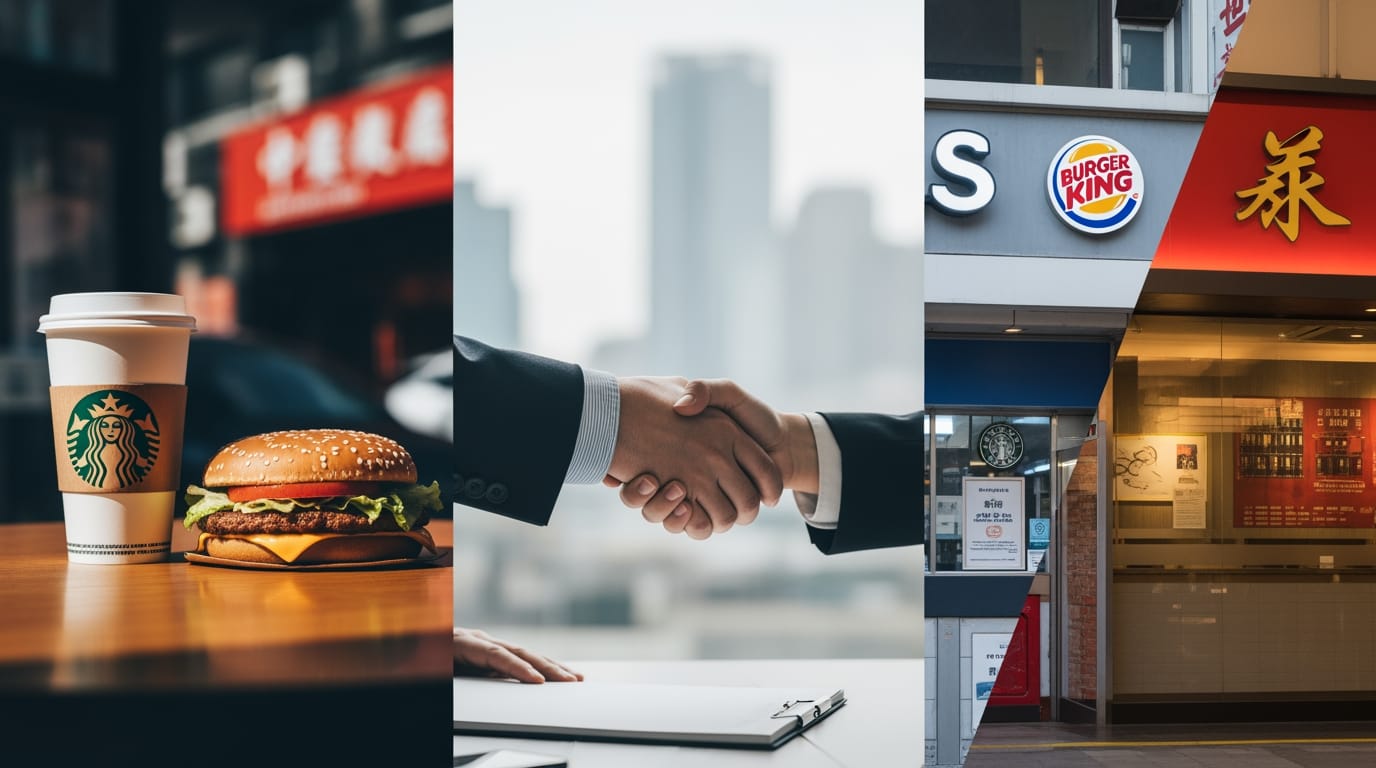
American multinational corporations, long accustomed to robust growth in the burgeoning Chinese market, are undergoing a significant strategic re-evaluation, driven by intensifying local competition, a cooling economy, and complex geopolitical currents. Brands from Starbucks to Burger King are not merely adjusting tactics; they are fundamentally rethinking their operational models and partnership structures to navigate a landscape vastly different from the one that initially drew them to China's vast consumer base. The era of guaranteed Western brand dominance is yielding to a more nuanced approach centered on deep localization and strategic collaboration.
The Evolving Landscape: From Opportunity to Scrutiny
For decades, China represented an unparalleled growth opportunity for American companies, offering access to an expanding middle class eager for Western products and lifestyles. However, this dynamic has shifted dramatically. US businesses in China are now reporting record-low profits and business confidence, with geopolitical tensions identified as the single largest long-term issue impacting sentiment. This challenging environment is compounded by several factors.
Firstly, fierce competition from agile local brands is eroding the market share of many foreign companies. Chinese firms are excelling in product localization, digital integration, and aggressive pricing strategies, often outpacing their global rivals. Secondly, China's slowing economic growth and depressed consumer sentiment, with confidence at a 30-year low, have led to weaker demand and declining sales across various sectors. Finally, rising nationalism among Chinese consumers increasingly favors domestic brands, sometimes manifesting in boycotts against foreign companies perceived as culturally insensitive or politically misaligned. Beyond these market forces, American firms continue to grapple with systemic challenges such as market access barriers, uneven regulatory enforcement, and stringent compliance requirements, particularly concerning data security and privacy.
Starbucks' Strategic Pivot Towards Deeper Integration
Starbucks, which successfully established a significant presence in China since opening its first store in Beijing in 1999, has been a quintessential example of a Western brand thriving in a tea-dominated culture through careful localization and the creation of a unique "third place" experience. China rapidly became Starbucks' second-largest market. However, recent years have presented formidable challenges, including declining revenue and same-store sales in early 2024. The coffee giant has faced intense pressure from rapidly expanding local competitors like Luckin Coffee, which, by late 2023, surpassed Starbucks in both sales and unit count by offering lower prices and a rapid expansion model.
In response, Starbucks is undertaking a significant strategic pivot, emphasizing deeper integration into the local ecosystem. The company is actively seeking new strategic investors for its China business, a process that saw it sell a 60% stake to Boyu Capital, while retaining a 40% share. This move is not an exit but a strategy to enhance operational efficiency, gain invaluable local expertise, and inject capital and agility into its Chinese operations. Starbucks aims to double its sales and quadruple its operating income, planning to open 9,000 stores in China by 2025, supported by investments in digitalization, localized product innovation (such as green tea lattes and black sesame frappuccinos), and culturally integrated store designs. The focus is on a rapid expansion strategy complemented by a nuanced understanding of regional tastes and preferences across China's diverse market.
Burger King's Quest for a Local Turnaround
Burger King's journey in China has been markedly different from Starbucks'. Despite entering the market in 2005, the fast-food chain has struggled to achieve the same scale and market penetration as rivals like McDonald's and KFC. Burger King has faced significant operational setbacks, including missed expansion targets and a reduced store count since 2023, leading to a weakened market perception. Its average per-store sales in China rank lowest among its top international markets.
Recognizing these challenges, Burger King's parent company, Restaurant Brands International (RBI), took decisive action. In February 2025, RBI spent $158 million to acquire stakes from its former franchisees, thereby regaining full control over Burger King's China operations. Following this, RBI formed a new joint venture with CPE Yuanfeng, a Beijing-based private equity firm, selling a majority 83% stake for $350 million. RBI will retain approximately 17% and a board seat. This new partnership signals an ambitious goal: to dramatically expand Burger King's presence from its current 1,250 stores to over 4,000 by 2035, with an intermediate target of 2,500 stores within five years. The underlying rationale is to leverage the local partner's deep understanding of China's fast-food landscape to improve localization, adjust pricing strategies, and drive expansion into untapped lower-tier cities, which are crucial for future growth.
Broader Implications and The "In China, For China" Imperative
The strategic adjustments by Starbucks and Burger King are indicative of a broader trend among American businesses in China. The dominant philosophy is increasingly shifting towards an "In China, For China" model. This approach necessitates embedding Chinese talent, fostering local innovation, and integrating local capital directly into business structures to achieve operational agility. Many US companies are realizing that while the market remains critical, success now hinges on adapting to its unique demands rather than imposing global templates.
Furthermore, geopolitical tensions and trade disputes have prompted a significant push for supply chain diversification. Many companies are adopting a "China+1" strategy, exploring alternative production bases in Southeast Asia, Mexico, India, and Eastern Europe to reduce reliance on China. However, despite these shifts, few American firms are planning a complete exodus from China. The country remains a top-five priority market for a substantial majority of US companies, acknowledging its irreplaceable importance to their global competitiveness. While some investments may be happening more quietly, foreign firms are still committed to the market, sometimes expanding operations for research, integrated supply chains, and local partnerships. The ability of brands like Tesla and Adidas to thrive by deeply localizing products and services underscores that success is achievable for those willing to fully adapt.
Conclusion: Adapting to a New Reality
The strategic overhaul undertaken by American brands like Starbucks and Burger King marks a pivotal moment in the history of US-China business relations. It reflects a profound recognition that the Chinese market has matured into a complex, intensely competitive arena where local players are setting the pace. The "rethinking" of strategy is less about a retreat and more about a fundamental re-engagement on new terms—terms defined by deep localization, strategic partnerships, and an unwavering commitment to understanding and integrating with local consumer preferences and cultural nuances.
Future success for American brands in China will depend on their ability to combine global quality and brand recognition with the agility, cultural fluency, and localized capital of domestic enterprises. As the market continues to evolve, balancing global identity with specific local needs will be paramount for sustainable growth. The Chinese market, while presenting increasing challenges, remains a dynamic and critical component of global corporate strategies, demanding continuous adaptation and innovative approaches to thrive.