US Completes Tactical Withdrawal from Nigeria After Successful Anti-ISIS Operation, Shifts to Intelligence Sharing
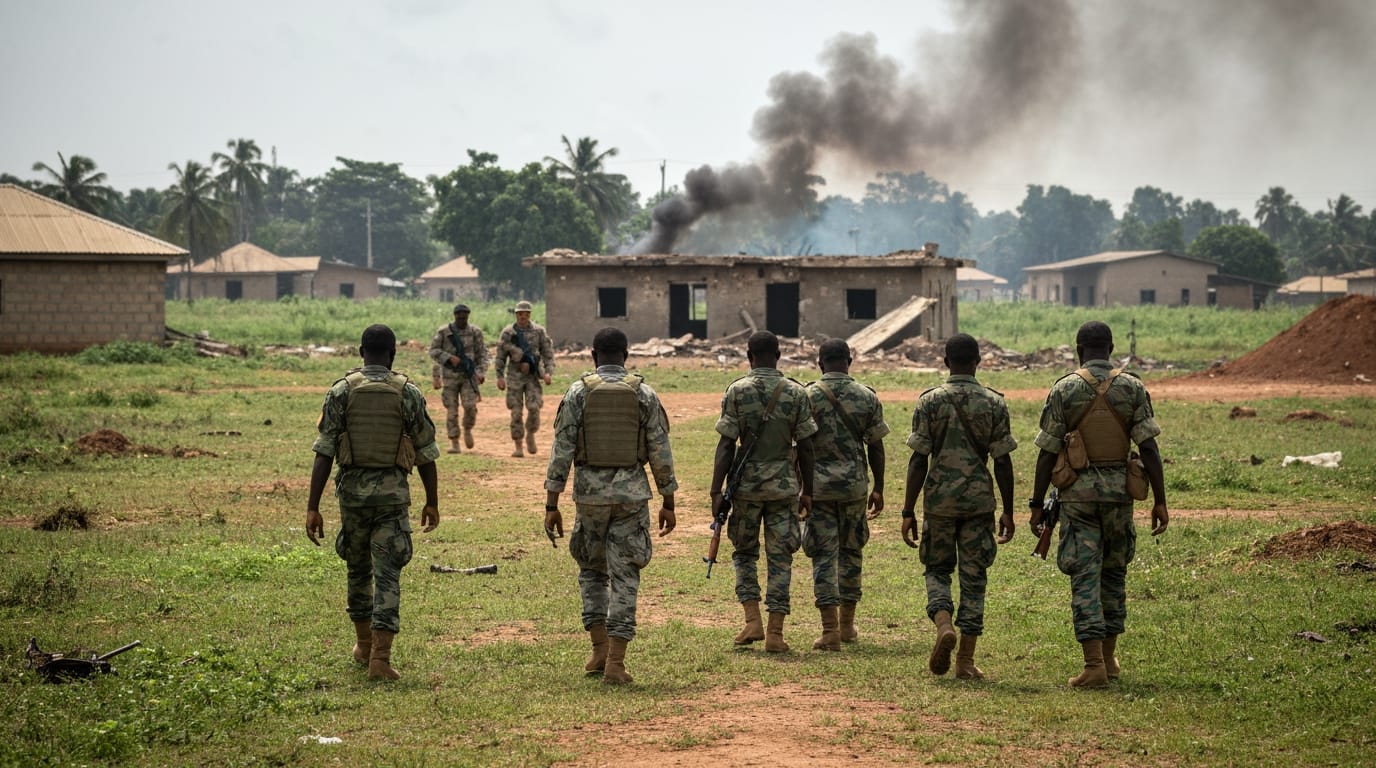
The United States has completed the withdrawal of the majority of its troops deployed to Nigeria, concluding a months-long counterterrorism mission that significantly degraded the leadership of the Islamic State in West Africa Province (ISWAP). The move, announced by the Commander of the U.S. Africa Command (AFRICOM), General Dagvin Anderson, marks a strategic shift from direct troop presence to enhanced intelligence sharing and technical assistance, underscoring Washington's evolving approach to combating extremist threats in the Sahel region. The operation, which involved joint efforts with Nigerian forces, achieved its immediate objectives, including the elimination of a key ISIS leader, and is being hailed as a model for future security cooperation.
The Tactical Withdrawal and Evolving Partnership
The deployment of U.S. forces to Nigeria began in early February 2026, following a mutual agreement between the United States and the Nigerian government. Initially described as a "small team," reports indicated that approximately 200 U.S. troops had been sent to north-east Nigeria. The stated purpose of this deployment was to provide military education, intelligence sharing, logistics support, and strategic dialogue, with an initial emphasis that U.S. forces would not participate in direct combat operations. However, the nature of the mission evolved, culminating in successful joint combat operations with Nigerian soldiers.
General Dagvin Anderson confirmed the withdrawal on Thursday, July 2, 2026, during a virtual press briefing held after the 2026 African Chiefs of Defence Conference in Luanda, Angola. Anderson stated, "We have withdrawn much of our forces that were just there for that operation," while emphasizing that the partnership would continue through intelligence sharing. This tactical adjustment reflects a broader U.S. strategy in Africa to provide specialized capabilities and allow African partners to lead security operations, rather than maintaining a large, enduring military footprint. U.S. officials have reaffirmed that while the physical troop presence has been scaled back, the core pillars of the bilateral security architecture remain intact.
Key Victories Against ISIS-West Africa
The recent counterterrorism operation in Nigeria yielded significant results, most notably the killing of a senior Islamic State leader. In May 2026, joint U.S. and Nigerian forces conducted military operations in northeastern Nigeria that resulted in the death of Abu-Bilal al-Minuki, identified as the second-in-command of ISIS globally. This success followed an earlier U.S. strike on Christmas Day 2025, ordered by then-President Donald Trump, against suspected ISIS fighters in Nigeria's Sokoto State, who were accused of targeting Christians.
The primary focus of these operations was the North-east, particularly Borno State and the Lake Chad Basin region, areas heavily impacted by extremist groups. AFRICOM Commander Anderson reported that the operation effectively "weakened the group's regional network in the Lake Chad Basin," and significantly degraded ISIS's leadership in Nigeria. The U.S. military noted that the intelligence provided, combined with Nigerian military operations, was crucial in successfully targeting and disrupting the ISIS network, with impacts extending beyond West Africa due to the group's international connections.
Context of U.S.-Nigeria Counterterrorism Cooperation
The enhanced security engagement between the U.S. and Nigeria had intensified following President Trump's re-designation of Nigeria as a "Country of Particular Concern" in late 2025, along with pledges of greater American support for counterterrorism operations. This came amid claims from the U.S. administration of a "Christian genocide" in Nigeria, a claim firmly rejected by Nigerian officials who emphasized that violence affected people from all communities. Despite differing perspectives on the nature of the conflict, both nations recognized the severe threat posed by extremist organizations.
Nigeria faces pervasive security challenges, with terrorism being a major threat, primarily from Boko Haram and ISWAP. ISWAP, an officially recognized affiliate of the Islamic State, operates extensively in the Lake Chad Basin region, including Nigeria's northern border areas, and has been actively engaged in an insurgency against Nigeria, Cameroon, Chad, and Niger since 2016. The group splintered from Boko Haram in 2016 and has since become a dominant force, often targeting military personnel and civilians, and exploiting poor economic conditions to recruit members. AFRICOM's broader mission includes strengthening relationships with African partners, enhancing defense capabilities, and countering transnational threats, with a directive to keep American forces out of direct combat whenever possible. The command maintains that its cooperation with Nigeria is rooted in respect for Nigerian sovereignty and operates strictly by invitation within an agreed bilateral framework.
Implications and Future Outlook
The withdrawal of most U.S. troops does not signal an end to collaborative counterterrorism efforts between the two nations. Both the U.S. and Nigeria have committed to sustaining intelligence exchange, technical assistance, and joint security cooperation. U.S. officials state that the partnership will continue "as long as there are shared security threats and the framework continues to be of value to both countries." Nigerian military spokesperson Samaila Uba indicated that the withdrawal would "not affect our momentum in any way," highlighting the continuity of intelligence sharing.
However, Nigeria's security landscape remains complex and challenging. Beyond the threat of ISWAP and Boko Haram, the country grapples with separatism, piracy in the Gulf of Guinea, and widespread violent crime including armed robbery, kidnapping, and banditry. While the joint operation delivered a significant blow to ISIS leadership, terrorist groups continue to stage attacks, particularly in northeastern Nigeria. The shift in U.S. military engagement implies an increased reliance on Nigeria's capacity to leverage shared intelligence and specialized training to prosecute its own counterterrorism campaigns effectively. This approach seeks to empower Nigerian forces while maintaining a vital partnership in the ongoing fight against extremism across West Africa.
The recent operation exemplifies a model where external support provides critical, specialized capabilities, allowing African partners to lead in addressing their security challenges. The continuity of intelligence and security cooperation underscores a long-term commitment to stability in a region vital to global security, albeit with an adjusted operational footprint.


