US Considers Taking Control of Ukraine's Nuclear Power Plants Amidst Ongoing Conflict
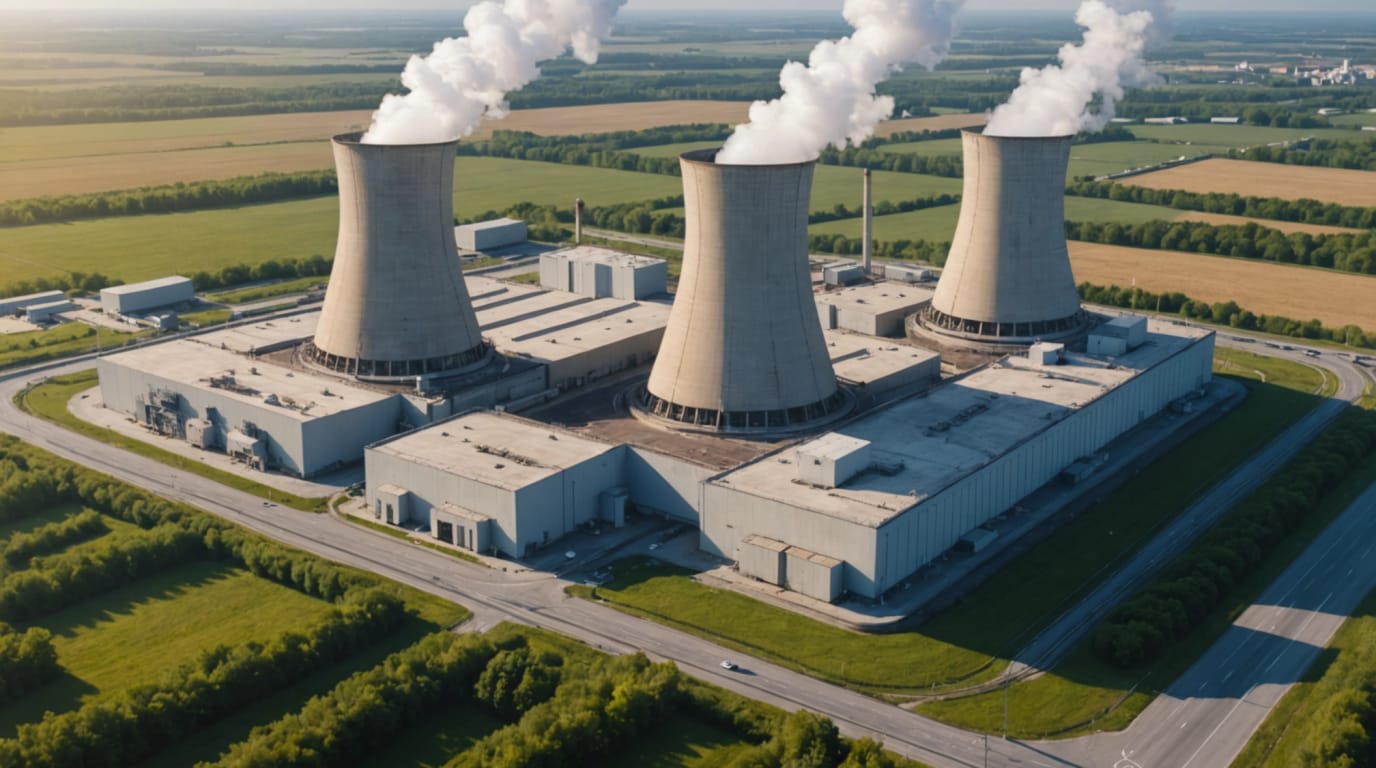
A proposal for the United States to assume control, or even ownership, of Ukraine's nuclear power plants has emerged following a recent phone call between U.S. President Donald Trump and Ukrainian President Volodymyr Zelenskyy. The proposal, intended to safeguard Ukraine's energy infrastructure amidst the ongoing conflict with Russia, has sparked both interest and controversy, raising questions about sovereignty, energy security, and the practicalities of managing nuclear facilities in a war zone.
The Genesis of the Proposal
The idea of U.S. involvement in Ukraine's nuclear sector reportedly arose during a March 19 phone conversation between Trump and Zelenskyy. According to a White House statement, Trump suggested that American ownership of the plants would provide the "best protection" for the infrastructure, leveraging U.S. expertise in energy management. U.S. Energy Secretary Chris Wright later confirmed that taking over management of Ukraine's nuclear facilities was under consideration.
Zelenskyy, however, clarified that the discussion focused primarily on the Zaporizhzhia Nuclear Power Plant (ZNPP), Europe's largest nuclear facility, which has been under Russian occupation since March 2022. He emphasized that all Ukrainian nuclear power plants belong to the Ukrainian people and are state-owned, denying that the issue of ownership of other plants was discussed. He indicated openness to U.S. investment in modernizing the ZNPP, but not to a change of ownership.
Ukraine's Nuclear Landscape
Ukraine relies heavily on nuclear power, with four active nuclear power plants operating 15 reactors. Before the war, these plants generated almost half of the nation's electricity, a role that became even more crucial after Kyiv lost access to coal mines in the Donbas region. In 2021, nuclear reactors produced over 55% of Ukraine's total electricity, the second-highest share in the world, behind only France.
The ZNPP, located in Enerhodar, has six reactors with a total capacity of 5700 MW. Before the Russian occupation, it generated a fifth of Ukraine's electricity. Since being captured by Russian forces, the plant has ceased power generation, and all six reactors are in "cold shutdown." However, the plant still requires energy to power critical safety systems and maintain cooling, raising concerns about potential nuclear accidents, especially after the destruction of the Kakhovka Dam reduced access to cooling water.
Potential Benefits and Challenges
Proponents of U.S. involvement argue that it would provide a strong security guarantee for Ukraine's nuclear facilities. The presence of American personnel could deter Russia from targeting the plants, as any attack would be seen as a direct assault on U.S. interests. Furthermore, U.S. expertise and investment could help modernize the plants, improving their safety and efficiency.
Volodymyr Omelchenko, energy program director at the Razumkov Center, a Kyiv-based think tank, suggested that Ukraine should agree to the proposal with certain conditions, including guaranteeing complete Ukrainian control and ensuring that Energoatom, the state-owned nuclear power enterprise, remains the sole operator.
However, the proposal also faces significant challenges. Ukrainian law currently prohibits the privatization of nuclear power plants, making U.S. ownership legally difficult. Amending these laws would be politically sensitive, given the historical importance of state-owned industries in Ukraine.
Moreover, Western nuclear technicians lack experience working with the Soviet-designed VVER reactors used in Ukraine. Maintaining a stable power supply and ensuring sufficient cooling water amid ongoing attacks on infrastructure would also be major concerns.
The Mineral Deal Connection
The proposal to take control of Ukraine's nuclear plants is also linked to a broader agreement on mineral resources. The U.S. is reportedly seeking to modify its subsoil agreement with Ukraine, aiming to eliminate rules governing the ownership and management of a joint investment fund. This expanded agreement could include American ownership of other economic assets, particularly Ukrainian nuclear power plants.
Ukraine seeks clear security guarantees from the U.S. in exchange for sharing profits from its natural resources. A Ukrainian official stated that they are ready to sign the mineral deal, but the Trump administration has yet to present an updated draft.
The View from Kyiv
While Zelenskyy has expressed openness to U.S. investment in modernizing Ukraine's nuclear sector, he has firmly rejected the idea of transferring ownership. He emphasized that all Ukrainian nuclear power plants belong to the Ukrainian people.
Oleksiy Orzhel, Ukraine's former energy minister, stated that transferring ownership of nuclear plants to the United States is impossible under current Ukrainian law. However, he acknowledged the challenging situation and the need to maintain a strong dialogue with the U.S.
Westinghouse and the Future of Ukrainian Nuclear Power
Westinghouse, a global nuclear giant, has been increasing its presence in Ukraine's nuclear sector in recent years. In 2022, Westinghouse and Energoatom signed an agreement guaranteeing that the company would provide all the nuclear fuel for Ukraine's reactors, breaking Russia's previous monopoly. There are also plans to build new reactors using U.S. technology at the Khmelnytskiy nuclear power plant.
Westinghouse has shown particular interest in the ZNPP, which previously relied on the company's fuel and technology. After Russia seized the plant, Westinghouse expressed concerns about potential theft of its intellectual property.
Implications and Outlook
The proposal for U.S. control of Ukraine's nuclear power plants highlights the complex interplay of energy security, national sovereignty, and geopolitical interests in the region. While the idea faces significant legal and practical hurdles, it also reflects the growing U.S. commitment to supporting Ukraine's energy sector.
Whether the U.S. ultimately takes control of Ukrainian nuclear plants remains uncertain. However, the ongoing discussions underscore the importance of nuclear energy to Ukraine's future and the potential for increased U.S. involvement in the country's energy sector, particularly through investment and technological assistance. The situation continues to evolve as negotiations between the U.S. and Ukraine progress, and as the conflict with Russia continues to impact Ukraine's energy infrastructure.


