US Detains Indian University Student Amid Pro-Palestinian Crackdown
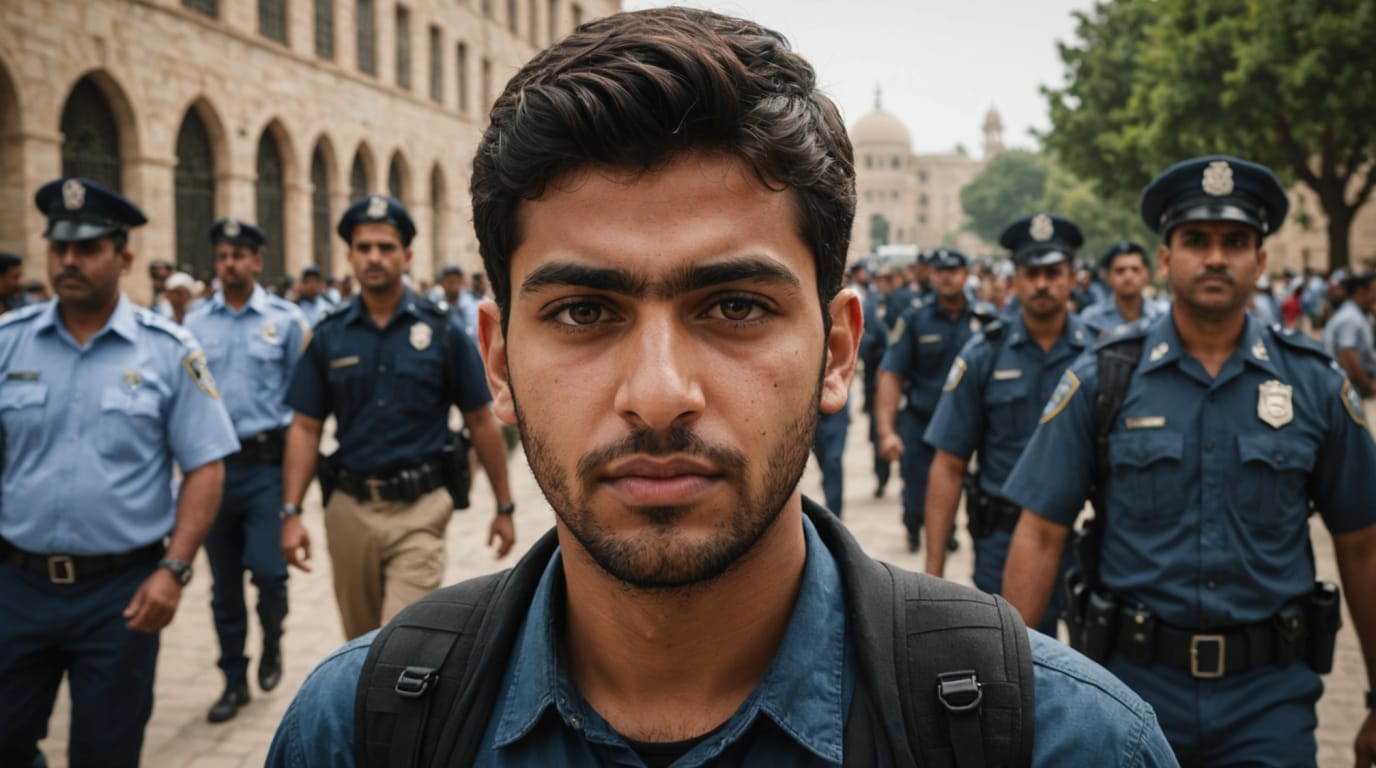
The United States government has detained an Indian postdoctoral researcher at Georgetown University, escalating concerns about the targeting of pro-Palestinian voices amid heightened tensions surrounding the Israeli-Palestinian conflict. Badar Khan Suri, accused of spreading Hamas propaganda and anti-Semitism on social media, faces deportation in what his lawyer describes as a politically motivated attack on his activism.
Allegations and Arrest
The Department of Homeland Security (DHS) has accused Suri of having ties to Hamas, a Palestinian militant group, and spreading its propaganda and anti-Semitism through his social media activity. Tricia McLaughlin, an assistant secretary at DHS, stated that Suri has "close connections to a known or suspected terrorist, who is a senior advisor to Hamas." However, the DHS has not provided specific evidence to support these claims. Secretary of State Marco Rubio reportedly determined on March 15, 2025, that Suri's activities rendered him deportable under the Immigration and Nationality Act (INA).
Suri, who is in the U.S. on a student visa and married to a U.S. citizen, Mapheze Saleh, was arrested outside his home in Rosslyn, Virginia, on Monday night. He is currently being held at a U.S. Immigration and Customs Enforcement (ICE) detention facility in Alexandria, Louisiana, awaiting a court date in immigration court.
Background and Context
Suri is a postdoctoral fellow at Georgetown University's Alwaleed Bin Talal Center for Muslim-Christian Understanding. According to the university's website, he holds a Ph.D. in peace and conflict studies from a university in India and has been teaching a class on "Majoritarianism and Minority Rights in South Asia" this semester. Georgetown University has stated that Suri was granted a student visa to carry out "doctoral research on peace-building in Iraq and Afghanistan" and that they are not aware of him engaging in any illegal activity.
Suri's detention comes amid a broader crackdown by the Trump administration on individuals involved in pro-Palestinian protests against Israel's actions in Gaza. Earlier this month, Columbia University student Mahmoud Khalil was also arrested and faces deportation for his participation in pro-Palestinian protests. These actions have sparked outrage from civil rights and immigrant advocacy groups, who accuse the administration of unfairly targeting political critics and stifling free speech.
Legal and Political Repercussions
Ahmad Hassan, Suri's lawyer, has filed a petition for his release at the U.S. District Court for the Eastern District of Virginia. He argues that Suri is being targeted for his political activism and that the government's actions are a threat to academic freedom. "If an accomplished scholar who focuses on conflict resolution is whom the government decides is bad for foreign policy, then perhaps the problem is with the government, not the scholar," Hassan said.
The case raises concerns about the potential chilling effect on free speech and academic discourse, particularly regarding the Israeli-Palestinian conflict. Critics argue that the government is conflating criticism of Israeli policies with anti-Semitism and using immigration laws to suppress dissent.
Several organizations and legal experts have voiced concerns about the legality and constitutionality of these actions. They argue that the government is violating the First Amendment rights of individuals by targeting them for their political views. The American Civil Liberties Union (ACLU) has condemned the targeting of pro-Palestinian activists, calling it "unprecedented, illegal, and un-American."
Student Visas in the US
To study in the United States as an international student, individuals typically need a student visa. The U.S. offers two primary types of student visas: the F-1 visa for academic studies and the M-1 visa for vocational or non-academic pursuits. To obtain a student visa, applicants must first be accepted into a Student and Exchange Visitor Program (SEVP)-certified institution. Once accepted, the institution provides the student with an I-20 form, which is required for the visa application.
The visa application process involves paying a SEVIS fee, completing the online DS-160 form, scheduling and attending a visa interview at a U.S. embassy or consulate, and providing necessary documentation such as a valid passport, academic transcripts, and financial statements.
International Response
The United Nations human rights experts have urged the U.S. Department of Homeland Security and U.S. Immigration and Customs Enforcement to cease repression and retaliation, including arbitrary detention of U.S. lawful permanent residents, and removal of international students who have participated in university protests in solidarity with Palestine.
“These actions are disproportionate, unnecessary, and discriminatory and will only lead to more trauma and polarisation negatively impacting the learning environment within university campuses,” the experts said, adding that “these actions create a chilling effect on the rights to freedom of expression, assembly and of association.”
Conclusion
The detention of Badar Khan Suri highlights the growing tensions surrounding pro-Palestinian activism in the United States and raises serious questions about the government's use of immigration laws to suppress political dissent. The case is ongoing, and its outcome could have significant implications for academic freedom, free speech, and the rights of international students in the U.S. The situation remains fluid as Suri awaits his court date and his legal team challenges the basis for his detention and potential deportation.


