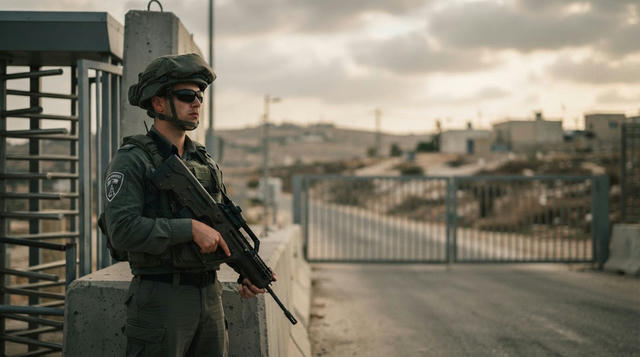
US Envoy's Kashmir Comments Ignite Fresh Diplomatic Firestorm Between India and Pakistan

Srinagar, Jammu and Kashmir – A diplomatic tremor has reverberated across South Asia after the United States Ambassador to India, Sergio Gor, declared Kashmir "an important part of India" during a recent visit to the region. The remarks, made on Wednesday, August 19, 2026, have swiftly reignited long-standing tensions between nuclear-armed rivals India and Pakistan, prompting a strong rebuke from Islamabad and raising questions about Washington's nuanced stance on the disputed territory.
Envoy's Visit and Controversial Statement
Ambassador Gor's visit to Jammu and Kashmir marked a significant moment, as he became the first American envoy to travel to the region in six years. During his itinerary, Gor met with Jammu and Kashmir Chief Minister Omar Abdullah in Srinagar, a meeting he described as "very good." It was in the aftermath of this meeting that Gor uttered the statement that has since sent shockwaves through the diplomatic landscape: "Kashmir is an important part of India." The declaration, intended perhaps to signal deepening US-India ties, instead triggered an immediate and forceful reaction from Pakistan. Gor also hinted at a potential review of Washington's travel advisory for the region, a move that could have significant economic and political implications.
Pakistan's Swift and Strong Rejection
Pakistan wasted no time in condemning Ambassador Gor's remarks, summoning the US Chargé d'Affaires, Natali A Baker, in Islamabad to lodge a "strong demarche." The Pakistani Foreign Ministry expressed its "strong condemnation" and "categorically rejected" the characterization of Jammu and Kashmir as an integral part of India, labeling Gor's comments as "factually incorrect" and "irresponsible." Pakistan reiterated its long-held position that Jammu and Kashmir is an "internationally recognised disputed territory" whose final status must be determined in accordance with relevant United Nations Security Council resolutions and the aspirations of the Kashmiri people. Islamabad further contended that the US envoy's statement contradicted the "long-standing and well-documented position of the United States" on the Kashmir dispute, as well as Washington's commitment to international law and the UN Charter. This diplomatic incident underscores the profound sensitivity surrounding the Kashmir issue, a territory that has been a flashpoint for conflict between India and Pakistan since their independence from British rule in 1947.
A History of Contention and Recent Escalations
The Kashmir region has remained at the core of India-Pakistan animosity for nearly eight decades. Both nations claim the entirety of the former princely state, but each administers only parts of it. The Line of Control (LoC) serves as a de facto border, a heavily militarized boundary frequently marred by skirmishes and cross-border firing. This latest diplomatic spat occurs against a backdrop of already heightened tensions between the two South Asian powers. In April 2025, a deadly attack on tourists in Indian-administered Kashmir led New Delhi to suspend its involvement in the Indus Waters Treaty, a vital water-sharing agreement. India swiftly attributed the attack to Pakistan-backed elements, an accusation Islamabad vehemently denied. The following month witnessed intense exchanges of drone, missile, and artillery fire across the LoC, resulting in nearly 70 fatalities on both sides. These recent violent episodes have left an already fragile peace even more precarious, making any perceived shift in international stance on Kashmir particularly volatile.
Geopolitical Repercussions and Future Outlook
Ambassador Gor's statement has placed the United States in a delicate position, potentially alienating Pakistan, a long-term, albeit complex, strategic partner, while seemingly bolstering its growing alliance with India. The remarks could be interpreted as a significant policy shift by Washington, moving away from its traditional stance of neutrality on the Kashmir dispute. Such a change could have far-reaching implications for regional stability, potentially emboldening India and further isolating Pakistan on the international stage regarding the Kashmir issue. The timing of the statement, amid existing bilateral tensions and recent hostilities, adds to its gravity. While New Delhi has yet to officially comment on Islamabad's reaction, the incident highlights the enduring challenges of navigating the intricate geopolitical landscape of South Asia. The United States will now face the diplomatic tightrope walk of clarifying its position and managing the fallout from a statement that has once again cast a spotlight on one of the world's most enduring and dangerous territorial disputes.