US Escalates Strikes on Iranian Missile Sites as Region Braces for Wider Conflict
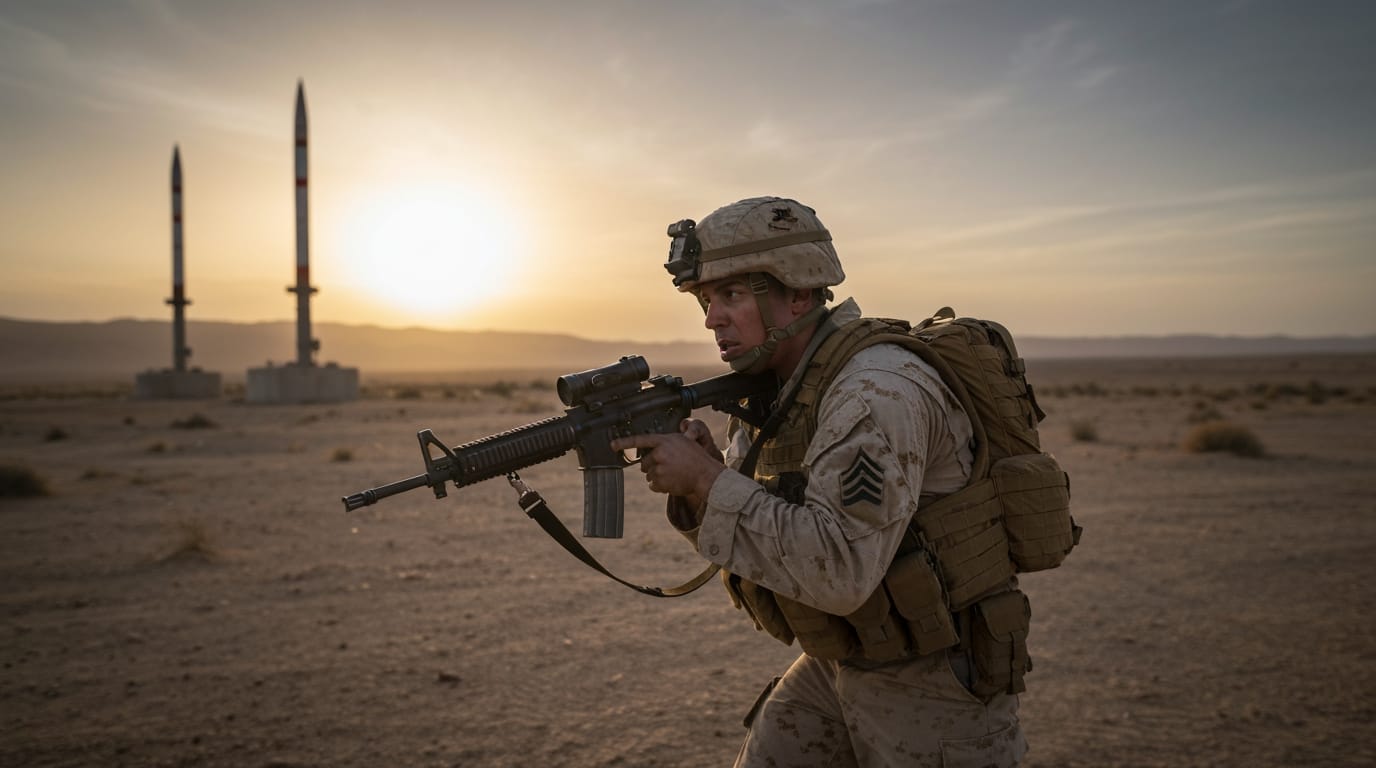
The United States has dramatically intensified its military campaign against Iran, launching multiple waves of airstrikes on Iranian missile sites and coastal defenses across the Persian Gulf, a move that has shattered a fragile ceasefire and thrust the Middle East deeper into a volatile new phase of conflict. These escalating attacks, ongoing for several days and reaching a fever pitch around July 15, 2026, are in direct response to what Washington describes as persistent Iranian aggression against commercial shipping in the vital Strait of Hormuz. Iran, for its part, has unleashed retaliatory strikes on U.S. military assets in neighboring countries and issued stark warnings of further escalation, pushing an already tense region closer to all-out war.
Renewed Offensive Targets Iranian Capabilities
U.S. Central Command (CENTCOM) confirmed a series of precision strikes aimed at degrading Iran’s capacity to disrupt global maritime trade. Targets have included crucial Iranian coastal defense systems, as well as cruise missile storage and launch sites, particularly on Greater Tunb Island, a strategically important outpost in the Strait of Hormuz. Additional strikes have hit other key locations along Iran's southern coast, including Bandar Abbas, Bandar-e Lengeh, Kong, Qeshm Island, and the Shahid Raahbar naval base. CENTCOM officials stated the operations are intended to "further degrade Iran's ability to attack commercial shipping in the Strait of Hormuz," an international waterway through which approximately one-fifth of the world's oil consumption and a significant portion of liquefied natural gas exports pass. In conjunction with the aerial assaults, the U.S. has reimposed a naval blockade on Iranian ports, escalating economic pressure on Tehran. The US has indicated these actions are intended to ensure the free transit of vessels through the Strait.
Iran Retaliates, Threatens Wider Action
Tehran has denounced the U.S. strikes as a blatant violation of international agreements and has swiftly responded with its own military actions. Iran's Islamic Revolutionary Guard Corps (IRGC) announced it had launched retaliatory missile and drone attacks against U.S. military targets in Bahrain, Kuwait, and Jordan. Iranian state media reported claims of significant damage, with assertions of striking the headquarters of the U.S. Fifth Fleet in Bahrain, the U.S. military logistics support center at Abdullah Port in Kuwait, and the Al-Azraq base in Jordan. The IRGC has also escalated its rhetoric, threatening to shut off all other regional energy export corridors that benefit the U.S. and its allies, a move that would have severe global economic repercussions. Iranian health officials reported a heavy human toll from the U.S. bombardments, claiming at least 30 civilians killed and more than 260 wounded in recent days. Seven Iranian soldiers were also reported killed in a missile attack on an army barracks in the southeastern province of Sistan and Baluchestan.
A Ceasefire Undone: The Arc of Escalation
The latest surge in hostilities marks the collapse of a Pakistan-mediated memorandum of understanding (MOU) that had aimed to establish a ceasefire and pave the way for broader negotiations. This agreement, reached in June 2026, had offered a brief respite, reopening the Strait of Hormuz and lifting an earlier U.S. naval blockade, leading to a temporary easing of global oil prices. However, the peace proved ephemeral. The current conflict traces its roots to February 28, 2026, when the United States and Israel initiated a large-scale military operation against Iran, codenamed "Operation Epic Fury" by the U.S., with stated objectives including the destruction of Iran's ballistic missile program and preventing nuclear weapons acquisition. Iran possesses the largest and most diverse missile arsenal in the Middle East, with capabilities to strike targets up to 2,000 kilometers away, covering Israel and parts of Europe, making its missile program a cornerstone of its defense strategy and a source of regional concern. The recent attacks on commercial vessels in the Strait of Hormuz, which the U.S. attributes to Iran, served as the catalyst for the renewed and intensified American response, igniting the current volatile exchanges.
Global Reverberations: Economic and Humanitarian Crisis
The escalating conflict has sent shockwaves through global markets and significantly worsened an already dire humanitarian situation. Oil prices have surged, with Brent crude trading above $85 a barrel, a direct reflection of fears regarding supply disruptions from the Strait of Hormuz. Analysts warn that any sustained closure of the Strait could trigger a global economic downturn. Beyond economics, the human cost is immense. Thousands of people, including numerous civilians and children, have been killed in Iran and Lebanon since the broader conflict began. Millions have been displaced within Iran and across the region, putting immense strain on already stretched humanitarian aid efforts. The conflict has severely disrupted global humanitarian supply chains, driving up costs for essential aid like food, water, and medicine, and exacerbating existing crises in vulnerable countries far from the immediate battlegrounds.
International Alarm and the Path Forward
The rapid escalation has drawn urgent international calls for de-escalation. The United Nations Security Council had previously passed Resolution 2817 in March 2026, condemning Iranian attacks on Gulf states and reaffirming freedom of navigation in the Strait of Hormuz. However, diplomatic efforts appear to be faltering amidst the renewed military confrontations. U.S. President Donald Trump has made strong statements, warning Iran that he would hit them "very hard" and suggesting potential strikes on Iranian power plants and bridges if negotiations do not resume. Conversely, U.S. Vice President J.D. Vance has ruled out the deployment of American ground troops, emphasizing that regime change must originate from the Iranian people. The current situation represents a perilous moment, with the collapse of the ceasefire and the increasing tit-for-tat strikes raising the specter of a wider regional conflict that could engulf the Middle East and have profound global consequences. The immediate future hinges on whether diplomacy can somehow regain traction amidst the intensifying military actions and fiery rhetoric.
In this volatile climate, the hopes for a lasting peace, briefly kindled by the recent ceasefire, have been extinguished by the renewed military engagement. The intensified U.S. strikes on Iranian missile capabilities and Iran's defiant retaliatory actions have set the stage for a potentially catastrophic expansion of the conflict. With the Strait of Hormuz remaining a flashpoint and civilian casualties mounting, the international community faces the urgent challenge of finding a viable path to de-escalation before the region descends into a full-scale war with untold global ramifications.


